What attachment needs was the affair meeting?
6 min read
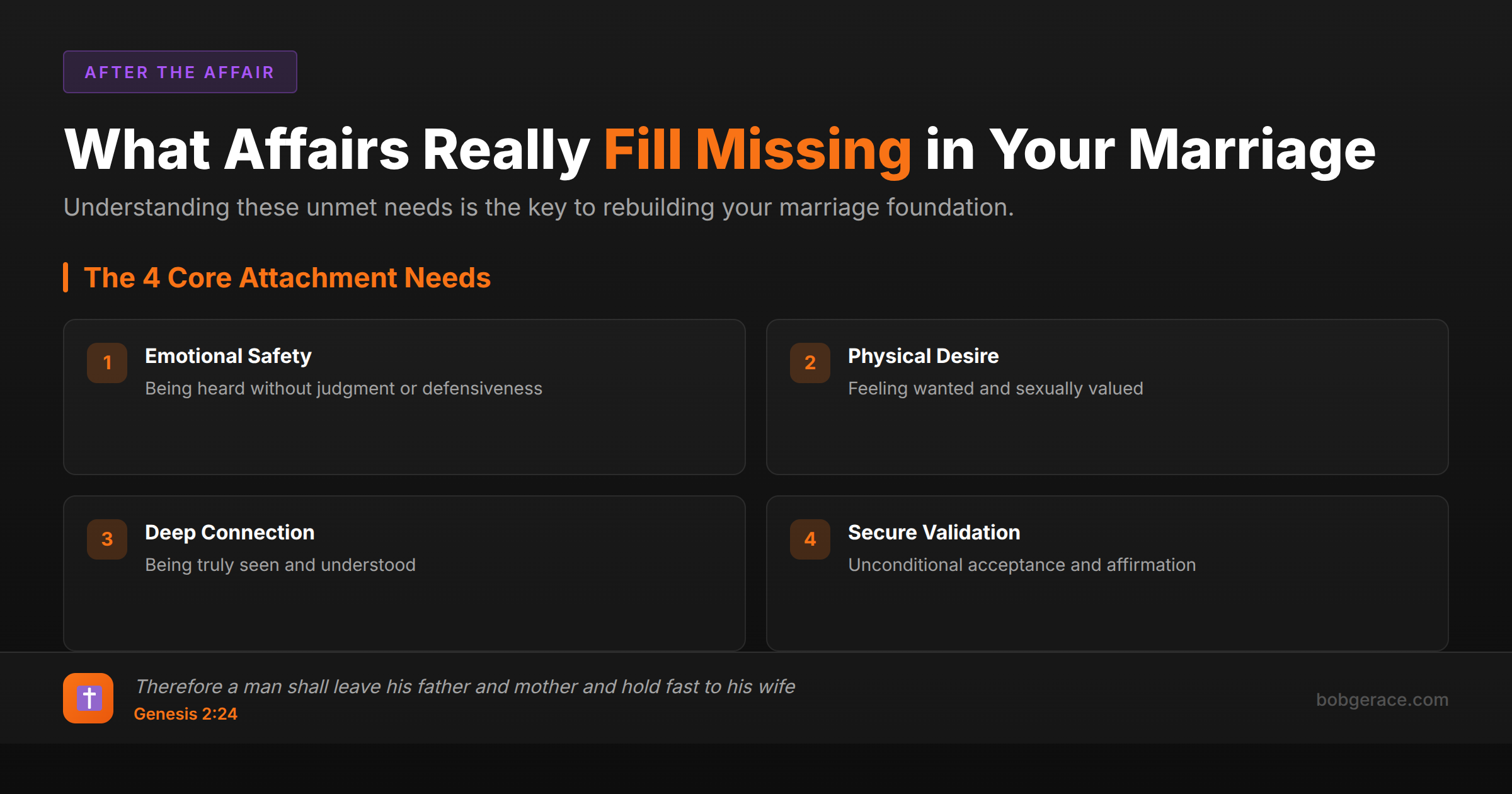
Affairs typically meet deep attachment needs that weren't being fulfilled in the marriage - needs for emotional connection, validation, feeling desired, or being truly seen and understood. The affair partner often provided what felt like unconditional acceptance, exciting novelty, or emotional safety that was missing at home. Understanding these specific attachment needs isn't about justifying the affair, but about identifying what was broken so it can be properly healed. Common needs include feeling emotionally secure, physically desired, intellectually stimulated, or simply having someone who listens without judgment. The affair became a substitute attachment figure, meeting needs that should have been addressed within the marriage covenant.
The Full Picture
Affairs don't happen in a vacuum. While the unfaithful spouse made the choice to step outside the marriage, affairs often reveal attachment wounds and unmet needs that created vulnerability in the first place.
The most common attachment needs affairs meet include:
- Emotional validation - feeling heard, understood, and valued - Physical affection and desire - feeling wanted and attractive - Novelty and excitement - escaping routine and feeling alive again - Unconditional acceptance - being loved without criticism or conditions - Emotional safety - having a non-judgmental space to be vulnerable - Intellectual connection - engaging conversations and shared interests - Feeling needed or important - being someone's priority or hero
Here's what's crucial to understand: The affair partner often appeared to meet these needs effortlessly because the relationship existed outside real-life pressures. There were no bills to discuss, children to parent together, or daily stresses to navigate. It was a fantasy relationship that felt intoxicating precisely because it wasn't real.
The affair became an attachment substitute - a place where the unfaithful spouse felt they could get their needs met without the work required in marriage. But this substitute was built on deception and couldn't provide the deep, lasting connection that a restored marriage can offer.
Understanding these needs isn't about blame - it's about awareness. Both spouses need to recognize what was missing so they can build something stronger together.
What's Really Happening
From an attachment theory perspective, affairs often represent an attempt to meet fundamental human needs for connection, security, and validation. When primary attachment bonds weaken in marriage, individuals become vulnerable to forming secondary attachments outside the relationship.
The affair partner typically provides what I call 'pseudo-secure attachment' - it feels safe and connecting, but it's actually built on fantasy and avoidance of real intimacy. The unfaithful spouse experiences neurochemical rewards (dopamine, oxytocin) that reinforce the attachment to the affair partner while weakening their bond to their spouse.
What's particularly important to understand is that the unmet attachment needs often predate the marriage. Many individuals carry attachment wounds from childhood or previous relationships that create ongoing vulnerabilities. The affair becomes a maladaptive coping strategy for dealing with these deeper wounds.
The healing process requires identifying not just what the affair provided, but why those particular needs felt so //blog.bobgerace.com/marriage-intelligence-data-driven-crisis-campaign/:urgent and unavailable within the marriage. This involves examining both partners' attachment styles, communication patterns, and how they've been meeting (or failing to meet) each other's core emotional needs.
Recovery isn't just about ending the affair - it's about creating secure attachment within the marriage so both partners get their deepest needs met in healthy, sustainable ways.
What Scripture Says
God designed marriage to meet our deepest attachment needs within the covenant relationship. When we seek these needs outside of marriage, we're looking in broken cisterns instead of the living water God provides.
Genesis 2:24 tells us *"Therefore a man shall leave his father and his mother and hold fast to his wife, and they shall become one flesh."* This oneness is meant to provide the deep connection and security we crave.
Jeremiah 2:13 warns: *"My people have committed two evils: they have forsaken me, the fountain of living waters, and hewed out cisterns for themselves, broken cisterns that can hold no water."* Affairs are broken cisterns - they promise to meet our needs but ultimately leave us empty.
1 Corinthians 7:3-4 instructs: *"The husband should give to his wife her conjugal rights, and likewise the wife to her husband. For the wife does not have authority over her own body, but the husband does. Likewise the husband does not have authority over his own body, but the wife does."* This speaks to mutual responsibility for meeting each other's needs.
Ephesians 5:28-29 declares: *"Husbands should love their wives as their own bodies. He who loves his wife loves himself. For no one ever hated his own flesh, but nourishes and cherishes it."* This nourishing and cherishing should meet deep attachment needs.
1 Peter 3:7 calls husbands to *"live with your wives in an understanding way..."* True understanding meets our need to be known and accepted.
Ecclesiastes 4:12 reminds us: *"A threefold cord is not quickly broken."* When God is at the center, marriage can meet our deepest needs securely.
What To Do Right Now
-
1
Identify the specific needs - List exactly what the affair provided: validation, excitement, feeling desired, emotional safety, etc.
-
2
Own your responsibility - If you're the unfaithful spouse, acknowledge that you sought these needs in the wrong place instead of addressing issues in your marriage
-
3
Examine the marriage gaps - Both spouses should honestly assess where these needs weren't being met within the relationship
-
4
Trace the deeper wounds - Look at attachment patterns from childhood or past relationships that created these vulnerabilities
-
5
Create a fulfillment plan - Develop specific ways the marriage can meet these legitimate needs moving forward
-
6
Get professional help - Work with a therapist who understands both attachment theory and affair recovery to guide this complex process
Related Questions
- What does affair as 'attachment substitute' mean?
- How do attachment injuries make affairs more likely?
- What is 'attachment affair' vs. 'exit affair'?
- Why do some people seek connection outside when it's available inside?
- What is 'anxious-avoidant trap' and did we have it?
- Did my avoidance push her toward someone else?
- What is 'emotional disengagement'?
- What happened to her attachment to me?
- What does 'emotional starvation' look like in a wife?
- What is 'attachment injury' and did I cause one?
Also find Bob on
Subscribe for weekly videos on Christian marriage.
Your Marriage Isn't a Textbook Case
Which needs, which patterns, which version of broken — that's specific to you two. A coach who knows your story can help you rebuild what actually matters in your marriage.
Talk to Bob →