Why does one wound matter more than a hundred good days?
6 min read
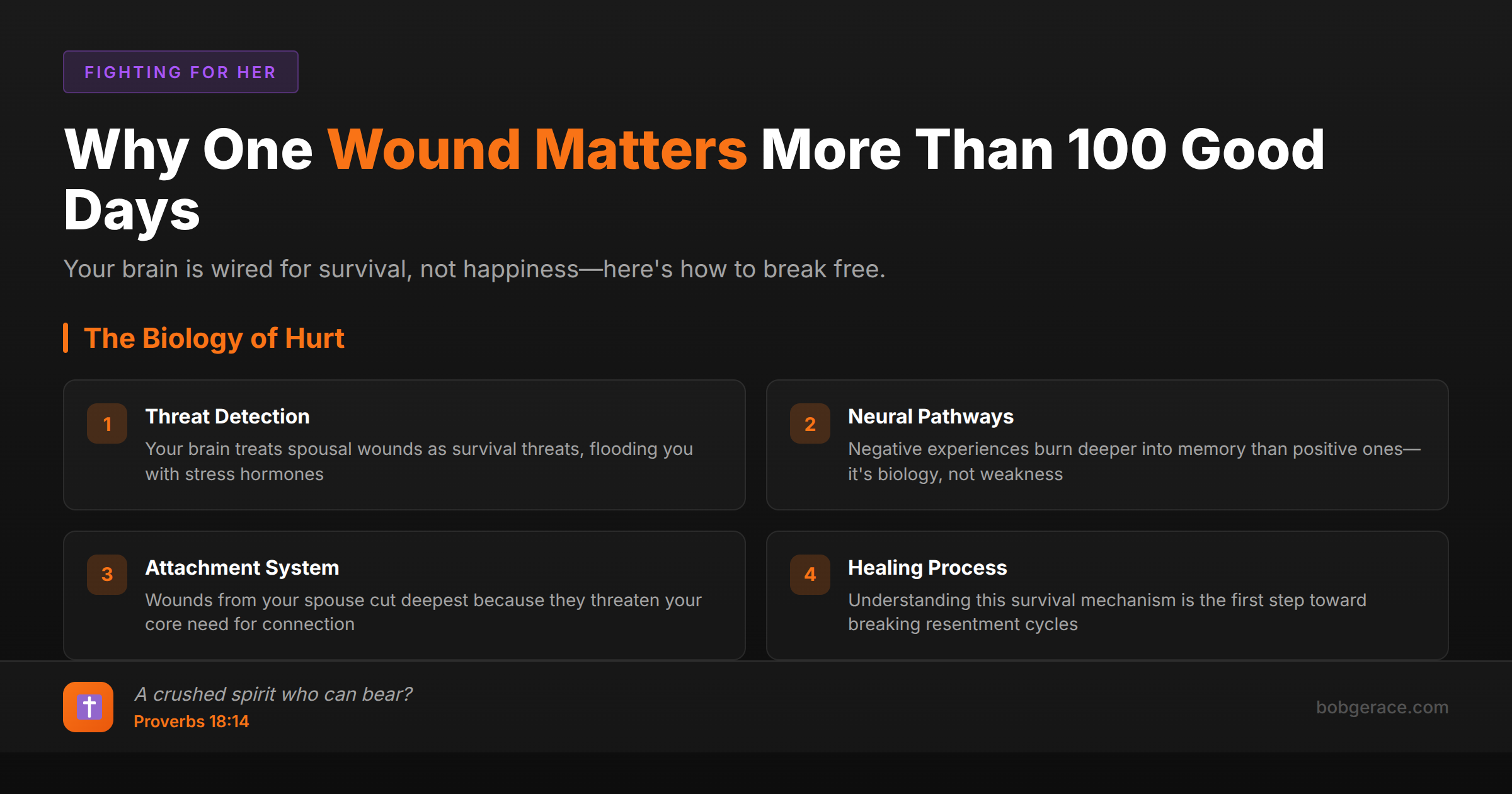
One wound matters more than a hundred good days because our brains are wired for survival, not happiness. Negative experiences trigger our threat detection system, creating deeper neural pathways than positive ones. When you're hurt by your spouse, your attachment system perceives it as a survival threat, flooding your body with stress hormones and burning the memory deeper into your mind. This isn't weakness—it's biology. Your brain is designed to remember dangers to protect you from future harm. The problem is that this survival mechanism, which kept our ancestors alive, now keeps marriages stuck in cycles of resentment and emotional distance. Understanding this biological reality is the first step toward healing.
The Full Picture
Here's what's really happening when one bad moment overshadows months of good ones: your nervous system is doing exactly what it was designed to do.
Research shows that negative events are processed by the brain five times more intensely than positive ones. This is called the "negativity bias," and it exists because throughout human history, missing a threat could mean death, while missing a good thing just meant a missed opportunity.
In marriage, this creates a devastating dynamic. Your spouse can be loving, attentive, and kind for weeks, but one harsh word or moment of rejection can wipe out all that goodness in your mind. It's not fair, but it's how we're wired.
The attachment factor makes it worse. When someone you depend on for emotional safety hurts you, it triggers ancient survival mechanisms. Your brain interprets spousal rejection not as a momentary conflict, but as a threat to your very survival. This is why arguments with your spouse feel so much more intense than disagreements with friends or coworkers.
The wound gets encoded with stress hormones like cortisol and adrenaline, making it stick in your memory like emotional superglue. Meanwhile, those hundred good days? They get filed away as "background normal"—pleasant but not urgent enough for your survival-focused brain to prioritize.
This is why logic doesn't work. You can't think your way out of feeling wounded because the wound isn't stored in the logical part of your brain. It's stored in the emotional, survival-focused areas that don't care about fairness or rationality.
The good news? Once you understand this pattern, you can begin to interrupt it.
What's Really Happening
From a clinical perspective, this phenomenon involves multiple neurobiological systems working simultaneously. The amygdala, our brain's alarm system, becomes hypervigilant after attachment injuries, scanning for similar threats. This creates what we call "negative sentiment override"—a state where even neutral or positive behaviors from your spouse get filtered through a lens of suspicion and hurt.
The hippocampus, responsible for memory formation, works differently under stress. Traumatic memories get fragmented and stored without proper context, which is why a small trigger can bring back the full emotional intensity of the original wound. Your body literally re-experiences the threat as if it's happening right now.
What's particularly challenging in marriage is that attachment wounds create a biochemical addiction to the very stress they produce. Your nervous system becomes conditioned to expect hurt from the person you love most, creating a hypervigilant state that makes new wounds more likely and healing more difficult.
The neural pathways formed by repeated hurt become like superhighways in your brain, while positive experiences create smaller, less traveled roads. This is why changing these patterns requires intentional, consistent work—you're literally rewiring decades of neural conditioning.
Healing begins when both partners understand that these reactions aren't character flaws but normal responses to feeling unsafe in the relationship. With proper intervention, you can create new neural pathways that prioritize connection over protection, but it requires patience, understanding, and often professional guidance to navigate successfully.
What Scripture Says
Scripture acknowledges the reality of wounds while calling us to a higher way of processing them. Proverbs 18:14 says, "A man's spirit sustains him in sickness, but a crushed spirit who can bear?" God understands that relational wounds cut deepest because they strike at our core need for connection.
Proverbs 12:18 reminds us, "Reckless words pierce like a sword, but the tongue of the wise brings healing." This verse recognizes that words have the power to wound deeply, but also that healing is possible through wisdom and intentional action.
Yet Scripture calls us beyond our natural responses. 1 Peter 4:8 instructs, "Above all, love each other deeply, because love covers over a multitude of sins." This doesn't mean ignoring wounds, but choosing love as the framework for addressing them. Deep love—not surface pleasantness—has the power to cover and heal.
Ephesians 4:31-32 provides the pathway forward: "Get rid of all bitterness, rage and anger, brawling and slander, along with every form of malice. Be kind and compassionate to one another, forgiving each other, just as in Christ God forgave you." Notice it doesn't say wounds don't matter—it says don't let them turn into bitterness.
Isaiah 53:5 reveals God's heart for healing: "By his wounds we are healed." God doesn't minimize our wounds but //blog.bobgerace.com/christian-marriage-leadership-transforms/:transforms them into sources of healing and wisdom. In marriage, your wounds can become doorways to deeper intimacy when handled with grace and truth.
The goal isn't to pretend wounds don't hurt, but to process them in ways that lead to healing rather than hardening of the heart.
What To Do Right Now
-
1
Acknowledge the wound without shame - tell yourself "My reaction makes biological sense" instead of "I'm being too sensitive"
-
2
Create safety before trying to process - both partners need to feel emotionally safe before healing can begin
-
3
Name the specific injury - vague hurt stays stuck, but specific wounds can be addressed and healed
-
4
Share your story without blame - explain the impact without attacking your spouse's character or motives
-
5
Ask for what you need to heal - be specific about actions that would help you feel safe and valued again
-
6
Practice intentional gratitude daily - actively look for and verbalize positive things to rewire your brain's default settings
Related Questions
- What are 'attachment injuries' and how many did I cause?
- How does unaddressed hurt compound?
- What is 'accumulated resentment'?
- What happens when small wounds never heal?
- What is 'marital debt' and how do I pay it down?
- Why does she remember everything I forgot?
- What is 'negative sentiment override' and does she have it?
- What are 'failed bids for connection' and how many did I miss?
- What is 'attachment injury' and did I cause one?
- Why does one event seem to define our whole marriage to her?
Also find Bob on
Subscribe for weekly videos on Christian marriage.
Your Marriage Isn't a Generic Case Study
Bob works with guys whose specific wounds—and specific wives—don't fit a template. If you're tired of guessing what will actually land with her, bring your story to a coach who gets it.
Talk to Bob →