Was she 'protest behavior' cheating or checked-out cheating?
6 min read
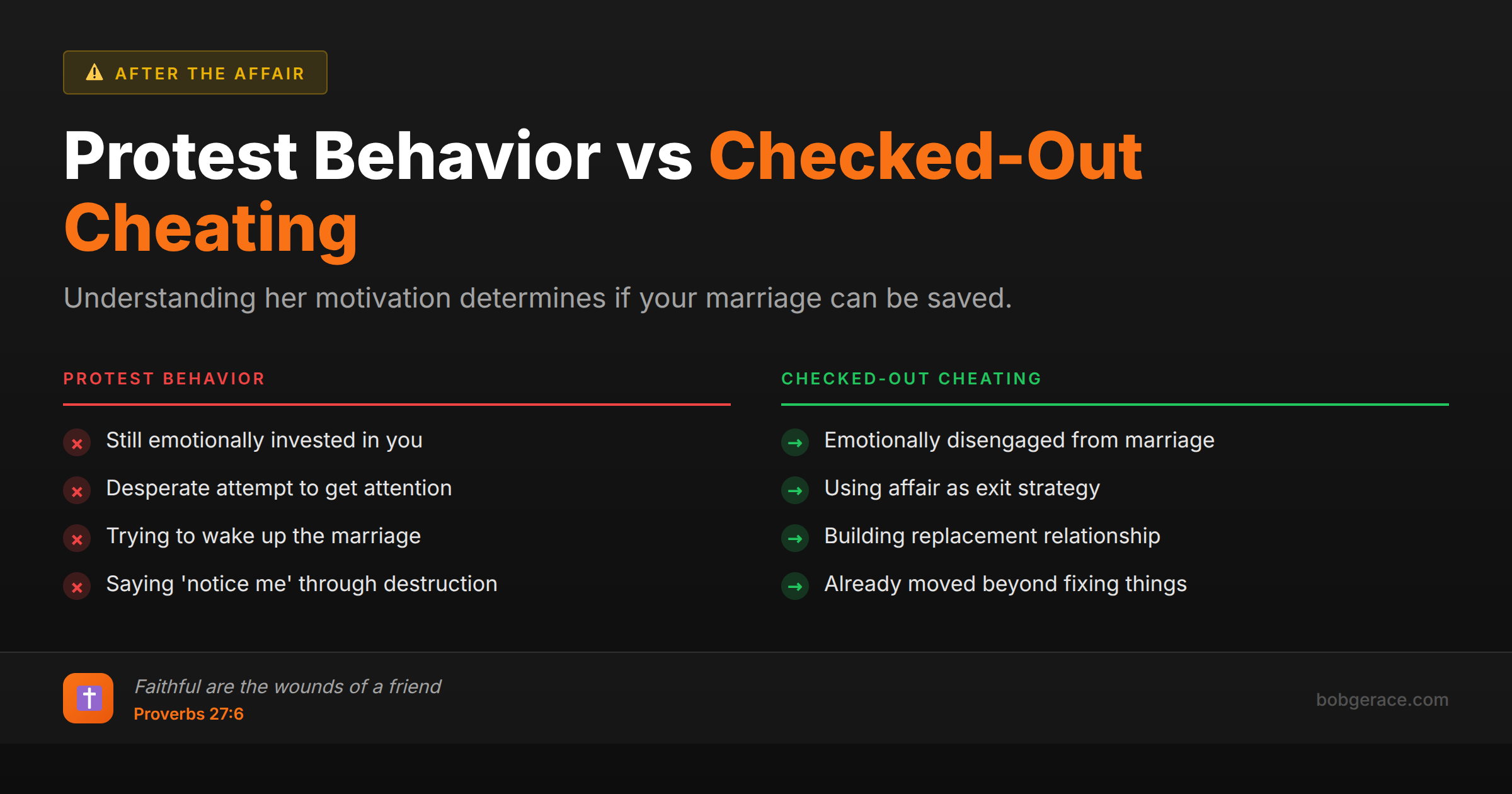
The difference between protest behavior and checked-out cheating lies in emotional investment and intent. Protest behavior affairs happen when your wife is still emotionally invested in the marriage but feels unheard, disconnected, or neglected. The affair becomes a desperate attempt to get your attention or express pain she can't communicate otherwise. She's essentially saying 'notice me' through destructive behavior. Checked-out cheating occurs when she's emotionally disengaged from the marriage and pursuing the affair as an exit strategy or replacement relationship. She's moved beyond trying to fix things and is actively building a new life. Understanding which type you're dealing with determines your approach and realistic expectations for restoration.
The Full Picture
Protest behavior affairs are cries for connection. Your wife may have tried expressing her needs through conversations, arguments, or withdrawal, but felt consistently misunderstood or dismissed. The affair becomes her nuclear option - a devastating way to communicate that the marriage is in crisis. She's still fighting FOR the relationship, even though she's fighting dirty.
Signs of protest behavior include: - Guilt and remorse about the affair - Inconsistent behavior - pulling away then reaching back toward you - Anger mixed with hurt rather than cold indifference - History of trying to address marriage problems before the affair - Quick escalation from emotional to physical involvement
Checked-out affairs are exits from connection. She's emotionally divorced herself from the marriage and is building toward a new life. This often happens after years of feeling unheard or after multiple failed attempts to reconnect. The affair isn't about getting your attention - it's about replacing you.
Signs of checked-out behavior include: - Calm detachment about the affair and marriage - Future planning with the affair partner - No interest in marriage counseling or working on issues - Practical preparations like separate finances or living arrangements - Relief rather than guilt about the affair being discovered
The distinction matters because your response strategy must match her emotional state. Protest behavior affairs can often be redirected toward healing if you address the underlying disconnection. Checked-out affairs require accepting that she may be done fighting for the marriage, though restoration is still possible with God's intervention.
What's Really Happening
From an attachment perspective, these represent two different relationship strategies under stress. Protest behavior affairs typically come from anxious attachment activation - she's using the affair as an extreme form of proximity-seeking behavior. The betrayal creates crisis, which paradoxically brings you closer through intensive focus on the relationship.
Checked-out affairs reflect attachment deactivation strategies. She's emotionally self-protecting by investing elsewhere and reducing dependence on the primary relationship. This often follows a pattern where anxious protests were consistently unmet, leading to defensive detachment.
The neurobiological difference is significant. Protest behavior involves high emotional arousal - stress hormones, fight-or-flight activation, and emotional dysregulation. You'll see tears, anger, and intense reactions. Checked-out behavior shows emotional numbing - she's activating self-protective neural pathways that reduce emotional pain by reducing emotional //blog.bobgerace.com/christian-marriage-investment-defense-protect-growth/:investment.
Understanding her attachment state helps predict outcomes. Protest behavior suggests the attachment bond is wounded but still active - there's emotional energy to work with. Checked-out behavior indicates potential attachment injury or exhaustion - the bond may need complete rebuilding rather than repair.
This doesn't excuse the betrayal, but it informs your response. Protest behavior often responds to consistent emotional attunement and addressing underlying relationship dynamics. Checked-out behavior may require accepting her autonomy while demonstrating authentic personal change without expectation of immediate reciprocation.
What Scripture Says
Scripture acknowledges that people express pain in destructive ways when they feel unheard or abandoned. Proverbs 27:6 reminds us that *'Faithful are the wounds of a friend, but deceitful are the kisses of an enemy.'* Sometimes protest behavior is a wounded attempt at faithfulness - trying to wake up a marriage through painful means.
However, God calls us to address relationship problems through direct communication and love. Matthew 18:15 instructs *'If your brother sins against you, go and tell him his fault, between you and him alone.'* Protest behavior affairs violate this principle by involving a third party instead of direct confrontation.
For checked-out situations, Scripture warns against hardened hearts. Hebrews 3:15 says *'Today, if you hear his voice, do not harden your hearts as in the rebellion.'* When someone becomes emotionally detached, they've often protected themselves by shutting down their ability to receive love or correction.
Ezekiel 36:26 offers hope: *'I will give you a new heart and put a new spirit in you; I will remove from you your heart of stone and give you a heart of flesh.'* God can soften hardened hearts and restore emotional capacity for connection.
1 Corinthians 13:7 defines love as bearing *'all things, believes all things, hopes all things, endures all things.'* Whether facing protest behavior or checked-out affairs, your response should demonstrate Christ-like love that doesn't enable sin but doesn't give up on redemption.
Remember Romans 2:4 - *'God's kindness is meant to lead you to repentance.'* Your consistent, faithful love may be the kindness God uses to draw her heart back toward the marriage and toward Him.
What To Do Right Now
-
1
Stop analyzing and start observing - Document her actual words and behaviors rather than interpreting motivations
-
2
Address the betrayal directly - Set clear boundaries about the affair regardless of her motivations
-
3
Get professional help - A qualified therapist can help you accurately assess the situation and your options
-
4
Focus on your own healing - Begin individual counseling to process the trauma and develop healthy responses
-
5
Create space for clarity - Avoid pursuing or pressuring her while you both process what's happening
-
6
Pray for wisdom and discernment - Ask God to reveal truth about the situation and guide your decisions
Related Questions
- Why did she cheat?
- What is 'attachment affair' vs. 'exit affair'?
- What attachment needs was the affair meeting?
- What does affair as 'attachment substitute' mean?
- Why do some people seek connection outside when it's available inside?
- What is 'anxious-avoidant trap' and did we have it?
- What is 'emotional disengagement'?
- Is her shutdown protective or permanent?
- What is 'deactivation' and did I cause it?
- What is anxious attachment and am I doing it right now?
Also find Bob on
Subscribe for weekly videos on Christian marriage.
Get a Coach on This Today
The difference between protest and checked-out matters in your marriage, not just theory. A coach who knows your story can tell you what you're actually dealing with and what to do next.
Talk to Bob →