What role did our relationship problems play?
6 min read
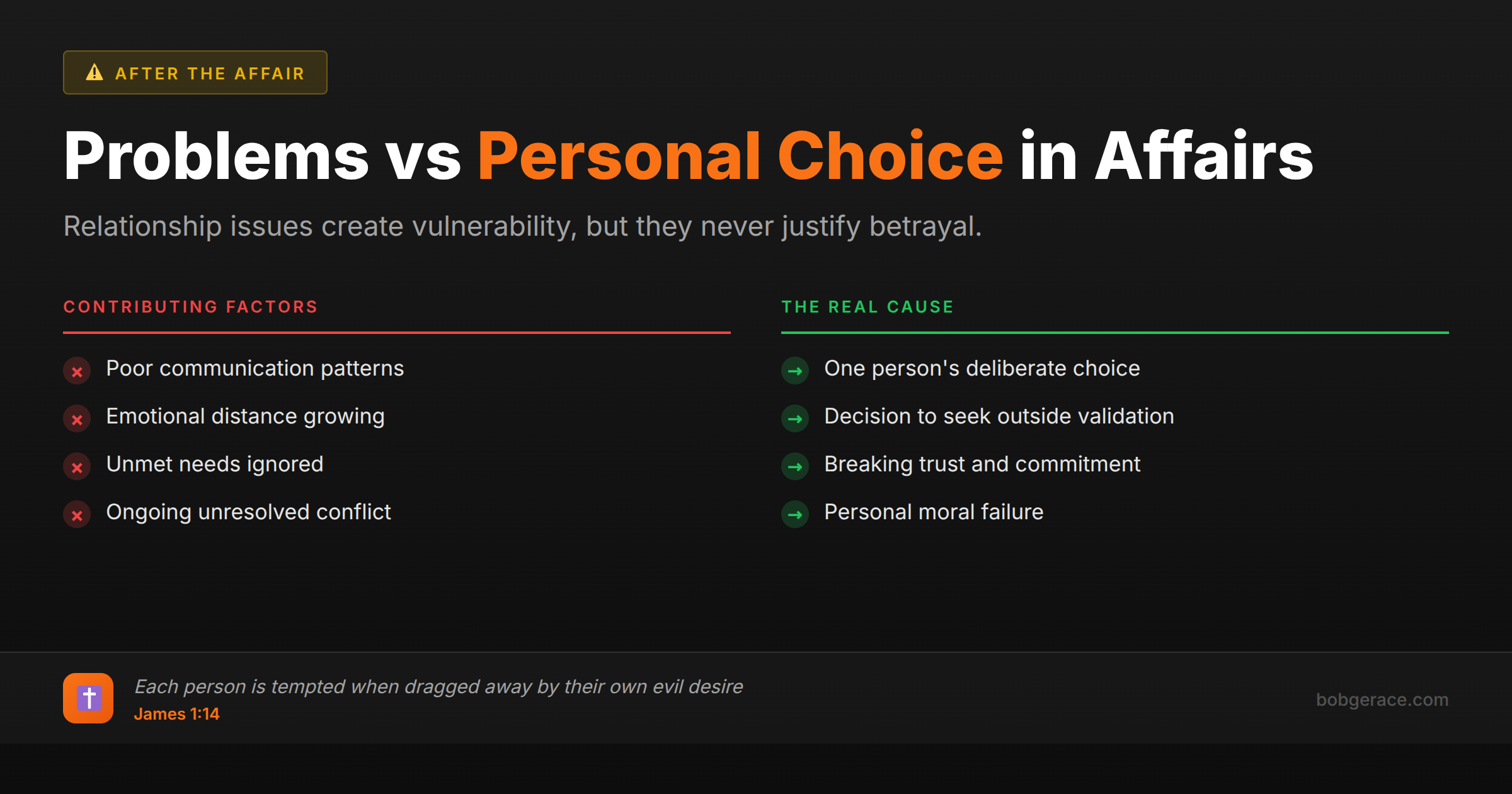
Relationship problems often create vulnerabilities that make affairs more likely, but they never justify infidelity. Research shows that marriages with unresolved issues like poor communication, emotional distance, unmet needs, or ongoing conflict create environments where one or both spouses become susceptible to outside attention and validation. However, it's crucial to understand that relationship problems are contributing factors, not causes. Millions of couples face similar challenges without choosing infidelity. The affair was still a choice made by one person, regardless of the marriage's condition. While examining relationship dynamics is essential for healing and preventing future betrayals, it must be done without shifting blame from the unfaithful spouse to the marriage itself.
The Full Picture
The relationship between marital problems and affairs is complex and often misunderstood. Research consistently shows that certain relationship dynamics increase vulnerability to infidelity, but these factors never excuse the choice to betray marriage vows.
Common relationship vulnerabilities include:
- Emotional disconnection - When spouses feel more like roommates than lovers - Communication breakdown - Inability to discuss needs, feelings, or conflicts constructively - Unresolved resentment - Accumulated hurts that create distance and defensiveness - Unmet emotional or physical needs - Feeling unseen, unappreciated, or sexually disconnected - Life stress and transitions - Career changes, parenting challenges, or major life events - Different growth trajectories - When spouses develop in different directions without staying connected
These issues create what researchers call "opportunity structures" - situations where someone becomes more open to connection outside the marriage. However, facing these same challenges, many couples choose to work together rather than seek fulfillment elsewhere.
The critical distinction is this: Relationship problems may explain why someone became vulnerable, but they don't explain why they chose betrayal over honesty, counseling, or even separation. The affair represents a failure of character and commitment, not just a response to marital dissatisfaction.
Understanding this balance is essential for recovery. Acknowledging relationship issues helps prevent future problems and creates a stronger marriage, but it must be done without minimizing the betrayal or shifting responsibility away from the unfaithful spouse.
What's Really Happening
In my practice, I see couples struggle with what I call the "explanation trap" - the belief that understanding why the affair happened will somehow make it hurt less or provide closure. While understanding contributing factors is important for healing, it's crucial to maintain proper perspective.
Neurologically, affairs often begin when someone's attachment system becomes activated by relationship distress. When we feel disconnected from our primary attachment figure (our spouse), our brains naturally scan for alternative sources of security and validation. This is a normal human //blog.bobgerace.com/theater-response-christian-marriage-crisis-communication/:response to relationship threats.
However, the transition from feeling vulnerable to acting on that vulnerability involves multiple choice points where the unfaithful spouse could have chosen differently. They could have communicated their needs, sought counseling, or addressed problems directly rather than seeking connection outside the marriage.
What I observe clinically is that affairs rarely solve the underlying relationship problems that contributed to the vulnerability. Instead, they typically intensify those problems while creating new trauma. The unfaithful spouse often discovers that their needs still aren't met in the affair relationship either, because external relationships cannot fix internal or relational deficits.
For healing to occur, both spouses need to understand their respective roles: the betrayed spouse in examining relationship dynamics without self-blame, and the unfaithful spouse in taking full responsibility while also committing to address the underlying issues that created vulnerability. This balanced approach creates the foundation for genuine recovery and a stronger marriage.
What Scripture Says
Scripture provides clear guidance on both personal responsibility and the importance of addressing relationship issues within marriage. The Bible never justifies sin based on circumstances, but it does call us to examine our hearts and relationships honestly.
Personal Responsibility: "Each person is tempted when they are dragged away by their own evil desire and enticed. Then, after desire has conceived, it gives birth to sin" (James 1:14-15). This passage makes clear that sin originates from internal choices, not external circumstances.
Marriage as Partnership: "Do not deprive each other except perhaps by mutual consent and for a time, so that you may devote yourselves to prayer. Then come together again so that Satan will not tempt you because of your lack of self-control" (1 Corinthians 7:5). Paul acknowledges that unmet needs within marriage can create temptation, emphasizing the importance of mutual care.
Addressing Problems Directly: "If your brother or sister sins, go and point out their fault, just between the two of you" (Matthew 18:15). Jesus commands direct communication about problems rather than seeking solutions outside the relationship.
Forgiveness and Restoration: "Be kind and compassionate to one another, forgiving each other, just as in Christ God forgave you" (Ephesians 4:32). While sin must be acknowledged and consequences faced, the ultimate goal is restoration.
Growth Through Trials: "Consider it pure joy, my brothers and sisters, whenever you face trials of many kinds, because you know that the testing of your faith produces perseverance" (James 1:2-3). God intends for relationship challenges to strengthen us, not destroy our commitments.
Scripture calls us to examine our marriages honestly while maintaining clear moral boundaries. Problems are opportunities for growth, not justifications for betrayal.
What To Do Right Now
-
1
Write down the relationship issues you both recognize existed before the affair, without using them to minimize the betrayal
-
2
Distinguish between contributing factors (relationship problems) and the actual cause (choice to betray)
-
3
Have the unfaithful spouse take full responsibility for the affair regardless of relationship issues
-
4
Identify specific relationship patterns that need to change to prevent future vulnerability
-
5
Commit to addressing underlying issues through counseling or structured communication
-
6
Create new systems for discussing needs and problems before they create dangerous vulnerabilities
Related Questions
Ready to Address the Real Issues?
Understanding how relationship problems contribute to affairs is just the beginning. Get the guidance you need to rebuild on a stronger foundation.
Get Help →