Do I need to know all the details?
6 min read
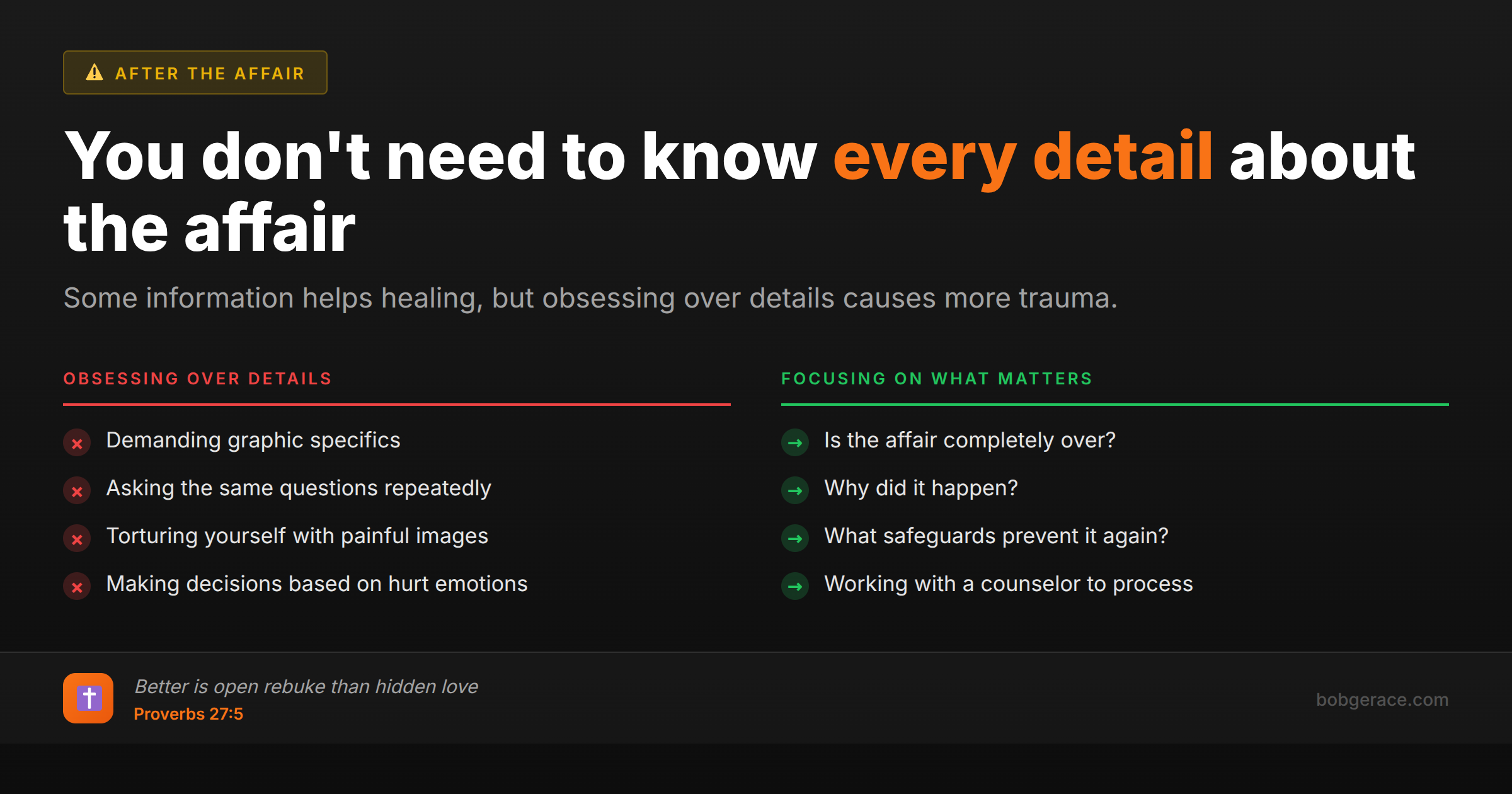
No, you don't need to know every single detail about your spouse's affair. While some information is necessary for healing and rebuilding trust, obsessing over graphic details often causes more trauma without adding value to recovery. Focus on getting answers to questions that help you understand what happened, why it happened, and what your spouse is doing to ensure it never happens again. The goal isn't to torture yourself with painful specifics, but to gather enough information to make informed decisions about your marriage's future. Work with a qualified counselor to determine which details serve your healing process and which ones only deepen your wounds.
The Full Picture
When you discover your spouse has had an affair, your mind immediately starts racing with questions. What exactly happened? When? Where? How many times? What did they do together? This tsunami of questions is completely normal - your brain is trying to make sense of something that has shattered your understanding of your marriage and your spouse.
But here's what I've learned after years of helping couples recover from affairs: there's a crucial difference between information that helps you heal and information that traumatizes you further. Some details are necessary for genuine recovery. Others are like drinking poison and expecting the other person to die.
The details you typically need to know include: - The timeline of the affair - Whether it was emotional, physical, or both - If it's completely over - How your spouse plans to ensure it never happens again - Any potential health risks you need to address - Whether other people knew about it
The details that usually don't help include: - Graphic descriptions of physical encounters - Specific things they said to each other - Comparisons between you and the other person - Play-by-play accounts of their meetings
Here's the hard truth: your spouse's affair isn't really about the other person - it's about the condition of your marriage and your spouse's character. Getting lost in the salacious details often prevents you from addressing the real issues that need to be fixed. Focus on understanding the 'why' behind the betrayal rather than torturing yourself with the 'how' of every encounter.
What's Really Happening
From a trauma recovery perspective, the betrayed spouse's desire to know details represents their brain's attempt to regain control and make sense of the betrayal. This is called 'hypervigilance' - a survival mechanism that keeps you alert to potential threats. However, excessive detail-seeking can actually reinforce trauma symptoms rather than resolve them.
Research shows that betrayed spouses who focus on gathering graphic details often experience more severe PTSD symptoms, including intrusive thoughts, nightmares, and emotional flooding. The brain creates vivid mental movies from these details that replay involuntarily, causing re-traumatization.
What's therapeutically helpful is what we call 'disclosure with boundaries.' This involves getting enough information to assess safety, make informed decisions, and understand patterns, while avoiding details that serve no constructive purpose. The key is distinguishing between your need to know and your trauma response driving compulsive questioning.
Effective affair recovery focuses on three critical areas: understanding the vulnerabilities that led to the affair, rebuilding emotional safety in the relationship, and developing new patterns of transparency and accountability. Obsessing over //blog.bobgerace.com/sacred-sexuality-christian-marriage-resurrect-bedroom/:sexual details rarely contributes to any of these healing objectives and often derails the recovery process entirely.
What Scripture Says
Scripture provides clear guidance on how to approach the painful process of addressing betrayal in marriage. Ephesians 4:25 tells us to "speak truthfully to your neighbor, for we are all members of one body." This means your spouse has an obligation to be honest with you - but it doesn't mean you need to know every sordid detail.
Proverbs 27:5-6 says, "Better is open rebuke than hidden love. Wounds from a friend can be trusted, but an enemy multiplies kisses." Sometimes the most loving thing is honest disclosure, even when it hurts. But wisdom must guide what level of detail serves restoration versus what feeds destructive obsession.
1 Corinthians 13:5 reminds us that love "keeps no record of wrongs." This doesn't mean you ignore betrayal or avoid accountability, but it does mean that cataloging every painful detail can work against the forgiveness process that's essential for healing. Philippians 4:8 instructs us to focus our minds on things that are "true, noble, right, pure, lovely, admirable." Obsessing over graphic details of betrayal rarely fits these criteria.
The goal isn't to bury your head in the sand, but to pursue truth in a way that serves redemption. Matthew 18:15-17 gives us a framework for addressing sin that focuses on restoration, not retribution. Seek the truth you need to rebuild trust and make wise decisions, but don't let the enemy use your spouse's sin to torment your mind with unnecessary details.
What To Do Right Now
-
1
Write down your questions and categorize them: 'Need to know' vs. 'Want to know' vs. 'Obsessing over'
-
2
Focus first on practical questions: Is it over? Are there health risks? Do others know?
-
3
Set boundaries on detail discussions - limit them to specific times, not all day every day
-
4
Ask your spouse to write a timeline of the affair without graphic details
-
5
Work with a qualified counselor to process information in a healthy way
-
6
Practice thought-stopping techniques when your mind obsesses over unnecessary details
Related Questions
- What does research say about disclosure?
- What's the right amount of detail to know?
- What is 'staggered disclosure' and why is it harmful?
- How do I stop the mental movies?
- What is 'mind movies' and how do I stop them?
- How do I deal with intrusive images?
- What is he doing with his coach?
- What should he be learning?
- How do I know if he's really changing?
- What are markers of genuine remorse vs. guilt?
Also find Bob on
Subscribe for weekly videos on Christian marriage.
Get a Coach Who Knows Your Story
The question isn't just what to ask—it's what YOUR marriage needs right now. A coach who hears your specific situation can help you focus on what actually moves you forward.
Talk to Bob →