What if the pain keeps coming back?
6 min read
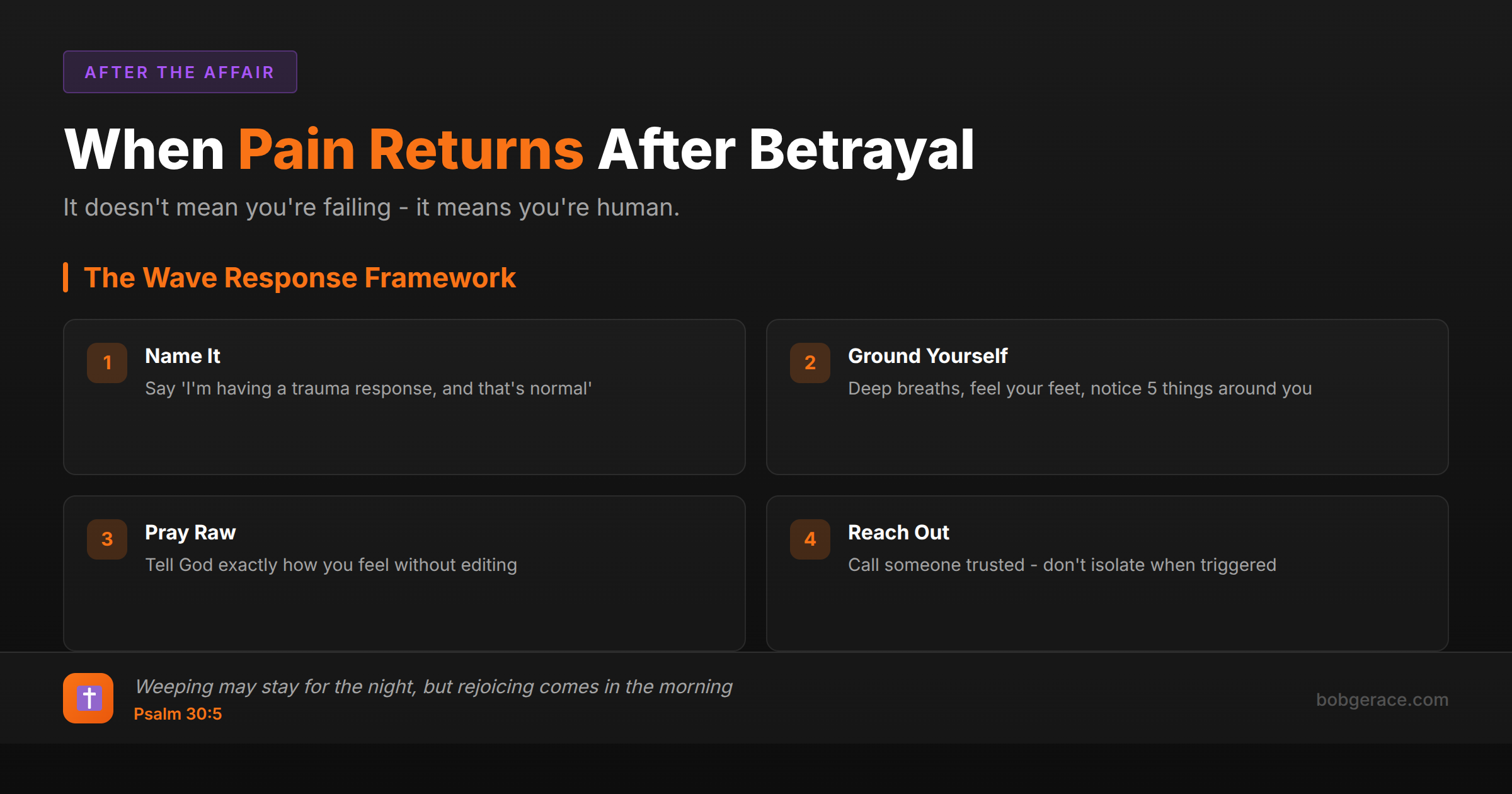
Pain that returns after betrayal doesn't mean you're failing at forgiveness or healing. It means you're human. Trauma creates neural pathways that can trigger emotional responses long after the initial wound. This is normal and expected - not a sign of weakness or spiritual failure. The key is learning to ride these waves rather than fight them. When pain resurfaces, acknowledge it without judgment, process it through healthy outlets like prayer or counseling, and remember that each wave typically gets smaller and less frequent over time. Your job isn't to eliminate all pain immediately, but to respond to it in ways that promote healing rather than deeper wounding.
The Full Picture
Let me be crystal clear: recurring pain doesn't mean you're doing forgiveness wrong. It means you're dealing with real trauma, and trauma has a way of announcing itself when we least expect it.
Think of it like this - when you break a bone, it heals, but changes in weather can still make it ache years later. Emotional wounds work similarly. The initial break heals, but certain triggers can bring back echoes of that original pain.
Here's what's actually happening in your brain: trauma creates strong neural pathways. When something reminds you of the betrayal - a song, a place, even a similar situation - your brain can fire along those same pathways, recreating the emotional experience. This isn't your fault, and it doesn't mean you haven't forgiven.
The difference between being stuck and healing isn't the absence of pain - it's how you respond to pain when it shows up. Are you spiraling into bitterness and revenge fantasies? Or are you acknowledging the hurt while choosing to continue moving forward?
I've seen couples get discouraged when pain resurfaces months or even years later, thinking they've somehow failed. But recurring pain often signals that you're actually processing deeper layers of the wound. It's like peeling an onion - each layer brings fresh tears, but you're getting closer to the core.
The goal isn't to become emotionally numb. It's to develop the skills to navigate these difficult moments without letting them derail your progress or your marriage.
What's Really Happening
From a clinical perspective, what you're experiencing is completely normal trauma processing. The brain doesn't heal from betrayal trauma in a linear fashion - it happens in waves, cycles, and sometimes unexpected surges.
When we experience betrayal, our nervous system goes into survival mode. Even after we've cognitively processed the event and chosen to forgive, our autonomic nervous system can still react to perceived threats. This is why you might feel suddenly anxious, angry, or hurt when triggered by something that reminds you of the betrayal.
This phenomenon is called 'trauma activation' or 'emotional flooding.' Your amygdala, the brain's alarm system, recognizes a pattern similar to the original threat and floods your system with stress hormones. It's not responding to the current moment - it's responding to the memory.
The good news is that each time you respond to these activations in healthy ways - through grounding techniques, self-compassion, or reaching out for support - you're literally rewiring your brain. You're creating new neural pathways that say 'I can handle this' instead of 'I'm in danger.'
//blog.bobgerace.com/christian-marriage-trust-rebuilding-evidence-recovery/:Recovery isn't about eliminating triggers or never feeling pain again. It's about building resilience and developing the capacity to move through difficult emotions without being controlled by them. This process takes time, patience, and often professional support, but it is absolutely possible.
What Scripture Says
Scripture doesn't promise that forgiveness eliminates all pain. In fact, it acknowledges that healing is often a process that requires endurance and faith.
Psalm 30:5 reminds us: *"Weeping may stay for the night, but rejoicing comes in the morning."* This verse acknowledges that sorrow has its season, but it doesn't last forever. Your pain has purpose, and it will give way to joy.
2 Corinthians 1:3-4 shows us God's heart for our suffering: *"Praise be to the God and Father of our Lord Jesus Christ, the Father of compassion and the God of all comfort, who comforts us in all our troubles, so that we can comfort those in any trouble with the comfort we ourselves receive from God."* Your pain isn't wasted - it's being transformed into compassion.
Isaiah 43:2 provides powerful reassurance: *"When you pass through the waters, I will be with you; and when you pass through the rivers, they will not sweep over you."* Notice it says "when you pass through" - not "if." God expects us to go through difficult waters, but promises to be with us.
Romans 8:28 offers hope in the process: *"And we know that in all things God works for the good of those who love him."* This doesn't mean all things are good, but that God can work through all things - including recurring pain - for our ultimate good.
Philippians 1:6 encourages patience with the process: *"He who began a good work in you will carry it on to completion."* God isn't finished with your healing yet. Trust the process.
What To Do Right Now
-
1
Name it without shame - When pain resurfaces, say out loud: 'I'm having a trauma response, and that's normal.'
-
2
Ground yourself physically - Take deep breaths, feel your feet on the floor, notice five things you can see around you.
-
3
Pray through it - Tell God exactly how you're feeling without editing. He can handle your raw emotions.
-
4
Reach out for support - Call a trusted friend, counselor, or mentor. Don't isolate when you're triggered.
-
5
Journal the pattern - Write down what triggered the pain to help identify and prepare for future situations.
-
6
Remind yourself of progress - List three ways you've grown since the initial betrayal, even if you don't feel it right now.
Related Questions
- How long does recovery take?
- Will I ever get over this?
- How do I deal with intrusive images?
- When do triggers decrease in intensity?
- What does full recovery actually look like?
- How do I know if I've actually forgiven?
- What is 'post-traumatic growth'?
- How do I regulate my own system?
- What does trauma recovery look like?
- What if I say I've forgiven but still bring it up?
Also find Bob on
Subscribe for weekly videos on Christian marriage.
You Don't Have to Keep Guessing
A coach who knows your marriage can help you tell the difference between a normal wave and a pattern that needs attention. You don't have to ride this out alone.
Talk to Bob →