What does forgiveness look like day to day?
6 min read
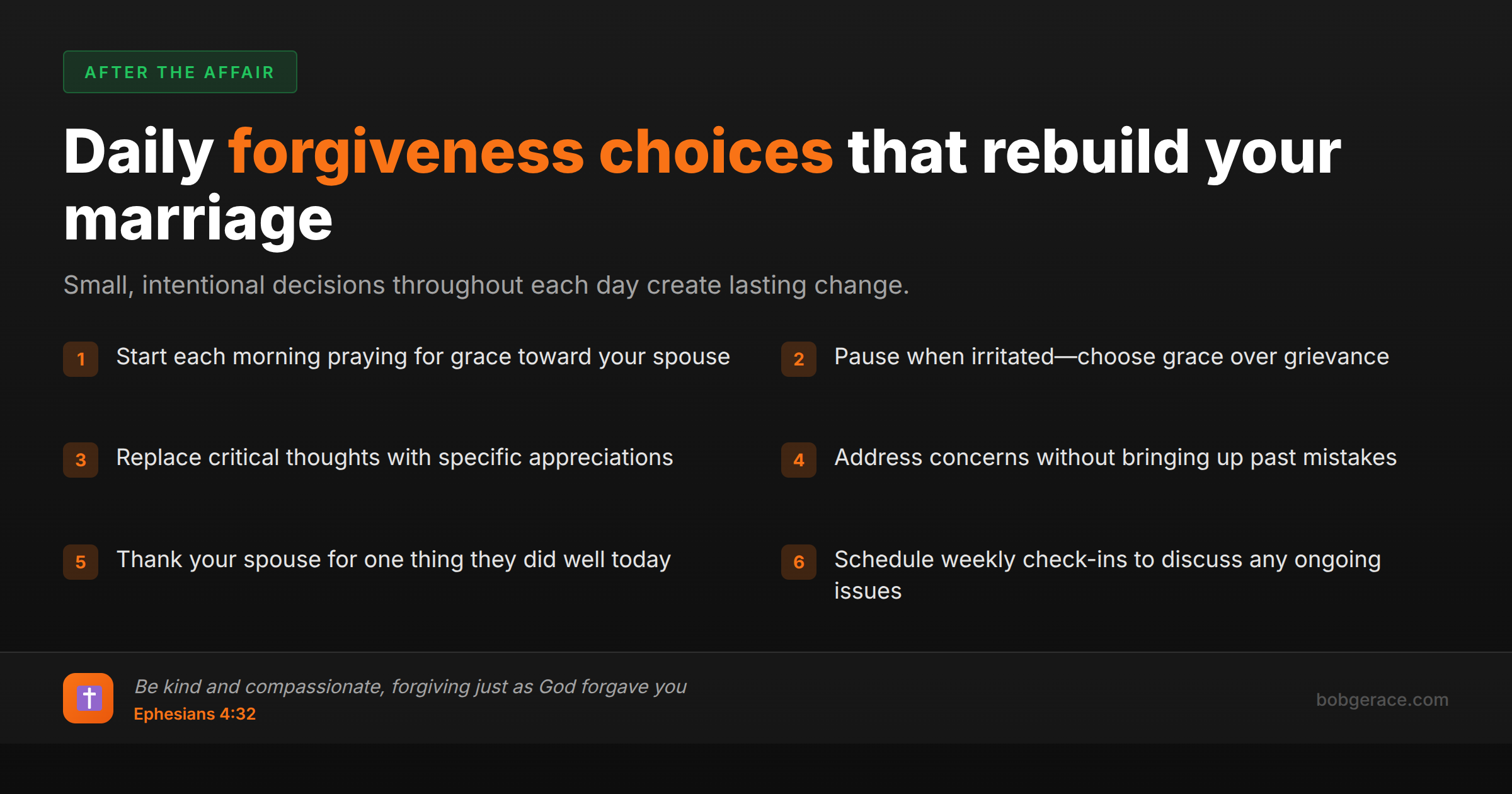
Daily forgiveness in marriage isn't a one-time event—it's a series of small, intentional choices throughout each day. It looks like choosing not to bring up past hurts during current disagreements, speaking kindly when your spouse makes mistakes, and actively working to rebuild trust through consistent actions. Practical forgiveness means replacing resentful thoughts with prayers for your spouse, choosing to see their efforts rather than focusing on their failures, and communicating about issues without attacking their character. It's about creating new patterns of grace while still maintaining healthy boundaries and working toward genuine restoration.
The Full Picture
Forgiveness in marriage is one of the most misunderstood concepts in Christian relationships. Many couples think forgiveness means pretending nothing happened or immediately returning to business as usual. But real forgiveness—the kind that actually heals marriages—is both more complex and more practical than that.
Daily forgiveness operates on multiple levels simultaneously. There's the heart level, where you're actively releasing resentment and choosing love. There's the mind level, where you're changing thought patterns and choosing to focus on your spouse's efforts rather than their failures. And there's the action level, where you're rebuilding trust through consistent, loving behavior.
The truth is, most marriage conflicts require ongoing forgiveness, not just a one-time decision. When your spouse leaves dishes in the sink again, interrupts you during conversation, or handles money differently than you'd prefer, you have a choice: harbor irritation or extend grace. These small daily choices either build intimacy or create distance.
Real forgiveness also includes wisdom about boundaries. Forgiving doesn't mean accepting harmful behavior or pretending serious issues don't exist. It means addressing problems from a place of love rather than revenge, seeking restoration rather than punishment. This requires discernment about when to speak up, when to let things go, and when to seek additional help.
The goal isn't perfection—it's progress. You're building new habits of grace while working together to address the root issues that create ongoing conflict.
What's Really Happening
From a therapeutic perspective, daily forgiveness is actually a neurological retraining process. When we hold onto resentment, our brains create neural pathways that make it easier to access angry feelings and defensive responses. Every time we choose forgiveness instead, we're literally rewiring our brains for healthier relationship patterns.
The research on forgiveness is compelling. Studies consistently show that couples who practice daily forgiveness have lower cortisol levels, better immune function, and significantly higher relationship satisfaction. But here's what's crucial: forgiveness works best when it's paired with accountability and behavioral change.
I often see couples get stuck in two extremes. Some practice 'cheap forgiveness'—they say the words but never address underlying issues, //blog.bobgerace.com/financial-leadership-christian-marriage-stop-money-wars/:leading to repeated cycles of hurt. Others get trapped in 'conditional forgiveness'—they withhold grace until their spouse proves they've changed, which creates emotional distance and resentment.
Healthy daily forgiveness involves both emotional release and practical boundaries. You're choosing to let go of yesterday's hurts while also working together on tomorrow's solutions. This might mean forgiving your spouse for being late while also having a conversation about better time management. It's grace plus wisdom.
The most successful couples I work with develop what I call 'forgiveness rituals'—small daily practices like brief check-ins, gratitude sharing, or simple affirmations that help them stay connected and address issues before they become major conflicts.
What Scripture Says
Scripture gives us both the motivation and the practical framework for daily forgiveness in marriage. Ephesians 4:32 tells us to "be kind and compassionate to one another, forgiving each other, just as in Christ God forgave you." This isn't just about big betrayals—it's about daily kindness and ongoing grace.
Colossians 3:13 provides the practical application: "Bear with each other and forgive one another if any of you has a grievance against someone. Forgive as the Lord forgave you." The phrase "bear with each other" suggests ongoing patience with your spouse's imperfections and growth process.
Matthew 18:21-22 addresses the frequency of forgiveness when Peter asks if forgiving seven times is enough, and Jesus responds "seventy-seven times"—essentially meaning without limit. In marriage, this translates to extending grace for the same issues repeatedly while your spouse works on change.
1 Corinthians 13:5 reminds us that love "keeps no record of wrongs." This doesn't mean ignoring patterns or avoiding necessary conversations, but rather not using past mistakes as weapons in current conflicts. You're choosing to see your spouse's current efforts rather than their historical failures.
Proverbs 19:11 teaches that "a person's wisdom yields patience; it is to one's glory to overlook an offense." This gives us permission to let minor irritations go while addressing major issues directly.
Matthew 6:14-15 connects our forgiveness of others to God's forgiveness of us, making daily grace a spiritual discipline that deepens our relationship with both our spouse and our Savior.
What To Do Right Now
-
1
Start each morning with a brief prayer asking God to help you extend grace to your spouse that day
-
2
When irritation rises, pause and ask yourself: 'Is this worth addressing or can I choose grace?'
-
3
Replace critical thoughts about your spouse with specific things you appreciate about them
-
4
Address legitimate concerns without bringing up past mistakes or attacking character
-
5
End each day by thanking your spouse for one specific thing they did well
-
6
Schedule weekly check-ins to discuss any ongoing issues that need attention and prayer
Related Questions
Need Help Building Forgiveness Patterns?
Learning to forgive daily while addressing real issues takes practice and often benefits from guidance. Let's work together to build healthier patterns.
Get Support →