She hasn't repented — do I still forgive?
6 min read
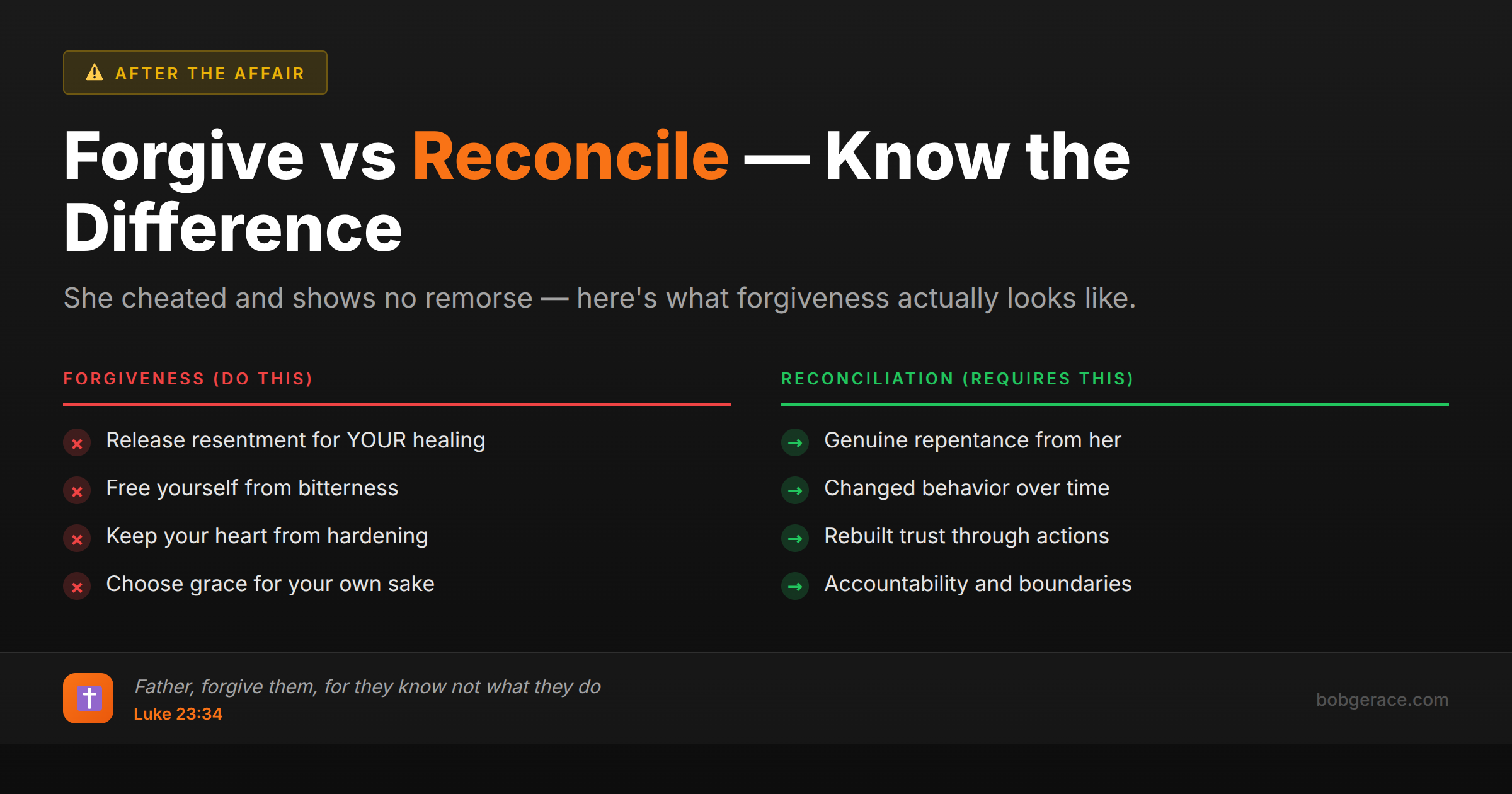
Yes, you should forgive — but forgiveness doesn't mean reconciliation or removing consequences. Forgiveness is primarily for your own spiritual and emotional health, releasing the bitterness that will destroy you from within. However, biblical forgiveness without repentance looks different than restoration with a repentant spouse. Forgive to free yourself from resentment, but maintain appropriate boundaries to protect yourself and your marriage. True reconciliation requires genuine repentance, changed behavior, and rebuilt trust. You can have a forgiving heart while still requiring accountability and safety measures. Don't confuse forgiveness with foolishness or enabling continued harmful behavior.
The Full Picture
This is one of the most misunderstood aspects of Christian marriage. Too many spouses think forgiveness means immediately returning to business as usual — but that's neither biblical nor wise.
Forgiveness without repentance is unilateral. It's something you do for your own spiritual health, regardless of your spouse's response. It releases you from the poison of bitterness and resentment that will eat you alive if you hold onto it. This type of forgiveness says, "I choose not to harbor hatred toward you, and I release my right to personal revenge."
But reconciliation requires repentance. There's a crucial difference between forgiving someone and trusting them again. Reconciliation involves restoration of relationship, which requires acknowledgment of wrong, genuine remorse, and demonstrated change over time.
You can forgive and still maintain boundaries. In fact, loving boundaries often create the space needed for genuine repentance to occur. When you remove natural consequences too quickly, you may actually enable continued destructive behavior.
Consider the progression: forgiveness → repentance → rebuilding trust → full reconciliation. You can't skip steps without creating an unstable foundation. Your spouse needs to experience the weight of their choices to motivate real change.
This isn't about punishment — it's about wisdom. You're called to be "wise as serpents and gentle as doves." Forgiveness demonstrates the gentleness; boundaries demonstrate the wisdom. Both are necessary for true restoration.
What's Really Happening
From a psychological perspective, premature reconciliation without genuine repentance often creates what we call "pseudo-recovery" — the appearance of healing without addressing root issues. This typically leads to repeated cycles of harm.
Genuine repentance involves specific elements: acknowledgment of the specific harm caused, taking full responsibility without blame-shifting, expressing authentic remorse, making amends where possible, and demonstrating sustained behavioral change. Without these elements, you're likely dealing with shallow remorse or manipulation rather than true repentance.
Forgiveness, however, is primarily about your own psychological and spiritual health. Holding onto resentment creates chronic stress, depression, and can even manifest in physical symptoms. The act of forgiving — releasing the emotional charge around the offense — is healing for you regardless of your spouse's //blog.bobgerace.com/marriage-counseling-divorce-risk-christian-response/:response.
Boundaries after forgiveness serve multiple purposes. They protect you from further harm, demonstrate self-respect, and create appropriate consequences that can motivate genuine change. They also prevent you from becoming an "enabler" of destructive patterns.
The key is distinguishing between forgiveness (internal) and reconciliation (relational). You can have a forgiving heart while maintaining protective boundaries. This isn't contradiction — it's wisdom.
What Scripture Says
Scripture gives us clear guidance on both forgiveness and reconciliation, showing they're related but distinct processes.
Jesus modeled unilateral forgiveness: "Father, forgive them, for they know not what they do" (Luke 23:34). He forgave those actively crucifying Him, without waiting for their repentance. This demonstrates our call to release bitterness regardless of others' responses.
But Jesus also taught conditional reconciliation: "If your brother sins against you, go and tell him his fault, between you and him alone. If he listens to you, you have gained your brother" (Matthew 18:15). The process continues with increasing accountability if there's no repentance.
Repentance is required for full restoration: "If your brother sins, rebuke him, and if he repents, forgive him" (Luke 17:3). The word "if" indicates that repentance is the condition for relational restoration.
Wisdom requires discernment: "Do not give dogs what is sacred; do not throw your pearls to pigs" (Matthew 7:6). This isn't about being judgmental — it's about being wise with what's precious to you.
Love includes boundaries: "Above all else, guard your heart, for everything you do flows from it" (Proverbs 4:23). Protecting your heart isn't selfish — it's necessary for long-term love.
Trust must be rebuilt: "By their fruit you will recognize them" (Matthew 7:16). Changed behavior over time is the evidence of genuine repentance.
What To Do Right Now
-
1
Release the resentment — Choose to forgive for your own spiritual and emotional health, not because she deserves it
-
2
Maintain wise boundaries — Protect yourself from continued harm while keeping your heart open to future restoration
-
3
Communicate your requirements — Clearly express what genuine repentance and rebuilding trust would look like
-
4
Seek support — Get guidance from a pastor, counselor, or trusted mentor who understands both grace and wisdom
-
5
Focus on your own growth — Work on becoming the spouse God calls you to be, regardless of her response
-
6
Pray for her heart — Ask God to work in her life while trusting Him with the timeline and outcome
Related Questions
- What does biblical forgiveness require of me?
- Can I forgive without trusting?
- What's the difference between forgiveness and reconciliation?
- How do I forgive when she hasn't fully repented?
- Does forgiveness mean no consequences?
- What does forgiveness require from the offender?
- What boundaries should I set?
- What's the difference between boundary and ultimatum?
- When does grace become enabling sin?
- What does loving confrontation look like biblically?
Also find Bob on
Subscribe for weekly videos on Christian marriage.
This balance is hard to hold alone
A coach who knows your marriage can help you forgive without being foolish — and set boundaries that protect you without becoming bitter.
Talk to Bob →