How many times do I forgive?
6 min read
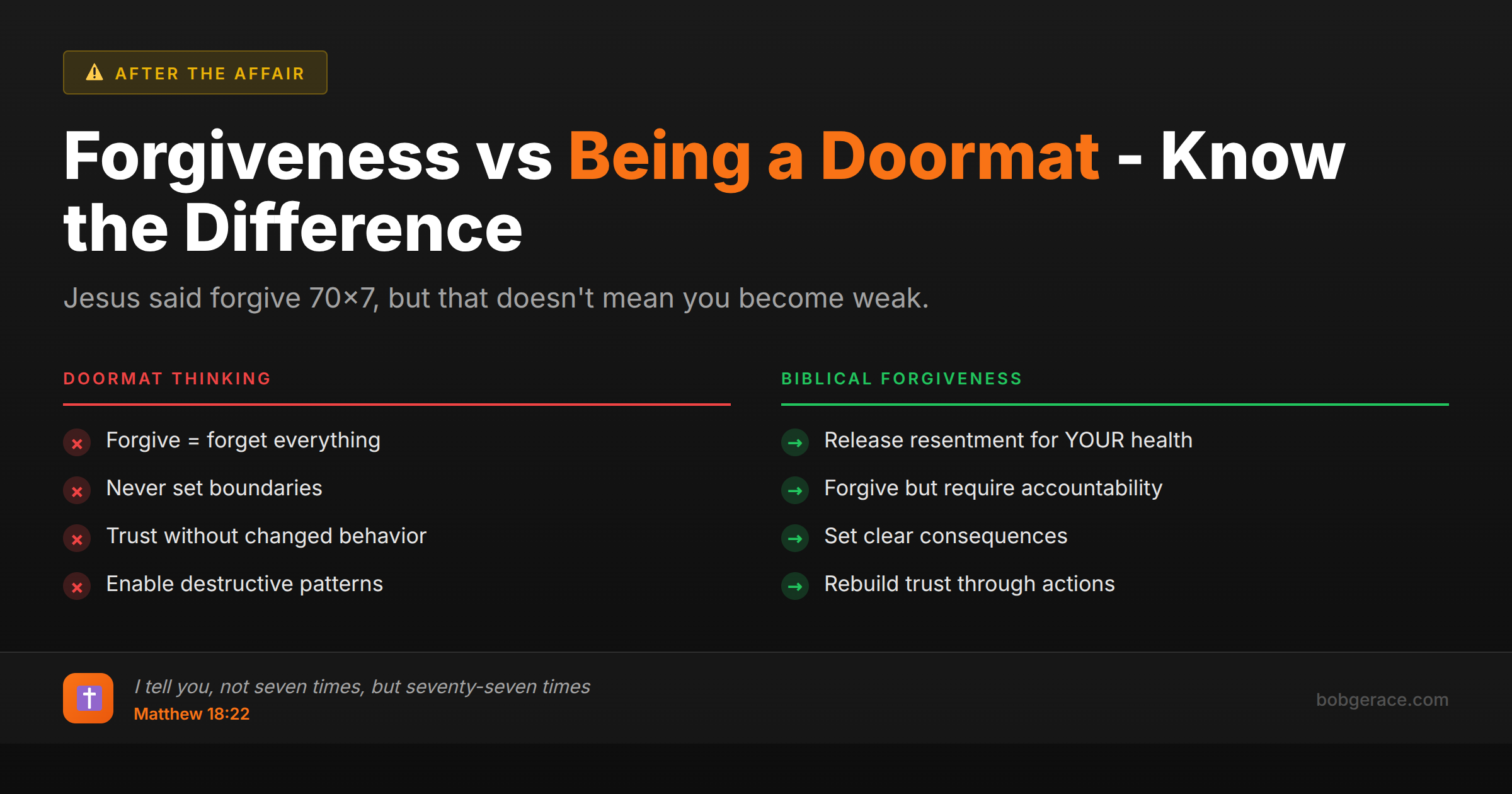
Jesus answered this exact question when Peter asked if seven times was enough. Christ's response of "seventy times seven" wasn't about keeping count—it was about limitless forgiveness. But here's what many miss: forgiveness doesn't mean becoming a doormat or enabling destructive behavior. Forgiveness is about releasing resentment for your own spiritual and emotional health. It's a decision, not a feeling. However, reconciliation—rebuilding trust and relationship—requires genuine repentance, changed behavior, and often time. You can forgive infinitely while still maintaining healthy boundaries and requiring accountability from your spouse.
The Full Picture
The question "how many times do I forgive?" usually comes from a place of exhaustion. You've been hurt repeatedly, you've tried to do the right thing, and you're wondering if there's a limit to what God expects from you.
Let's be clear: forgiveness is unlimited, but foolishness isn't required. When Jesus said "seventy times seven," He was teaching us that forgiveness has no expiration date or numerical limit. But He never said to ignore patterns of destructive behavior or to remove all consequences.
## The Difference Between Forgiveness and Reconciliation
This distinction is crucial for your marriage's health:
Forgiveness is: - A personal decision to release resentment - For your own spiritual and emotional freedom - Immediate and unconditional - About the past offense
Reconciliation is: - A mutual process requiring two people - Built on repentance and changed behavior - Gradual and conditional on trustworthiness - About the future relationship
You can forgive someone who shows no remorse, but you cannot reconcile with someone who refuses to change. Attempting to do so often enables continued hurt and prevents real healing.
## When Forgiveness Gets Complicated
Some situations require wisdom beyond simple forgiveness: - Patterns of abuse (emotional, physical, or spiritual) - Unrepentant adultery with ongoing deception - Addiction that's destroying the family - Financial betrayal that continues
In these cases, forgiveness protects your heart from bitterness, but boundaries protect your life from further damage.
What's Really Happening
From a therapeutic perspective, the struggle with "how many times" often indicates trauma bonding or codependency patterns. When someone repeatedly hurts us, our brain creates stress responses that can actually become addictive cycles.
The Forgiveness Trap occurs when: - You forgive quickly to avoid conflict - You confuse forgiveness with trust restoration - You use forgiveness to bypass necessary grief - You forgive without requiring accountability
Healthy forgiveness involves processing the emotional impact of betrayal, not just spiritually "letting go." Research shows that premature forgiveness—before processing hurt—often leads to suppressed anger, depression, and repeated victimization.
Neurologically, repeated betrayals create hypervigilance in the brain. Your nervous system remains in "threat detection" mode, making genuine intimacy difficult. True healing requires both forgiveness AND safety.
The most psychologically healthy approach combines //blog.bobgerace.com/emotional-regulation-christian-marriage-biology-betrayal/:unlimited forgiveness/what-does-seventy-times-seven-mean) with appropriate boundaries. This means: - Forgiving to free yourself from resentment - Requiring changed behavior before rebuilding trust - Allowing natural consequences for harmful actions - Seeking professional help for complex trauma
Remember: forgiveness without wisdom often enables the very behavior you're trying to heal from.
What Scripture Says
Scripture is clear about both forgiveness and wisdom in relationships:
On Unlimited Forgiveness: *"Then Peter came to Jesus and asked, 'Lord, how many times shall I forgive my brother or sister who sins against me? Up to seven times?' Jesus answered, 'I tell you, not seven times, but seventy-seven times.'"* - Matthew 18:21-22
*"Be kind and compassionate to one another, forgiving each other, just as in Christ God forgave you."* - Ephesians 4:32
On Wisdom and Boundaries: *"Above all else, guard your heart, for everything you do flows from it."* - Proverbs 4:23
*"If your brother or sister sins, go and point out their fault, just between the two of you. If they listen to you, you have won them over."* - Matthew 18:15
On Repentance and Restoration: *"If your brother or sister sins against you, rebuke them; and if they repent, forgive them. Even if they sin against you seven times in a day and seven times come back to you saying 'I repent,' you must forgive them."* - Luke 17:3-4
*"Godly sorrow brings repentance that leads to salvation and leaves no regret, but worldly sorrow brings death."* - 2 Corinthians 7:10
Notice that Jesus connected forgiveness with repentance in Luke 17. While we're called to have a forgiving heart always, full reconciliation involves genuine repentance and changed behavior.
What To Do Right Now
-
1
Choose to forgive today - Release resentment for your own spiritual freedom, regardless of your spouse's response
-
2
Distinguish forgiveness from trust - Forgive the offense while requiring changed behavior before rebuilding intimacy
-
3
Set clear boundaries - Communicate what behaviors are unacceptable and what consequences will follow
-
4
Seek wise counsel - Get input from mature believers or professional counselors about your specific situation
-
5
Document patterns - Keep record of recurring issues to avoid minimizing serious problems
-
6
Focus on your healing - Work on your own emotional and spiritual health regardless of your spouse's choices
Related Questions
Need Help Navigating Forgiveness?
Struggling with repeated hurt in your marriage? Get personalized guidance on healthy forgiveness and rebuilding trust.
Get Support →