Forgiveness vs. reconciliation — what's the difference?
6 min read
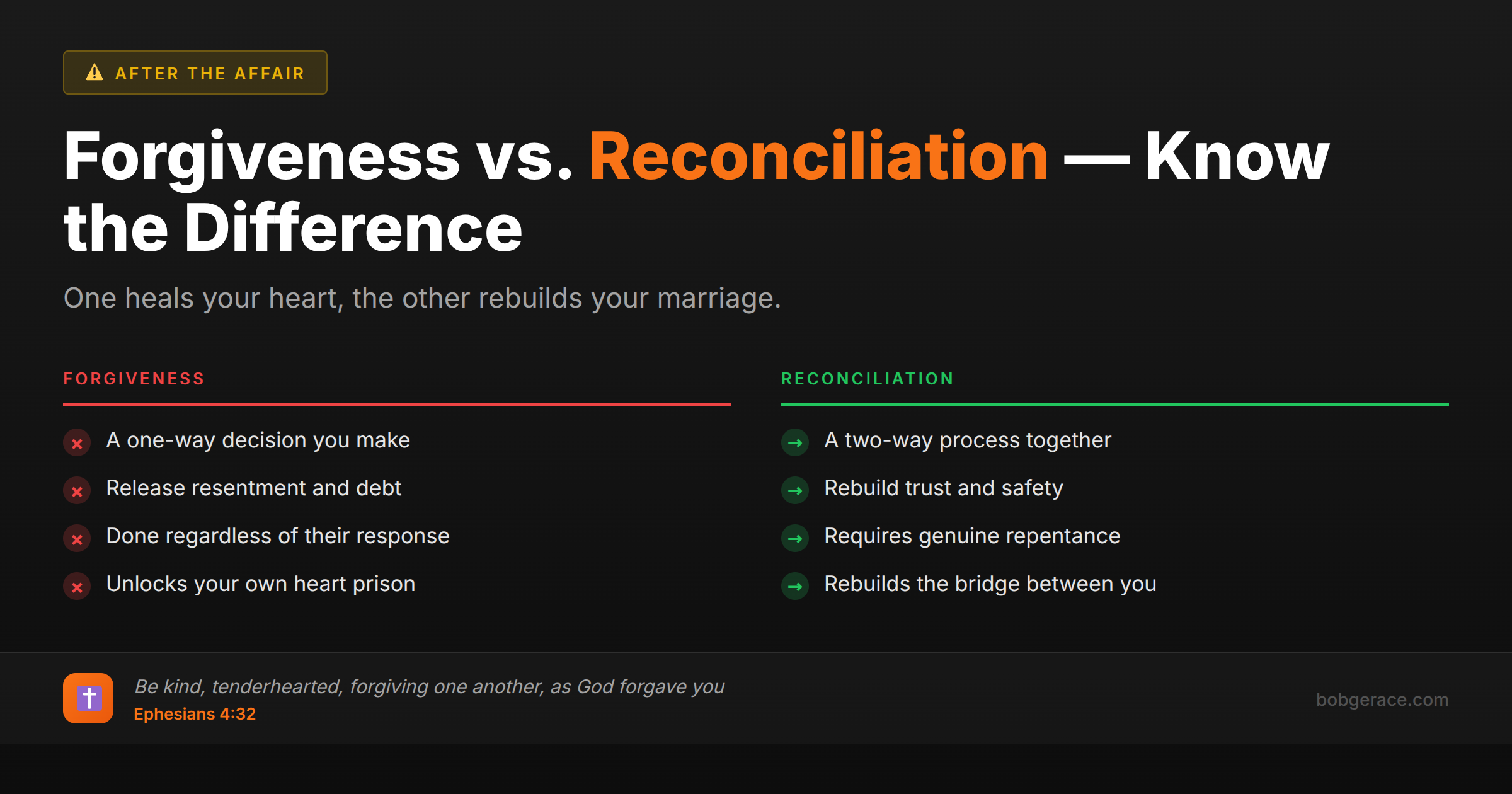
Forgiveness and reconciliation are two distinct but related concepts in marriage healing. Forgiveness is a one-way decision you make to release resentment and cancel the debt your spouse owes you for their wrongdoing. It's something you do regardless of whether they ask for it or change their behavior. Reconciliation, however, is a two-way process that requires both spouses to participate—it involves rebuilding trust, restoring relationship, and creating safety together. Think of forgiveness as unlocking the prison door of your own heart, while reconciliation is rebuilding the bridge between you and your spouse. You can forgive someone who never apologizes or changes, but you cannot reconcile with someone who refuses to acknowledge wrongdoing or demonstrate genuine change. Forgiveness is always required for followers of Christ, but reconciliation requires wisdom, discernment, and often time to rebuild trust safely.
The Full Picture
Here's what many couples get wrong: they think forgiveness and reconciliation are the same thing, or that one automatically leads to the other. This confusion causes tremendous pain in marriages.
Forgiveness is unilateral. It's a decision you make in your heart to release the right to punish, seek revenge, or hold the offense against your spouse. When you forgive, you're essentially saying, "You don't owe me for what you did." This doesn't mean the action was okay or that there shouldn't be consequences—it means you're choosing to let God handle the justice instead of carrying the burden of resentment.
Reconciliation is bilateral. It requires both people to participate actively. The offending spouse must acknowledge their wrongdoing, show genuine remorse, and demonstrate changed behavior over time. The wounded spouse must be willing to trust again, though this happens gradually as safety is rebuilt.
Here's where it gets practical: You might forgive your spouse for an affair, releasing your bitterness and desire for revenge. But reconciliation would require them to end the affair completely, show genuine remorse, be transparent about their activities, possibly get counseling, and rebuild trust through consistent actions over months or years.
Sometimes couples rush reconciliation without proper repentance and changed behavior. This isn't wise love—it's enabling. Other times, couples withhold forgiveness waiting for reconciliation, which keeps them trapped in bitterness. Both approaches cause unnecessary suffering.
The timeline matters too. Forgiveness can happen relatively quickly (though it's often a process), but reconciliation takes time. Trust is built in drops and lost in buckets. Expecting immediate reconciliation after forgiveness sets everyone up for disappointment and further hurt.
What's Really Happening
From a therapeutic standpoint, the distinction between forgiveness and reconciliation is crucial for healthy recovery after betrayal or significant hurt in marriage. When couples conflate these concepts, they often re-traumatize themselves or enable continued harmful behavior.
Forgiveness is primarily an internal emotional and spiritual process that benefits the forgiver. Research shows that forgiveness reduces cortisol levels, decreases symptoms of PTSD, and improves overall mental health. It's about releasing the emotional grip that resentment has on your nervous system. You can forgive someone and still maintain appropriate boundaries—in fact, healthy forgiveness often requires boundaries.
Reconciliation, however, involves the relational dynamics between two people. It requires what we call 'earned security'—the gradual rebuilding of trust through consistent, trustworthy behavior over time. Attempting reconciliation without //blog.bobgerace.com/christian-marriage-teamwork-stop-fighting-alone/:genuine repentance-for-her/why-didnt-my-past-apologies-work) and behavioral change often leads to what I call 'false reconciliation,' where the surface relationship appears restored but the underlying issues remain unaddressed.
I often see wounded spouses pressure themselves to reconcile quickly, thinking it's the 'Christian' thing to do. This bypasses necessary healing and can actually prevent true intimacy from being restored. Conversely, I see offending spouses demand immediate reconciliation after offering a surface-level apology, not understanding that trust repair is a process, not an event. Both approaches are psychologically and relationally harmful.
What Scripture Says
Scripture is clear that forgiveness is not optional for Christians, but it also provides wisdom about the process of reconciliation.
Forgiveness is commanded: *"Be kind to one another, tenderhearted, forgiving one another, as God in Christ forgave you"* (Ephesians 4:32). This isn't conditional on the other person's response. Jesus forgave those who crucified Him even as they were doing it.
But reconciliation requires repentance: Jesus said, *"If your brother sins against you, go and tell him his fault, between you and him alone. If he listens to you, you have gained your brother"* (Matthew 18:15). Notice the conditional nature—reconciliation happens when someone "listens" and receives correction.
Luke 17:3-4 makes this even clearer: *"Pay attention to yourselves! If your brother sins, rebuke him, and if he repents, forgive him, and if he sins against you seven times in the day, and turns to you seven times, saying, 'I repent,' you must forgive him."* Forgiveness follows repentance in the reconciliation process.
Wisdom is required: *"Be wise as serpents and innocent as doves"* (Matthew 10:16). Love doesn't mean being naive about someone's patterns of behavior. Even God's forgiveness doesn't eliminate natural consequences.
Time and testing matter: *"By their fruits you will know them"* (Matthew 7:16). True repentance shows up in changed behavior over time, not just words.
The Bible never asks us to trust foolishly or put ourselves in harm's way in the name of reconciliation.
What To Do Right Now
-
1
Choose to forgive—release your right to revenge or payment, even if your spouse hasn't asked for forgiveness
-
2
Separate forgiveness from reconciliation in your mind—you can do one without the other
-
3
If your spouse wants reconciliation, look for genuine repentance: acknowledgment of wrongdoing, remorse, and willingness to change
-
4
Set appropriate boundaries while rebuilding trust—reconciliation doesn't mean immediate full access to your heart
-
5
Give reconciliation time—don't rush the process or allow others to pressure you into premature restoration
-
6
Seek wise counsel from mature Christians who understand both grace and wisdom in restoration processes
Related Questions
Need Help Navigating Forgiveness and Reconciliation?
Working through betrayal and rebuilding trust requires wisdom, support, and a clear plan. I can help you navigate this difficult season with both grace and wisdom.
Get Support →