What does God's forgiveness require from us?
6 min read
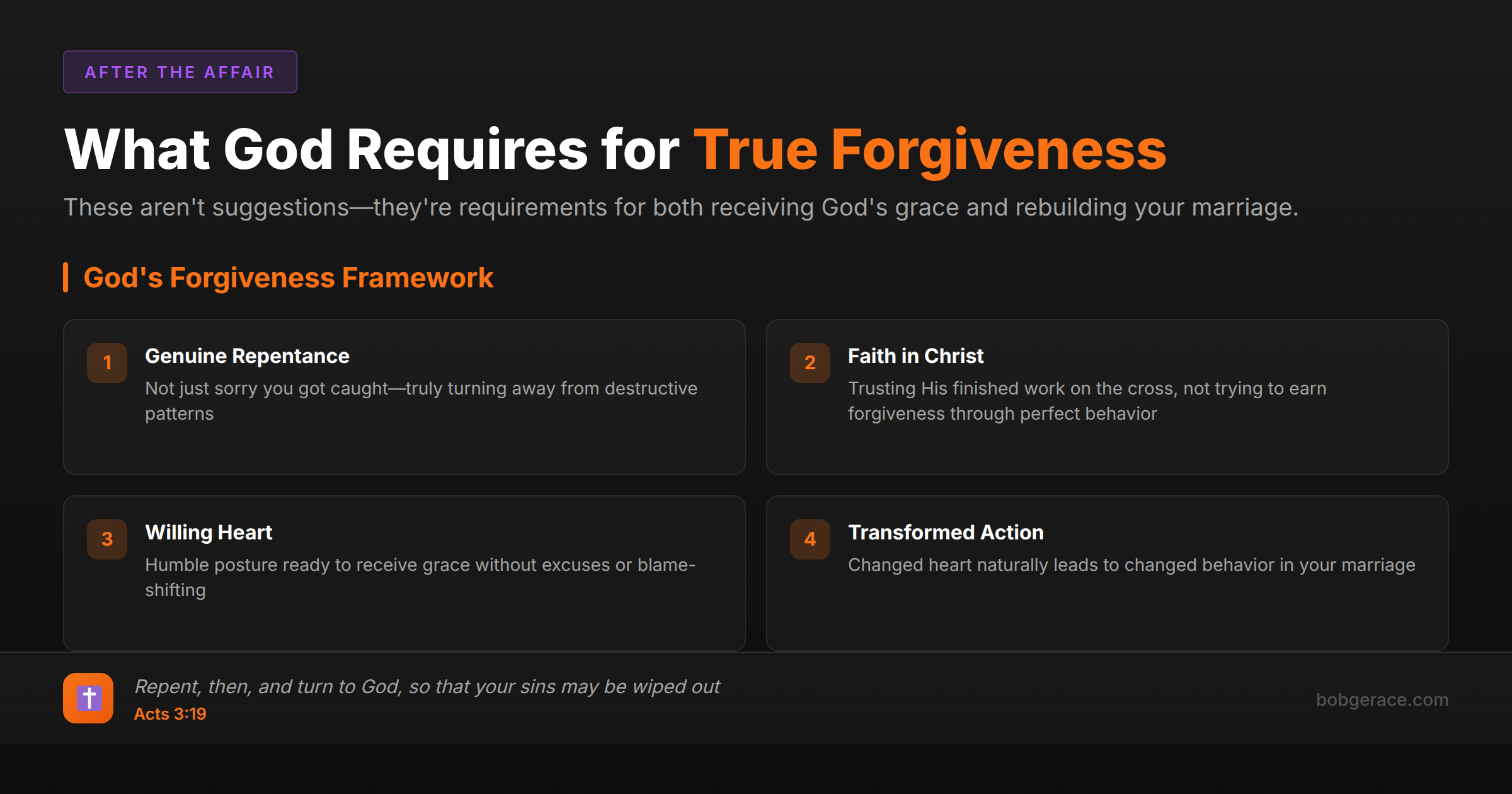
God's forgiveness requires genuine repentance, faith in Jesus Christ, and a heart willing to receive His grace. This isn't about earning forgiveness through good works—it's about acknowledging our sin, turning away from it, and trusting in Christ's finished work on the cross. When we truly repent, we experience a change of heart that naturally leads to transformed behavior. In marriage, understanding God's requirements for forgiveness helps us both receive His grace and extend it to our spouse. The same heart posture that receives God's forgiveness—humility, repentance, and faith—becomes the foundation for healing broken trust and rebuilding intimacy in your relationship.
The Full Picture
God's forgiveness operates on principles that seem counterintuitive to our human nature, yet they're absolutely essential for both our relationship with Him and our marriage. The requirements aren't burdensome religious tasks—they're the natural response of a heart that truly understands the gravity of sin and the magnitude of grace.
Repentance is the starting point. This means more than feeling sorry about consequences; it's a fundamental change of mind and heart about our sin. True repentance involves acknowledging what we've done wrong, taking full responsibility without excuses, and genuinely turning away from that behavior. In marriage, this translates to owning your mistakes completely rather than minimizing them or shifting blame.
Faith in Christ's work is non-negotiable. God's forgiveness isn't based on our ability to make up for our wrongs—it's anchored in Jesus' sacrifice. This faith element is crucial because it keeps us from the exhausting cycle of trying to earn forgiveness through perfect behavior. In your marriage, this same principle applies: healing comes through grace, not through endless penance.
A surrendered heart is what ties it all together. God requires us to come with empty hands, acknowledging our complete dependence on His mercy. This humility opens us to receive not just forgiveness, but transformation. When both spouses approach their relationship with this same heart posture, it creates space for genuine healing and deeper intimacy than ever before.
What's Really Happening
From a psychological standpoint, the //blog.bobgerace.com/marriage-vision-biblical-transformation-frog-king/:biblical requirements for God's forgiveness create the optimal conditions for genuine healing and behavioral change. When we examine repentance clinically, we see it encompasses several therapeutic elements: acknowledgment of harmful behavior, emotional processing of impact, cognitive restructuring of justifications, and commitment to change.
The faith component addresses what we call 'earned security' versus 'grace-based security.' Many people get trapped trying to earn forgiveness through perfect behavior, which creates anxiety and actually inhibits genuine change. Biblical forgiveness breaks this cycle by establishing security first, then allowing authentic transformation to follow.
In marriage therapy, I consistently observe that couples who understand these biblical principles experience deeper healing than those relying solely on behavioral modification. When spouses approach each other with genuine repentance—not just apologizing to stop conflict, but truly owning their impact—it creates psychological safety for the wounded partner.
The surrendered heart aspect is particularly powerful because it dismantles the defensive mechanisms that typically prevent intimacy. When we stop trying to manage others' perceptions and simply take responsibility for our choices, it removes the barriers to authentic connection. This vulnerability, backed by genuine commitment to change, creates the foundation for rebuilding trust and intimacy in ways that purely therapeutic approaches often cannot achieve.
What Scripture Says
Scripture is crystal clear about what God requires for forgiveness, and these principles directly apply to marriage restoration.
Acts 3:19 states, *"Repent, then, and turn to God, so that your sins may be wiped out, that times of refreshing may come from the Lord."* Repentance isn't just feeling bad—it's an active turning away from destructive patterns toward God's design for relationship.
1 John 1:9 promises, *"If we confess our sins, he is faithful and just and will forgive us our sins and purify us from all unrighteousness."* Confession means agreeing with God about the reality and impact of our sin, not minimizing or explaining it away.
Romans 10:9 explains the faith requirement: *"If you declare with your mouth, 'Jesus is Lord,' and believe in your heart that God raised him from the dead, you will be saved."* This isn't just intellectual agreement—it's surrendering control and trusting Christ's work over our own efforts.
James 4:6 reminds us, *"God opposes the proud but shows favor to the humble."* Pride keeps us from receiving both God's forgiveness and our spouse's grace. Humility opens the door to restoration.
Matthew 6:14-15 connects our forgiveness with our willingness to forgive: *"For if you forgive other people when they sin against you, your heavenly Father will also forgive you. But if you do not forgive others their sins, your Father will not forgive your sins."* Receiving God's forgiveness transforms our capacity to extend it to our spouse.
What To Do Right Now
-
1
Examine your heart honestly—are you truly repentant or just sorry you got caught? Ask God to reveal any areas where you're still justifying or minimizing your actions.
-
2
Confess specifically to God, naming your sins without excuses, blame-shifting, or minimizing. Agree with Him about the impact of your choices.
-
3
Trust in Christ's finished work rather than trying to earn forgiveness through perfect behavior. Rest in His grace while committing to genuine change.
-
4
Approach your spouse with the same heart posture—humble, specific confession without defensiveness or demands for immediate forgiveness.
-
5
Demonstrate repentance through consistent changed behavior, not just words. Let your actions prove the genuineness of your heart change.
-
6
Extend the same grace to your spouse that God has shown you, understanding that forgiveness is a process that requires patience and commitment from both partners.
Related Questions
Ready to Apply God's Forgiveness in Your Marriage?
Understanding God's requirements is just the beginning. Let's work together to apply these biblical principles practically in your relationship.
Get Support →