What does Jesus teach about forgiveness?
6 min read
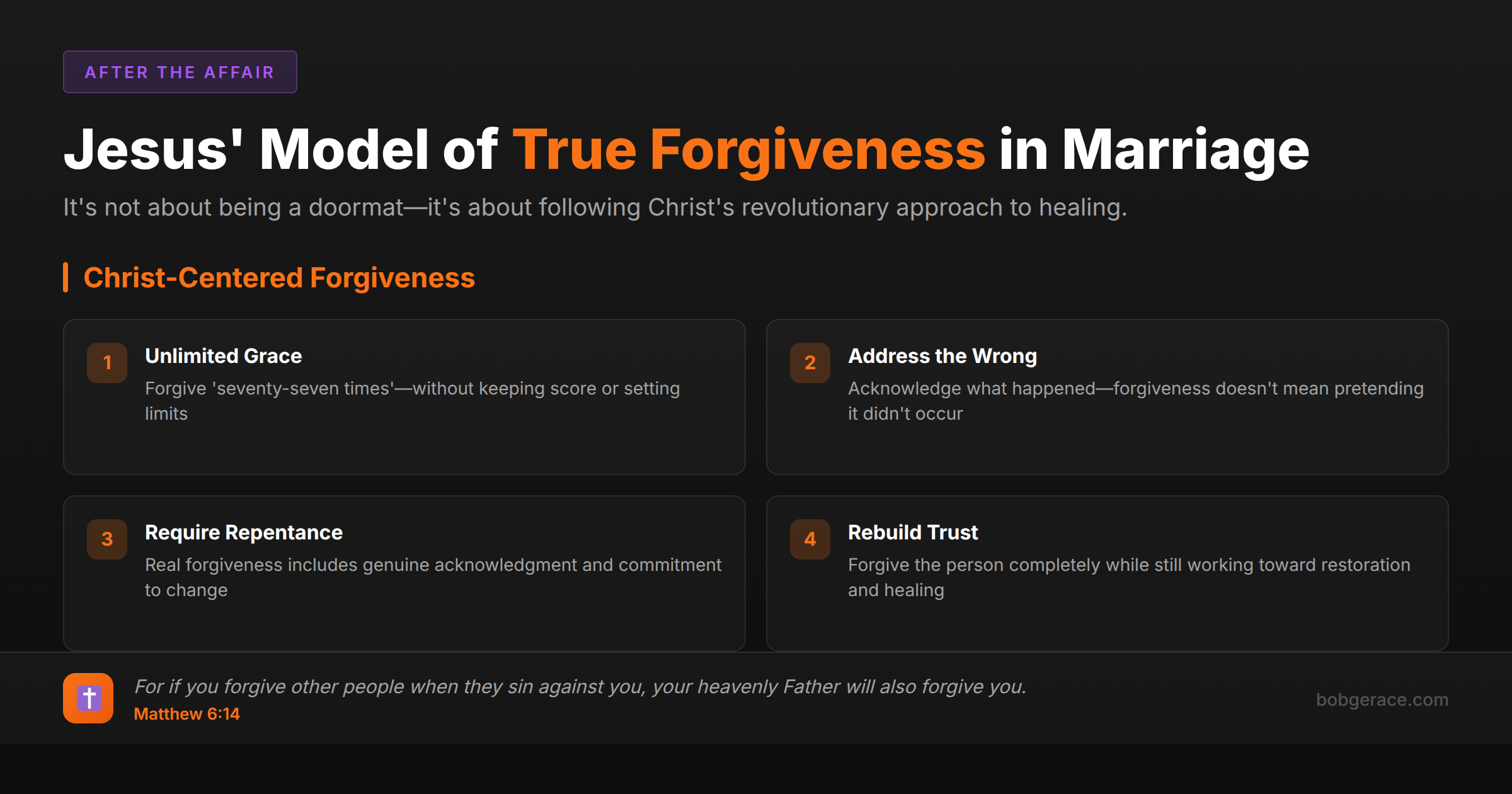
Jesus teaches that forgiveness is not optional—it's the heart of Christian living and essential for healthy marriages. He commands us to forgive "seventy-seven times" (Matthew 18:22), meaning without limit, because we've been forgiven an unpayable debt by God. Jesus makes it clear that our forgiveness of others is directly connected to our relationship with the Father. This isn't about being a doormat or ignoring serious issues. Jesus' model of forgiveness includes acknowledgment of wrong, genuine repentance, and the hard work of rebuilding trust. In marriage, this means we forgive the person while still addressing harmful behaviors and working toward real change and healing.
The Full Picture
Jesus doesn't just suggest forgiveness—He commands it. And for good reason. Unforgiveness is like drinking poison and expecting the other person to die. It destroys you from the inside out, and it will absolutely wreck your marriage if you let it fester.
But here's where people get confused: forgiveness doesn't mean pretending nothing happened. Jesus never modeled that kind of fake peace. When He forgave, He also spoke truth, set boundaries, and expected real change. Look at how He handled the woman caught in adultery—He forgave her AND told her to "go and sin no more."
In marriage, Jesus' approach to forgiveness means you release the debt, but you don't ignore the damage. You work together to rebuild what was broken. This takes time, effort, and often professional help. Forgiveness is the starting point, not the finish line.
The power in Jesus' teaching is this: when you forgive like He forgives, you're free. Free from bitterness. Free from the exhausting burden of keeping score. Free to love fully again. Your spouse benefits, sure, but YOU are the one who gets your life back.
This is especially crucial when you've been deeply hurt. Adultery, addiction, betrayal—these wounds go deep. Jesus knows this. That's why He gives us a process, not just a platitude. Forgiveness opens the door to healing, but healing takes work from both people.
What's Really Happening
From a clinical perspective, Jesus' teachings on forgiveness align perfectly with what we know about emotional and psychological healing. When couples hold onto resentment, their nervous systems remain in a chronic state of threat detection. This makes intimacy and connection nearly impossible.
Forgiveness, as Jesus modeled it, is actually a neurological reset. It doesn't happen overnight—the brain needs time to form new neural pathways and release old patterns of hurt and defensiveness. This is why Jesus emphasized the process nature of forgiveness, not just a one-time decision.
What's particularly profound about Christ's approach is how He balanced grace with accountability. Clinically, we see that forgiveness without boundaries often leads to repeated trauma. Jesus never advocated for that. He forgave completely while also addressing the root issues and expecting genuine change.
In marriage therapy, I often see couples stuck because they think forgiveness means everything should immediately go //blog.bobgerace.com/soul-restoration-marriage-leading-her-back/:back to normal. Jesus' model shows us that forgiveness begins the healing process—it doesn't complete it. Trust rebuilding, behavior change, and emotional repair happen over time with consistent effort from both partners.
What Scripture Says
Jesus' teachings on forgiveness are woven throughout the Gospels, and they're revolutionary:
Matthew 6:14-15: "For if you forgive other people when they sin against you, your heavenly Father will also forgive you. But if you do not forgive others their sins, your Father will not forgive your sins." This isn't God being harsh—it's Him showing us that unforgiveness blocks our ability to receive His love and grace.
Matthew 18:21-22: When Peter asks if forgiving seven times is enough, Jesus responds, "Not seven times, but seventy-seven times." He's not giving us a new number to count to—He's saying forgiveness should be our default response, not our last resort.
Luke 17:3-4: "If your brother or sister sins against you, rebuke them; and if they repent, forgive them. Even if they sin against you seven times in a day and seven times come back to you saying 'I repent,' you must forgive them." Notice the balance—rebuke AND forgive. Truth AND grace.
Matthew 18:15-17: Jesus gives us the process for addressing sin and conflict. Go directly to the person first, then bring others if needed. This shows that forgiveness doesn't mean avoiding difficult conversations—it means having them in love.
Colossians 3:13: "Bear with each other and forgive one another if any of you has a grievance against someone. Forgive as the Lord forgave you." The standard is God's forgiveness of us—complete, costly, and transformative.
What To Do Right Now
-
1
Stop keeping score. Write down every grievance you're holding against your spouse, then burn the list as an act of releasing those debts.
-
2
Have the conversation. Follow Jesus' model—address the issue directly with your spouse in love, not accusation.
-
3
Separate forgiveness from consequences. Forgive the person completely while still addressing harmful behaviors and setting appropriate boundaries.
-
4
Pray for your spouse daily. Ask God to bless them and work in their heart—this will change YOUR heart toward them.
-
5
Work on rebuilding together. Create a plan for addressing the root issues that led to the hurt in the first place.
-
6
Get help if needed. Some wounds are too deep to heal alone—there's no shame in getting professional Christian counseling.
Related Questions
Need Help Working Through Forgiveness?
Forgiveness is a journey, not a destination. If you're struggling to forgive or rebuild trust in your marriage, you don't have to walk this path alone.
Get Support →