What is the relationship between forgiveness and justice?
6 min read
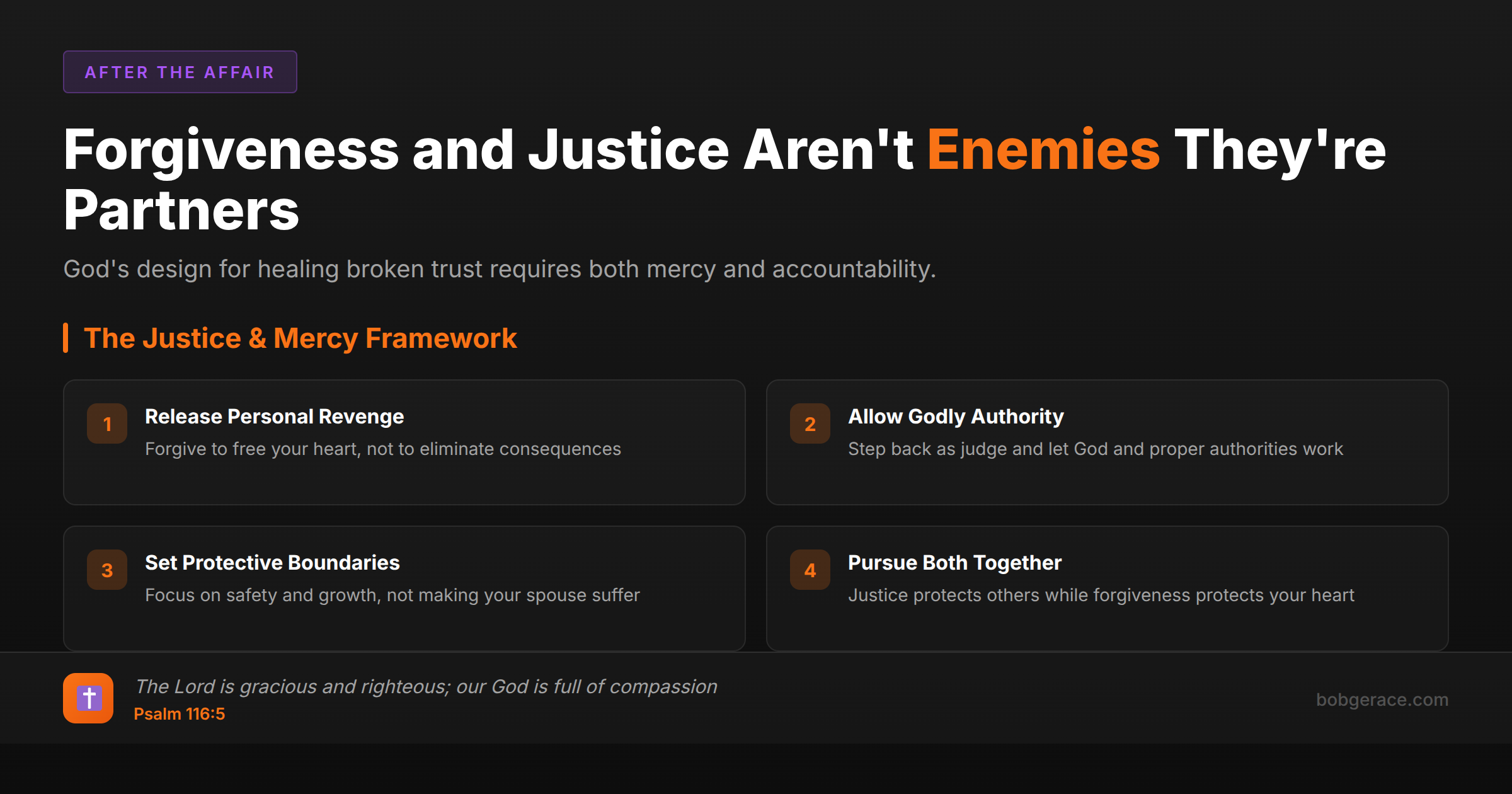
Forgiveness and justice aren't opposites - they're partners in God's design for healing relationships. Biblical forgiveness doesn't eliminate the need for justice; it transforms how justice is pursued. When you forgive your spouse, you're releasing your right to personal revenge, not abandoning all accountability. True forgiveness actually makes space for godly justice to work. It means you stop being the judge and jury, allowing God and appropriate authorities to handle consequences. Justice protects future victims and upholds God's standards, while forgiveness protects your heart from bitterness and opens the door for restoration. Both are necessary for genuine healing in marriage.
The Full Picture
Here's what most people get wrong about forgiveness and justice - they think you have to choose one or the other. That's not biblical thinking, and it's not practical for real marriage problems.
Forgiveness is about your heart's posture. When you forgive, you're saying "I won't hold this against you forever, and I won't seek personal revenge." You're releasing the debt they owe you emotionally. But forgiveness doesn't mean pretending the offense never happened or that there shouldn't be consequences.
Justice is about upholding God's standards and protecting people. Justice says certain behaviors are wrong and have natural consequences. In marriage, this might mean setting boundaries, requiring counseling, or in extreme cases, involving authorities. Justice protects you, your children, and even your spouse from the destructive cycle of sin.
The beauty of God's design is that forgiveness actually makes room for true justice. When you're not consumed with personal revenge, you can think clearly about what real accountability looks like. You can pursue consequences that actually help rather than just hurt.
Too many Christian marriages get stuck because someone demands forgiveness without justice ("just get over it") or justice without forgiveness ("they must pay forever"). God's way is better. He is both perfectly just and perfectly merciful. Your marriage needs both too.
This balance isn't always easy to find, especially when you're hurting. But it's the path to real healing - not just sweeping problems under the rug or holding grudges forever.
What's Really Happening
From a therapeutic perspective, the tension between forgiveness and justice reflects a fundamental human need for both emotional healing and safety. When clients struggle with this balance, they're often dealing with conflicting internal systems.
The part of you that wants to forgive is seeking emotional freedom and relationship restoration. This is healthy - carrying resentment creates chronic stress, impacts physical health, and keeps you emotionally bound to the offense. Forgiveness activates your parasympathetic nervous system, reducing cortisol and allowing genuine healing to begin.
But the part of you that demands justice serves an equally important function - it's your protective system recognizing that certain behaviors threaten your wellbeing and must have consequences. This isn't vindictiveness; it's wisdom. Without appropriate consequences, harmful patterns typically escalate.
The //blog.bobgerace.com/character-integration-christian-marriage-theater-success/:integration happens when you understand that forgiveness and justice serve different purposes and operate on different timelines. Forgiveness is an ongoing process that primarily benefits the forgiver. Justice is about creating safety and accountability that protects everyone involved.
Clinically, I see the healthiest outcomes when couples can separate these functions. The offended spouse works on forgiveness for their own healing while also insisting on appropriate boundaries and consequences. The offending spouse accepts both the grace of forgiveness and the responsibility of making amends.
This isn't easy psychological work. It requires emotional maturity to hold both mercy and accountability simultaneously. But couples who achieve this balance report stronger, more authentic relationships than those who choose only forgiveness or only justice.
What Scripture Says
Scripture never presents forgiveness and justice as contradictory. God himself embodies both perfectly, and he calls us to walk in both.
God is both just and merciful: "The Lord is gracious and righteous; our God is full of compassion" (Psalm 116:5). At the cross, God's justice was fully satisfied while his mercy was fully expressed. This is our model for handling offense in marriage.
Forgiveness doesn't eliminate consequences: Even after David repented and was forgiven for his sin with Bathsheba, he still faced the consequences - "The sword will never depart from your house" (2 Samuel 12:10). Forgiveness restores relationship, but it doesn't erase the natural results of sin.
We're called to forgive while upholding righteousness: Jesus said, "Be merciful, just as your Father is merciful" (Luke 6:36), but he also said, "If your brother or sister sins, go and point out their fault" (Matthew 18:15). Love confronts sin; it doesn't ignore it.
Justice protects the innocent: "Defend the weak and the fatherless; uphold the cause of the poor and the oppressed. Rescue the weak and the needy; deliver them from the hand of the wicked" (Psalm 82:3-4). Sometimes justice in marriage means protecting yourself, your children, or even your spouse from destructive patterns.
Forgiveness and boundaries work together: "Above all else, guard your heart, for everything you do flows from it" (Proverbs 4:23). You can forgive someone while still maintaining healthy boundaries. In fact, biblical wisdom demands it.
God's way isn't either mercy or justice - it's mercy and justice working together for true restoration.
What To Do Right Now
-
1
Separate forgiveness from consequences - forgive for your own freedom, but don't eliminate appropriate accountability
-
2
Ask God for wisdom to discern what justice looks like in your specific situation - not revenge, but righteous boundaries
-
3
Set clear consequences that protect rather than punish - focus on safety and growth, not making your spouse suffer
-
4
Work on your own forgiveness process through prayer, counseling, or trusted Christian community - don't wait for perfect justice first
-
5
Communicate both mercy and expectations clearly - 'I forgive you, and here's what needs to change going forward'
-
6
Get outside help when needed - some situations require pastoral counsel, professional therapy, or legal protection
Related Questions
Struggling to Balance Forgiveness and Boundaries?
You don't have to choose between being merciful and being wise. Get the guidance you need to pursue both forgiveness and healthy accountability in your marriage.
Get Help Now →