What does 'seventy times seven' mean?
6 min read
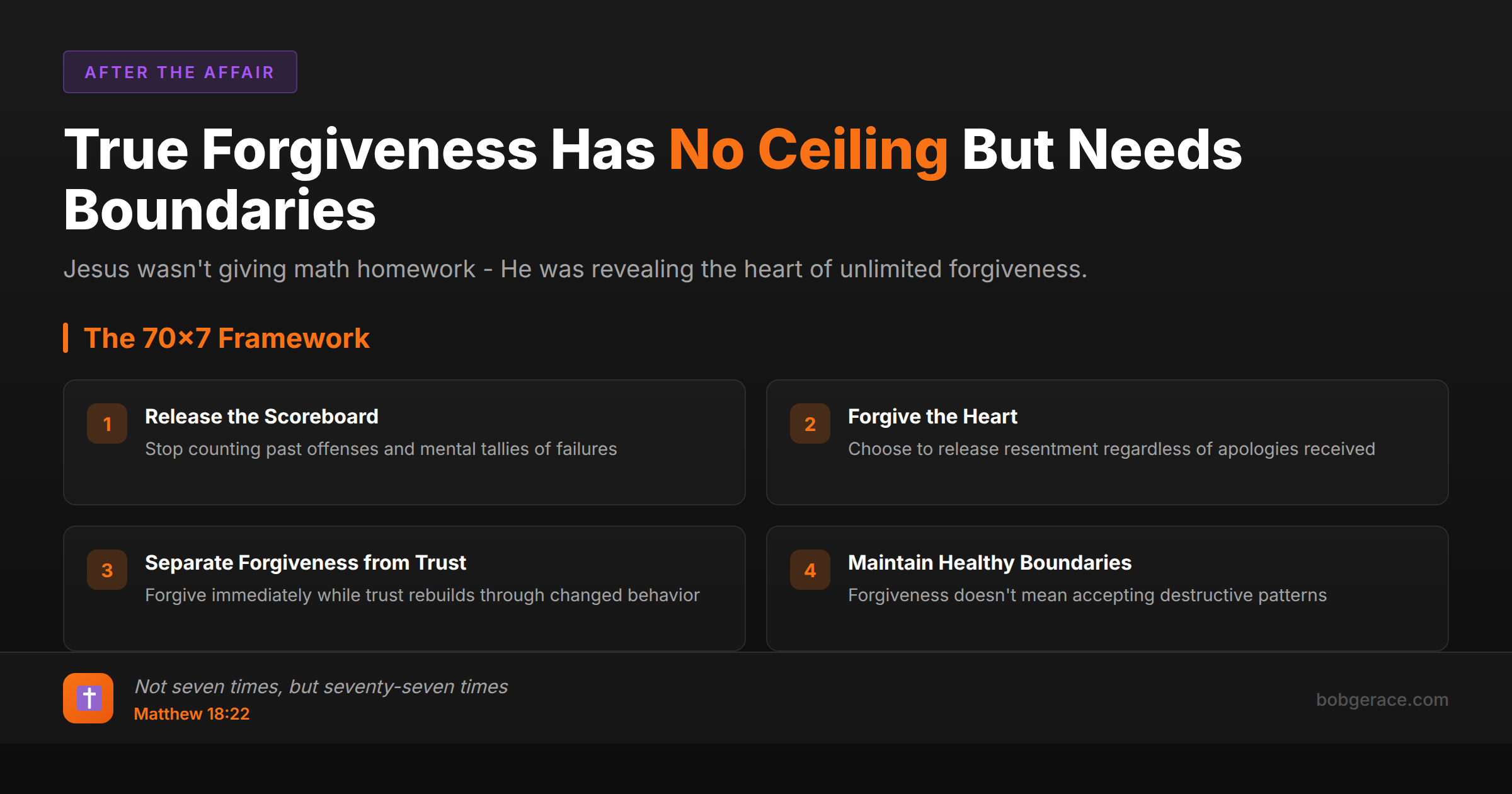
When Jesus said to forgive 'seventy times seven' in Matthew 18:22, He wasn't giving us a math problem - He was establishing a principle of unlimited forgiveness. Peter thought he was being generous by suggesting forgiveness seven times, but Jesus multiplied that exponentially to show that true forgiveness has no ceiling. This doesn't mean becoming a doormat or enabling destructive behavior. Biblical forgiveness is about releasing resentment and choosing love while still maintaining healthy boundaries. In marriage, this principle transforms how we handle the daily offenses, disappointments, and hurts that inevitably come. It's a commitment to keep choosing forgiveness, not because your spouse deserves it, but because Christ first forgave you.
The Full Picture
The 'seventy times seven' teaching comes from one of the most practical conversations Jesus had with His disciples about marriage-level relationships. Peter, probably feeling pretty spiritual, asked if forgiving someone seven times was sufficient. In Jewish culture, forgiving three times was considered generous, so Peter was doubling down and adding one for good measure.
Jesus' response was revolutionary. By saying 'seventy times seven' (490 times), He wasn't creating a new counting system. He was obliterating the counting system entirely. The point isn't to keep a tally until you hit 490 - it's to stop counting altogether.
This principle directly applies to your marriage because couples who thrive long-term understand that forgiveness isn't a limited resource. Every day in marriage brings small moments that require grace: forgotten tasks, sharp words, unmet expectations, and simple human failures. Couples who keep score create a marriage prison. Those who embrace unlimited forgiveness create freedom.
But here's what this doesn't mean: It's not about accepting abuse, manipulation, or destructive patterns without consequences. Biblical forgiveness includes accountability, boundaries, and sometimes professional intervention. Forgiveness releases your heart from bitterness while wisdom protects your marriage from harm. You can forgive someone and still require them to earn back trust through consistent change.
What's Really Happening
From a clinical perspective, Jesus was teaching one of the most psychologically sound principles for mental health and relationship longevity. Research consistently shows that couples who practice frequent, genuine forgiveness report higher satisfaction, lower stress levels, and greater relationship stability.
The 'counting mentality' that Peter displayed is actually a defensive mechanism our brains use to protect us from further hurt. When we keep score of offenses, we're essentially building walls to justify emotional distance. This creates what we call 'emotional ledgers' - mental spreadsheets of who owes whom in the relationship.
The unlimited forgiveness model Jesus proposed rewires this pattern. Instead of activating our threat-detection system every time our spouse fails us, we can activate our attachment and bonding systems. This doesn't make us naive - it makes us powerful. We're choosing our response rather than being controlled by our spouse's behavior.
However, clinical wisdom aligns with //blog.bobgerace.com/marriage-vision-biblical-transformation-frog-king/:biblical wisdom here: Forgiveness must be paired with appropriate boundaries. Trauma-informed therapy recognizes that some situations require safety measures, accountability structures, and professional intervention. The goal isn't to become a victim of unlimited abuse, but to become a person of unlimited grace within appropriate relationship structures.
What Scripture Says
Scripture provides a comprehensive framework for understanding unlimited forgiveness within the safety of biblical boundaries:
Matthew 18:21-22 - *'Then Peter came to Jesus and asked, "Lord, how many times shall I forgive my brother or sister who sins against me? Up to seven times?" Jesus answered, "I tell you, not seven times, but seventy-seven times."* This establishes the principle of unlimited forgiveness.
Ephesians 4:32 - *'Be kind and compassionate to one another, forgiving each other, just as in Christ God forgave you.'* The motivation for forgiveness isn't your spouse's worthiness, but Christ's example toward you.
Matthew 18:15-17 - *'If your brother or sister sins, go and point out their fault, just between the two of you... But if they will not listen, take one or two others along... If they still refuse to listen, tell it to the church.'* Forgiveness includes accountability and escalating consequences when necessary.
1 Corinthians 13:5 - *'Love keeps no record of wrongs.'* This directly addresses the scorekeeping mentality that destroys marriages.
Proverbs 27:5-6 - *'Better is open rebuke than hidden love. Wounds from a friend can be trusted.'* True love sometimes requires difficult conversations and boundaries.
Luke 17:3 - *'If your brother or sister sins against you, rebuke them; and if they repent, forgive them.'* Forgiveness works best within a framework of repentance and accountability.
What To Do Right Now
-
1
Stop counting past offenses - make a conscious decision to release your mental scoreboard of your spouse's failures
-
2
Identify one current resentment you're holding and choose to forgive it today, regardless of whether your spouse has apologized
-
3
Distinguish between forgiveness and trust - you can forgive immediately while rebuilding trust requires your spouse's consistent changed behavior
-
4
Set appropriate boundaries where needed - forgiveness doesn't mean accepting destructive patterns without consequences
-
5
Practice daily grace for small offenses - don't let minor irritations build into major resentments by addressing them with immediate forgiveness
-
6
Seek professional help if you're dealing with abuse, addiction, or destructive patterns that require structured accountability beyond personal forgiveness
Related Questions
Ready to Build a Marriage of Grace and Strength?
Learning to balance unlimited forgiveness with wise boundaries takes guidance. Let's work together to create the marriage God designed for you.
Get Help Now →