What does forgiveness require from the offender?
6 min read
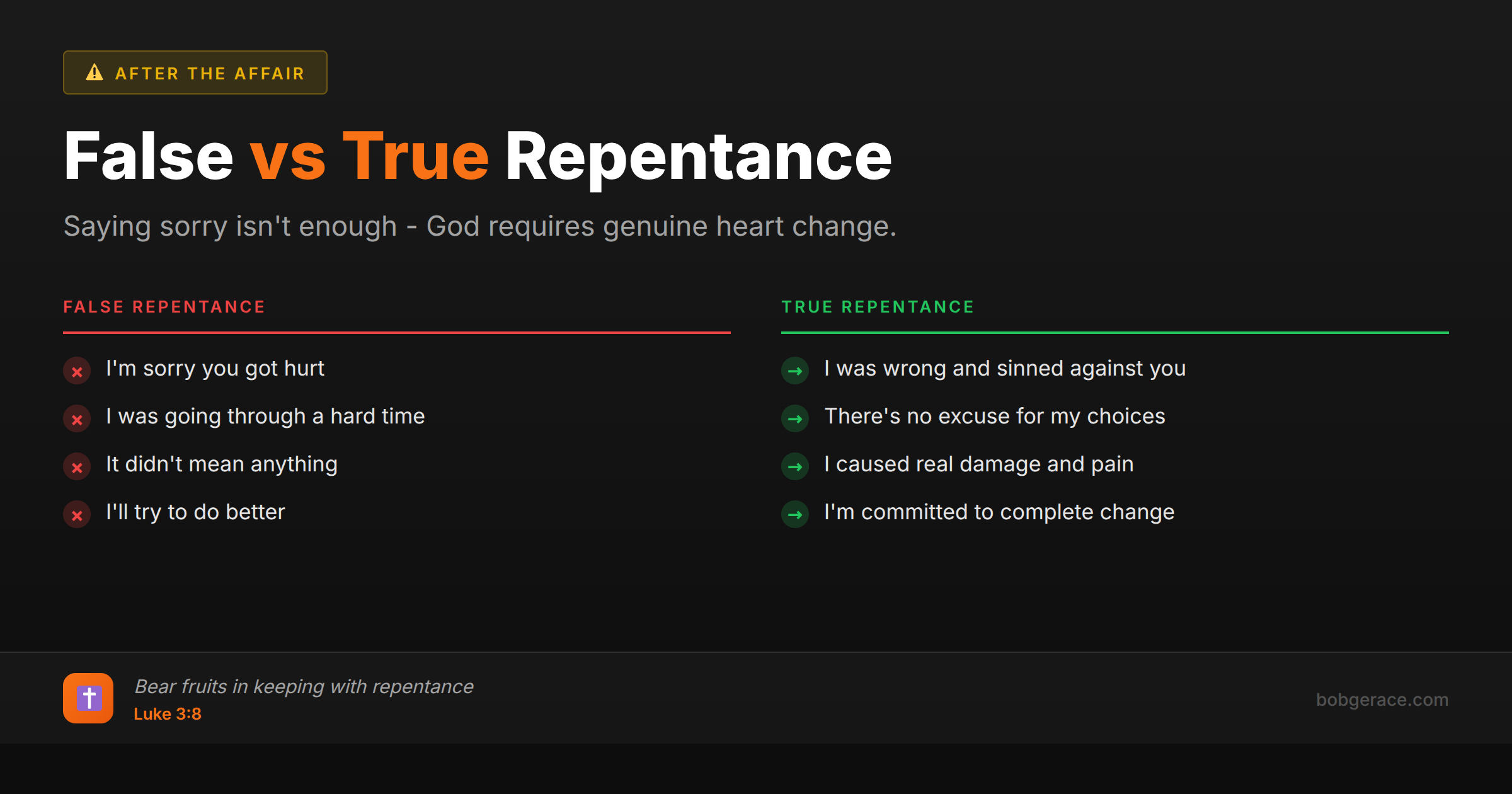
Biblical forgiveness requires genuine repentance from the offender - not just saying sorry, but demonstrating true heart change. This means acknowledging the full weight of their actions, taking complete responsibility without excuses, and showing fruit that proves their repentance is real. Scripture is clear: repentance involves turning away from the sin and turning toward God. It's more than feeling bad about getting caught - it's grief over the damage caused and a commitment to change. The offender must be willing to make things right wherever possible and submit to whatever process of restoration is needed.
The Full Picture
Here's what most people get wrong about forgiveness: they think it's a one-way street where the hurt spouse just needs to "let it go." That's not biblical forgiveness - that's enabling.
True biblical forgiveness is a two-party transaction. Yes, the offended party chooses to release their right to revenge and bitterness. But the offender has serious work to do too. Without genuine repentance, you're not dealing with forgiveness - you're dealing with cheap grace that actually prevents real healing.
The offender's requirements aren't suggestions - they're biblical mandates. Confession means agreeing with God about the sin, calling it what it is without minimizing or excuse-making. Repentance means genuine sorrow that leads to changed behavior, not just remorse over consequences. Restitution means making things right wherever possible, even when it's costly or uncomfortable.
This process protects both spouses. It protects the offended spouse from being pressured to "forgive" someone who isn't actually repentant. And it protects the offender from thinking they can continue destructive patterns without consequences. Real forgiveness leads to real restoration, but only when both parties do their part according to God's design.
Without these requirements, forgiveness becomes a doormat for continued abuse rather than a pathway to genuine reconciliation.
What's Really Happening
From a therapeutic standpoint, genuine repentance involves specific psychological and behavioral changes that can be observed and measured. When someone has truly repented, you'll see cognitive shifts (how they think about their actions), emotional changes (appropriate guilt and empathy), and behavioral modifications (concrete steps to prevent recurrence).
Many offenders get stuck in what we call "pseudo-repentance" - they're sorry they got caught or sorry for the consequences, but they haven't experienced the deeper transformation that leads to lasting change. This creates a cycle where the hurt partner is asked to forgive repeatedly without seeing real //blog.bobgerace.com/christian-marriage-trust-rebuilding-evidence-recovery/:evidence of change.
True repentance involves what psychologists call "taking the victim's perspective" - the ability to genuinely understand and feel the impact of their actions on their spouse. This empathetic shift is crucial because it moves the offender from self-focused remorse to other-focused responsibility.
The process also requires what we term "behavioral accountability" - concrete, measurable actions that demonstrate commitment to change. This might include therapy, support groups, transparency measures, or other specific steps tailored to the offense. Without these behavioral markers, repentance remains merely intellectual rather than transformational.
What Scripture Says
Scripture is unambiguous about what God requires from those seeking forgiveness. Luke 3:8 commands us to "bear fruits in keeping with repentance" - meaning our changed behavior should provide evidence of our changed heart.
1 John 1:9 tells us that "if we confess our sins, he is faithful and just to forgive us our sins." But notice - confession comes first. The Greek word for confess (*homologeo*) means to "say the same thing" - agreeing with God about the reality and seriousness of our sin.
2 Corinthians 7:10 distinguishes between worldly sorrow and godly sorrow: "Godly grief produces a repentance that leads to salvation without regret, whereas worldly grief produces death." Worldly sorrow focuses on consequences; godly sorrow focuses on the offense against God and others.
Matthew 3:8 reinforces this: "Bear fruit in keeping with repentance." John the Baptist wasn't interested in words alone - he demanded evidence of genuine heart change. Luke 19:8-9 shows us Zacchaeus doing exactly this - not just saying sorry, but making costly restitution that proved his transformation was real.
Ezekiel 33:15-16 describes the repentant person who "restores the pledge, gives back what he has taken by robbery, and walks in the statutes of life." God's forgiveness is connected to concrete actions that demonstrate genuine change.
What To Do Right Now
-
1
Stop making excuses or minimizing - call your actions exactly what they are according to Scripture
-
2
Take 100% responsibility without deflecting blame to circumstances, your spouse, or anyone else
-
3
Identify specific steps you'll take to ensure this behavior doesn't happen again
-
4
Ask your spouse what they need from you to begin rebuilding trust, then follow through consistently
-
5
Submit to accountability - whether counseling, mentorship, or other oversight your spouse requests
-
6
Demonstrate fruit of repentance through changed behavior over time, not just words
Related Questions
- What does biblical forgiveness require of me?
- Can I forgive without trusting?
- What's the difference between forgiveness and reconciliation?
- How do I forgive when she hasn't fully repented?
- What are markers of genuine remorse vs. guilt?
- What does rebuilding trust require from her?
- What does 'taking responsibility' actually look like?
- What does genuine repair look like for old wounds?
- What does repentance look like for accumulated sin?
- What does humility in process look like?
Also find Bob on
Subscribe for weekly videos on Christian marriage.
You Can't Script Real Repentance Alone
A coach who knows your marriage can tell you if what you're seeing is real change or performance. Bob works with men whose wives are waiting for proof.
Talk to Bob →