What does forgiveness feel like when it's real?
6 min read
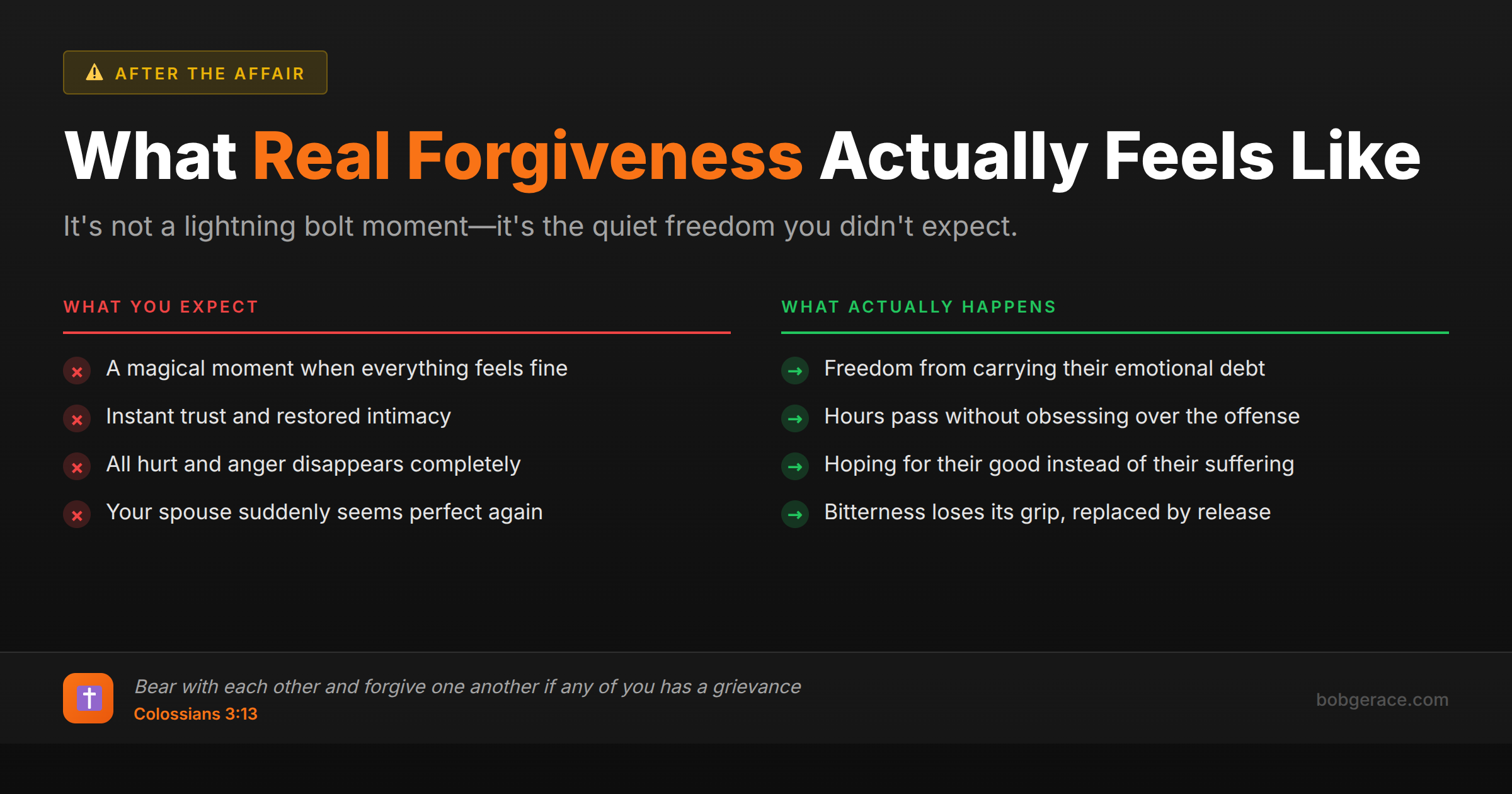
Real forgiveness doesn't feel like everything is magically fine—it feels like freedom from the burden of carrying someone else's debt. You'll notice the emotional charge around the offense begins to fade. The obsessive thoughts quiet down. You can think about your spouse without that immediate surge of anger or hurt. Here's what catches people off guard: forgiveness often feels ordinary. It's not a lightning bolt moment. It's more like realizing you haven't thought about the offense in hours, or finding yourself genuinely hoping for your spouse's good rather than secretly wanting them to suffer. The bitterness loses its grip, replaced by a quiet sense of release.
The Full Picture
Let me be straight with you—real forgiveness is one of the most misunderstood experiences in marriage. Most people think it should feel like warm fuzzy feelings flooding back, but that's not biblical forgiveness. That's emotional reunion, which may or may not follow forgiveness.
What forgiveness actually feels like:
First, there's a release of the demand for payment. You stop needing your spouse to grovel, suffer, or "make it up to you" before you can move forward. This doesn't mean you become a doormat—it means you're no longer emotionally enslaved to their debt.
Second, you'll notice mental freedom. The endless mental replays start to fade. You're not constantly rehearsing your case or imagining confrontations. Your mind gets freed up for other things—like actually building your marriage instead of prosecuting it.
Third, there's often surprising compassion. You might find yourself understanding your spouse's brokenness without excusing their behavior. You can see their humanity without minimizing the hurt they caused.
What forgiveness doesn't feel like:
It doesn't feel like trust restored—that's separate. It doesn't feel like consequences disappear—those might remain. And it definitely doesn't feel like you have to pretend the offense never happened.
Real forgiveness feels like laying down a weight you didn't realize was crushing you. It's freedom for you first, reconciliation second.
What's Really Happening
From a clinical perspective, genuine forgiveness creates measurable changes in your nervous system. When we hold onto resentment, we maintain a chronic stress response that keeps us in a state of hypervigilance around our spouse. Real forgiveness deactivates this threat-detection system.
Clients often describe a //blog.bobgerace.com/physical-fitness-christian-marriage-body-temple/:physical sensation of "letting go"—tension leaving their shoulders, breathing becoming deeper, sleep improving. This isn't coincidental. Forgiveness literally rewires our neural pathways, moving us from a trauma response to a growth response.
What's fascinating is that forgiveness doesn't require your spouse to change first. When you choose to release the debt, your brain stops treating them as a primary threat. This shift often creates space for actual healing conversations that weren't possible when you were in defensive mode.
I tell couples to expect forgiveness to feel underwhelming at first. There's no dramatic emotional payoff—just a gradual return to baseline functioning. You'll know it's working when you can discuss the offense without your heart racing, when you're not scanning for signs they might hurt you again, and when you can genuinely wish them well even if you're still working through trust issues.
The clinical reality is that unforgiveness keeps you trauma-bonded to past hurts. Forgiveness breaks that bond, freeing you to respond to your spouse based on present reality rather than past wounds.
What Scripture Says
Scripture gives us the clearest picture of what forgiveness actually looks like and feels like. God's model of forgiveness isn't about feelings—it's about a deliberate choice to release a debt.
Colossians 3:13 tells us to "bear with each other and forgive one another if any of you has a grievance against someone. Forgive as the Lord forgave you." Notice it doesn't say "feel good about" or "trust again"—it says forgive.
Ephesians 4:31-32 commands: "Get rid of all bitterness, rage and anger, brawling and slander, along with every form of malice. Be kind and compassionate to one another, forgiving each other, just as in Christ God forgave you." The feeling that accompanies biblical forgiveness is the absence of bitterness and rage, replaced by the possibility of kindness.
Matthew 6:14-15 makes it clear that forgiveness is non-negotiable: "For if you forgive other people when they sin against you, your heavenly Father will also forgive you. But if you do not forgive others their sins, your Father will not forgive your sins." This isn't about emotion—it's about obedience that leads to freedom.
Psalm 103:12 shows us God's heart: "As far as the east is from the west, so far has he removed our transgressions from us." When you truly forgive, you'll feel that same distance—not because you've forgotten, but because the offense no longer defines your relationship.
Real forgiveness feels like participating in God's character. It's supernatural, which is why it often feels so different from human emotion.
What To Do Right Now
-
1
Stop waiting to "feel" forgiveness and choose to release the debt your spouse owes you, regardless of your emotions
-
2
Pray specifically asking God to show you any bitterness you're still carrying and confess it as sin
-
3
Write down what your spouse would have to do to "earn" forgiveness, then deliberately tear up that list
-
4
When intrusive thoughts about the offense come, redirect them to prayer for your spouse's good rather than rehearsing the hurt
-
5
Take inventory of your physical tension—notice what changes as you practice releasing resentment
-
6
Distinguish between forgiveness and trust—commit to the first while wisely rebuilding the second
Related Questions
- What does real forgiveness look like?
- How do I know if I've actually forgiven?
- What if the pain keeps coming back?
- Can I forgive before I'm ready?
- What does forgiveness look like day to day?
- What if I say I've forgiven but still bring it up?
- How do I not lose my mind right now?
- How long does recovery take?
- What does healing timeline look like?
- How do I grieve while also fighting?
Also find Bob on
Subscribe for weekly videos on Christian marriage.
Forgiveness in Your Actual Marriage
The mechanics of forgiveness shift depending on what happened in your marriage and where you both are now. A coach who knows your story can help you work through what's real versus what's performance.
Talk to Bob →