Does forgiveness mean no consequences?
6 min read
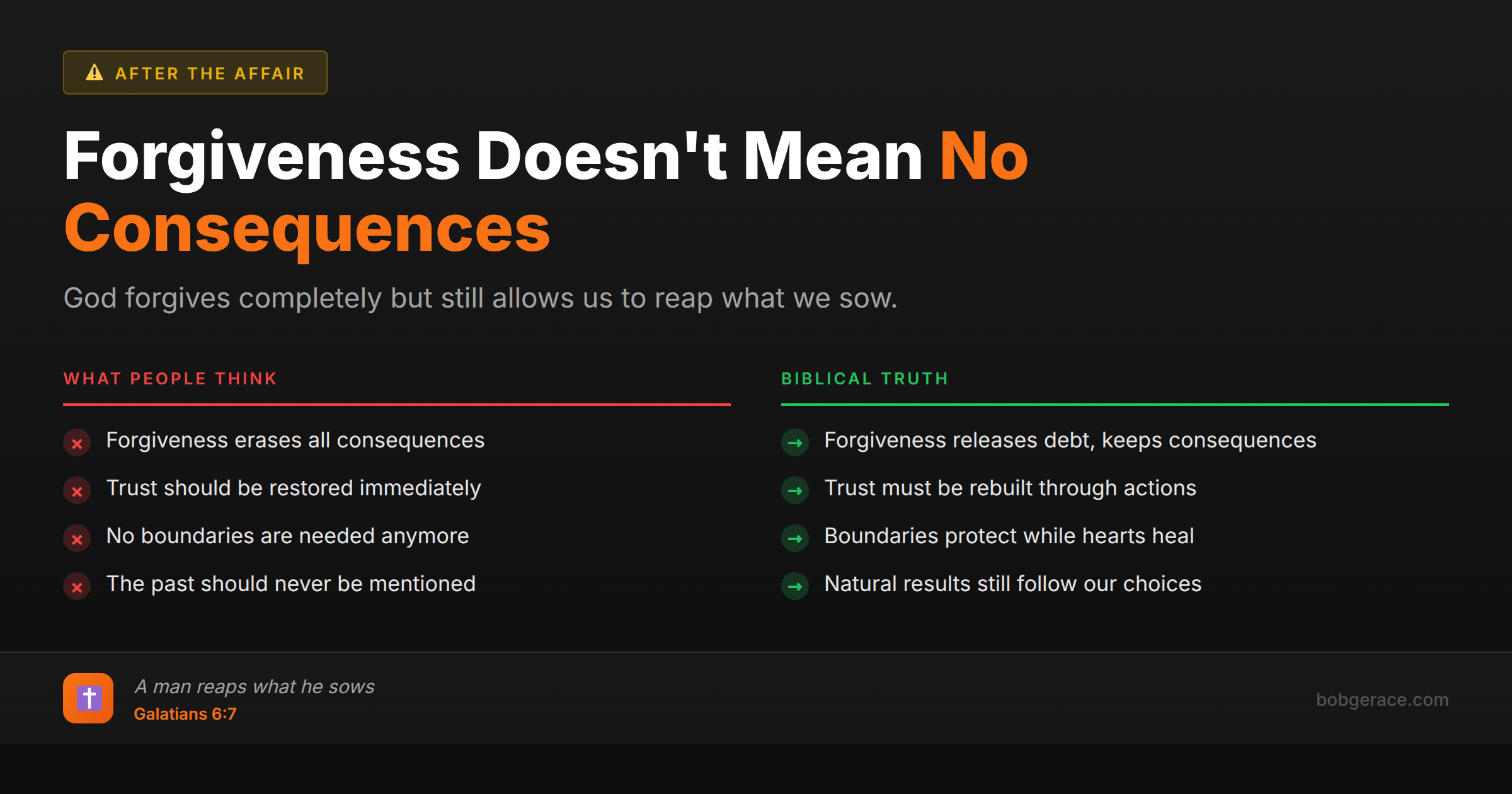
No, biblical forgiveness absolutely does not mean no consequences. This is one of the most dangerous misunderstandings in marriage recovery. God Himself demonstrates this perfectly - He forgives our sins through Christ, yet we still live with the natural consequences of our choices. When David committed adultery and murder, God forgave him, but the consequences rippled through his family for generations. Forgiveness is about releasing bitterness and choosing to love despite the hurt. Consequences are about wisdom, protection, and allowing the natural results of choices to teach and transform. Your unfaithful spouse needs both your forgiveness AND the accountability that comes with facing the full weight of what they've done to your marriage.
The Full Picture
Here's what I see happening in most marriages after infidelity: the unfaithful spouse wants immediate forgiveness that erases all consequences, while the betrayed spouse feels guilty for wanting accountability. Both positions miss the biblical balance between grace and truth.
Forgiveness is about your heart. It's choosing to release the right to revenge, choosing not to be consumed by bitterness, and opening your heart to the possibility of restoration. This is a command from God and ultimately for your own freedom and healing.
Consequences are about wisdom and protection. They're the natural results of broken trust that must be rebuilt through consistent action over time. Consequences might include transparency with devices and schedules, temporary separation, counseling requirements, or changed living arrangements.
The confusion comes when we think love means removing all discomfort from someone's life. That's not love - that's enabling. True love sometimes means allowing someone to feel the full weight of their choices so they can truly change.
Your marriage doesn't need cheap grace that sweeps everything under the rug. It needs the kind of costly grace that faces reality head-on, deals with the damage honestly, and builds something stronger on the foundation of truth. This process is messy, uncomfortable, and absolutely necessary for real healing.
What's Really Happening
From a therapeutic standpoint, consequences serve crucial psychological functions in affair recovery that forgiveness alone cannot provide. When we remove consequences in the name of forgiveness, we actually impede the healing process for both spouses.
For the unfaithful spouse, consequences create what we call 'adaptive anxiety' - the healthy discomfort that motivates genuine change. Without this pressure, the brain's reward system doesn't fully process the severity of the betrayal. The unfaithful spouse may intellectually understand they've hurt their partner, but they won't develop the deep emotional understanding necessary for //blog.bobgerace.com/christian-marriage-success-blueprint-lasting-legacy/:lasting change.
For the betrayed spouse, appropriate consequences provide a sense of justice and safety that's essential for trauma recovery. When consequences are removed too quickly, it can actually retraumatize the betrayed spouse and reinforce their sense of powerlessness.
Consequences also serve as external accountability when internal motivation is insufficient. The unfaithful spouse's ability to maintain boundaries and make healthy choices is often compromised. External structure provides the framework they need while their internal systems heal.
This isn't about punishment - it's about creating the optimal conditions for genuine transformation. Research consistently shows that marriages with appropriate accountability measures during recovery have significantly higher rates of successful restoration than those that attempt to bypass this crucial phase.
What Scripture Says
Scripture consistently demonstrates that God's forgiveness doesn't eliminate consequences. Understanding this biblical pattern is crucial for navigating your marriage recovery with both grace and wisdom.
God forgives but maintains consequences: 'The Lord is compassionate and gracious, slow to anger, abounding in love' (Psalm 103:8), yet throughout Scripture we see that forgiven people still live with the results of their choices. David was forgiven for his adultery and murder, but his family suffered for generations.
Consequences serve God's purposes: 'No discipline seems pleasant at the time, but painful. Later on, however, it produces a harvest of righteousness and peace for those who have been trained by it' (Hebrews 12:11). Consequences aren't punishment from an angry God - they're training from a loving Father.
Forgiveness and accountability work together: Jesus told the woman caught in adultery, 'Neither do I condemn you. Go now and leave your life of sin' (John 8:11). He offered complete forgiveness AND clear expectations for change.
Wisdom requires discernment: 'Be as shrewd as snakes and as innocent as doves' (Matthew 10:16). Love doesn't mean naively trusting without verification. Wisdom protects both spouses during the vulnerable recovery process.
Truth and grace together: 'Grace and truth came through Jesus Christ' (John 1:17). Your marriage needs both. Grace without truth becomes enabling. Truth without grace becomes harsh and hopeless.
What To Do Right Now
-
1
Separate forgiveness from consequences in your thinking - choose to forgive while maintaining necessary boundaries
-
2
Identify what consequences naturally flow from the betrayal and which ones serve protection and accountability
-
3
Communicate clearly that forgiveness doesn't mean immediate trust or removal of safety measures
-
4
Establish specific, measurable accountability structures with clear timelines for evaluation
-
5
Focus on consequences that promote healing and change rather than punishment or revenge
-
6
Regularly evaluate whether consequences are serving their purpose or becoming destructive
Related Questions
- What does biblical forgiveness require of me?
- Can I forgive without trusting?
- What's the difference between forgiveness and reconciliation?
- How do I forgive when she hasn't fully repented?
- What does 'seventy times seven' mean practically?
- How do I model grace without enabling?
- What boundaries should I set?
- What's the difference between boundary and ultimatum?
- When does grace become enabling sin?
- What is redemptive discipline vs. punitive discipline?
Also find Bob on
Subscribe for weekly videos on Christian marriage.
Your Marriage Isn't a Textbook Case
Forgiveness and consequences look different in your specific situation—your history, your spouse's patterns, where you actually are today. A coach who knows your story can help you calibrate what's grace and what's enabling.
Talk to Bob →