Can I forgive and still have boundaries?
5 min read
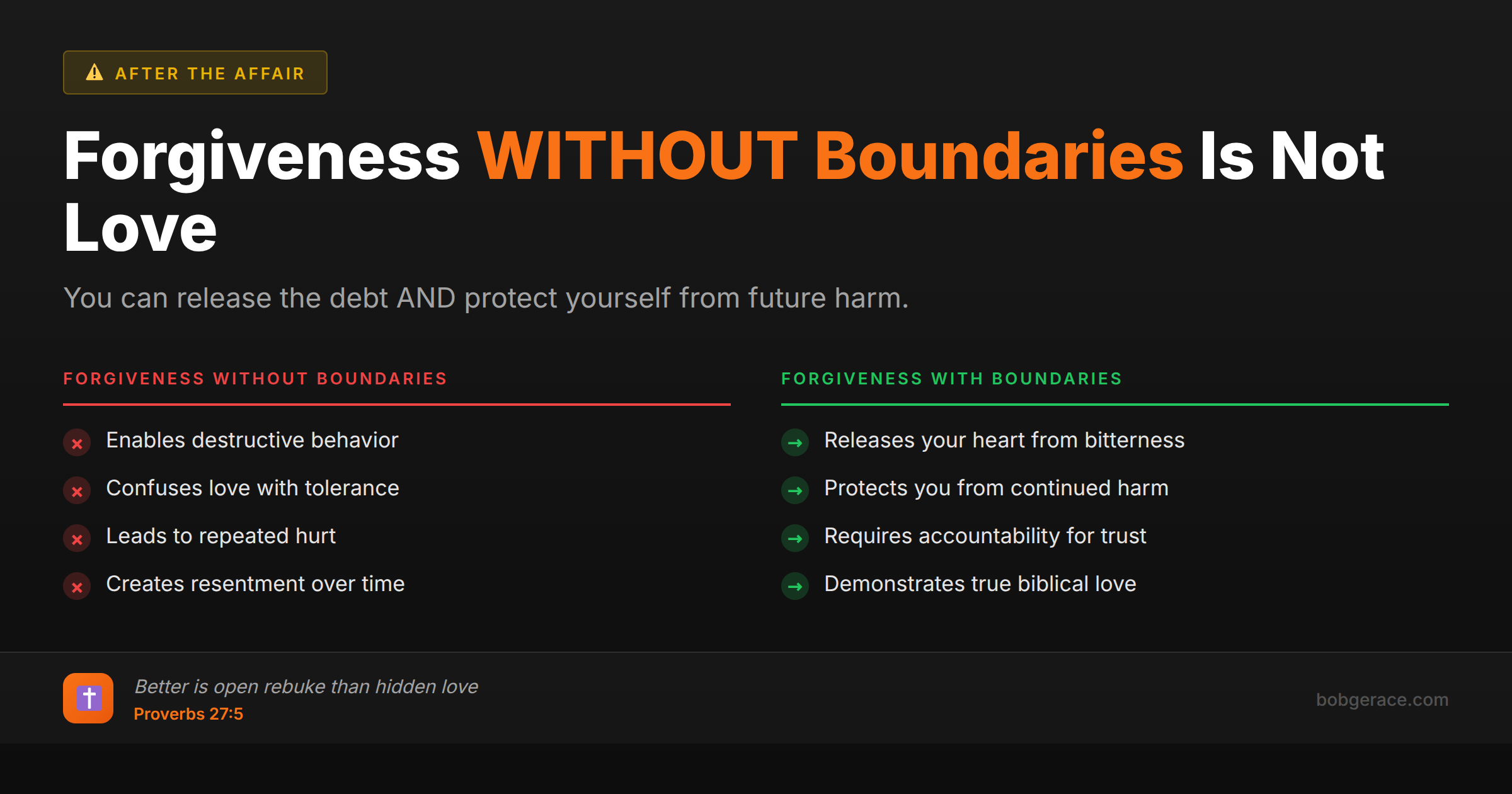
Yes, absolutely. Forgiveness and boundaries are not opposing forces - they're complementary aspects of healthy relationships. Biblical forgiveness releases your heart from bitterness and the debt owed to you, but it doesn't require you to expose yourself to continued harm or manipulation. Think of it this way: forgiveness deals with your heart posture toward the person who hurt you, while boundaries deal with your wise response to their behavior. You can genuinely forgive someone while still saying 'no' to unsafe situations, requiring accountability, or insisting on changed behavior before rebuilding trust. God Himself demonstrates this - He forgives us freely, yet He still has standards and consequences for our choices.
The Full Picture
Here's where many Christians get confused: they've been taught that forgiveness means becoming a doormat. Nothing could be further from biblical truth.
Forgiveness is fundamentally about releasing the debt someone owes you. It's choosing not to hold their sin against them in your heart. It's refusing to let bitterness take root. But nowhere in Scripture does forgiveness require you to trust blindly or remove all consequences.
Forgiveness is instantaneous; trust is rebuilt over time. When your spouse lies to you, you can forgive them immediately while still requiring transparency with passwords, checking accounts, and whereabouts. When they're verbally abusive, you can forgive while refusing to stay in the room during outbursts.
Boundaries aren't punishment - they're protection. They protect your heart, your marriage, and often the other person from their own destructive patterns. A boundary says, "I love you enough to not enable your harmful behavior."
Consider this: if someone is drowning and you jump in without a life preserver, you'll both drown. Boundaries are your life preserver. They allow you to help without being destroyed in the process.
The confusion comes from conflating forgiveness with reconciliation. Forgiveness can happen unilaterally - you don't need the other person's participation. Reconciliation requires repentance, changed behavior, and rebuilt trust. You can forgive someone who refuses to acknowledge their wrong, but you shouldn't reconcile with them.
Healthy boundaries actually create space for genuine repentance and restoration. When there are no consequences for harmful behavior, there's no motivation to change.
What's Really Happening
From a clinical perspective, the ability to maintain boundaries while forgiving represents emotional maturity and psychological health. When clients struggle with this concept, it often reveals deeper issues with codependency, people-pleasing, or childhood trauma.
Trauma bonding frequently makes boundaries feel like betrayal. If you grew up in a home where love was conditional on accepting poor treatment, setting boundaries can trigger overwhelming guilt and anxiety. Your nervous system learned that connection requires sacrificing your wellbeing.
Forgiveness without boundaries often leads to resentment recycling. You forgive, get hurt again, forgive again, and gradually build an underground reservoir of bitterness. This isn't biblical forgiveness - it's avoidance masquerading as spirituality.
Healthy individuals understand that forgiveness preserves their heart while boundaries preserve their safety. They can hold both simultaneously without internal conflict. This //blog.bobgerace.com/character-integration-christian-marriage-theater-success/:integration typically requires working through:
- Guilt over disappointing others (even when setting reasonable limits) - Fear of abandonment (believing boundaries will drive people away) - Distorted responsibility (feeling accountable for others' emotions and reactions) - Spiritual manipulation (misused Bible verses that promote unhealthy dynamics)
The goal isn't to become hard-hearted but to develop differentiation - the ability to maintain your values and wellbeing while staying emotionally connected to others. This creates the safety necessary for authentic intimacy and genuine reconciliation when appropriate.
What Scripture Says
Scripture consistently demonstrates that forgiveness and boundaries coexist beautifully:
Proverbs 27:5-6 - "Better is open rebuke than hidden love. Wounds from a friend can be trusted, but an enemy multiplies kisses." Sometimes loving someone means confronting their behavior and maintaining firm boundaries.
Matthew 18:15-17 gives us Jesus' process for addressing sin: "If your brother or sister sins, go and point out their fault, just between the two of you. If they listen to you, you have won them over. But if they will not listen, take one or two others along... If they still refuse to listen, tell it to the church; and if they refuse to listen even to the church, treat them as you would a pagan or a tax collector." Notice the escalating boundaries while maintaining a heart of restoration.
1 Corinthians 5:11-13 instructs believers not to associate with unrepentant, destructive people: "You must not associate with anyone who claims to be a believer yet indulges in sexual sin, or is greedy, or worships idols, or is abusive, or is a drunkard, or cheats people. Don't even eat with such people." This is a boundary, not unforgiveness.
Luke 17:3 says, "If your brother or sister sins against you, rebuke them; and if they repent, forgive them." Forgiveness is linked to repentance and changed behavior.
Galatians 6:1-2 shows us how to restore someone: "If someone is caught in a sin, you who live by the Spirit should restore that person gently. But watch yourselves, or you also may be tempted. Carry each other's burdens." The phrase "watch yourselves" implies maintaining protective awareness.
Even God demonstrates boundaries - He forgives freely but doesn't ignore consequences for sin (Romans 6:23).
What To Do Right Now
-
1
Separate forgiveness from trust - Write down what you're forgiving (the debt released) versus what trust rebuilding requires (changed behavior over time)
-
2
Identify your non-negotiables - List behaviors you will not tolerate regardless of apologies, and determine consequences you'll implement
-
3
Communicate boundaries clearly - Use 'I will' statements: 'I will leave the room if you raise your voice' rather than 'You can't yell at me'
-
4
Practice the 24-hour rule - When hurt, forgive in your heart within 24 hours, but take time to determine appropriate boundaries
-
5
Get accountability - Share your boundaries with a trusted friend or counselor who will help you maintain them when guilt kicks in
-
6
Pray for wisdom and strength - Ask God to help you love like He does - with forgiveness AND wisdom about protecting what He's entrusted to you
Related Questions
- What does biblical forgiveness require of me?
- What's the difference between forgiveness and reconciliation?
- Does forgiveness mean no consequences?
- What does forgiveness require from the offender?
- What does forgiveness look like day to day?
- How do I forgive when she hasn't fully repented?
- What boundaries should I set?
- What's the difference between boundary and ultimatum?
- What makes boundaries effective vs. empty threats?
- How do I set boundaries without controlling?
Also find Bob on
Subscribe for weekly videos on Christian marriage.
Your Marriage Isn't a Textbook Case
Forgiveness and boundaries look different in your specific situation. A coach who knows your story helps you calibrate what's actually wise here.
Talk to Bob →