What is 'cheap grace' and is forgiveness enabling?
6 min read
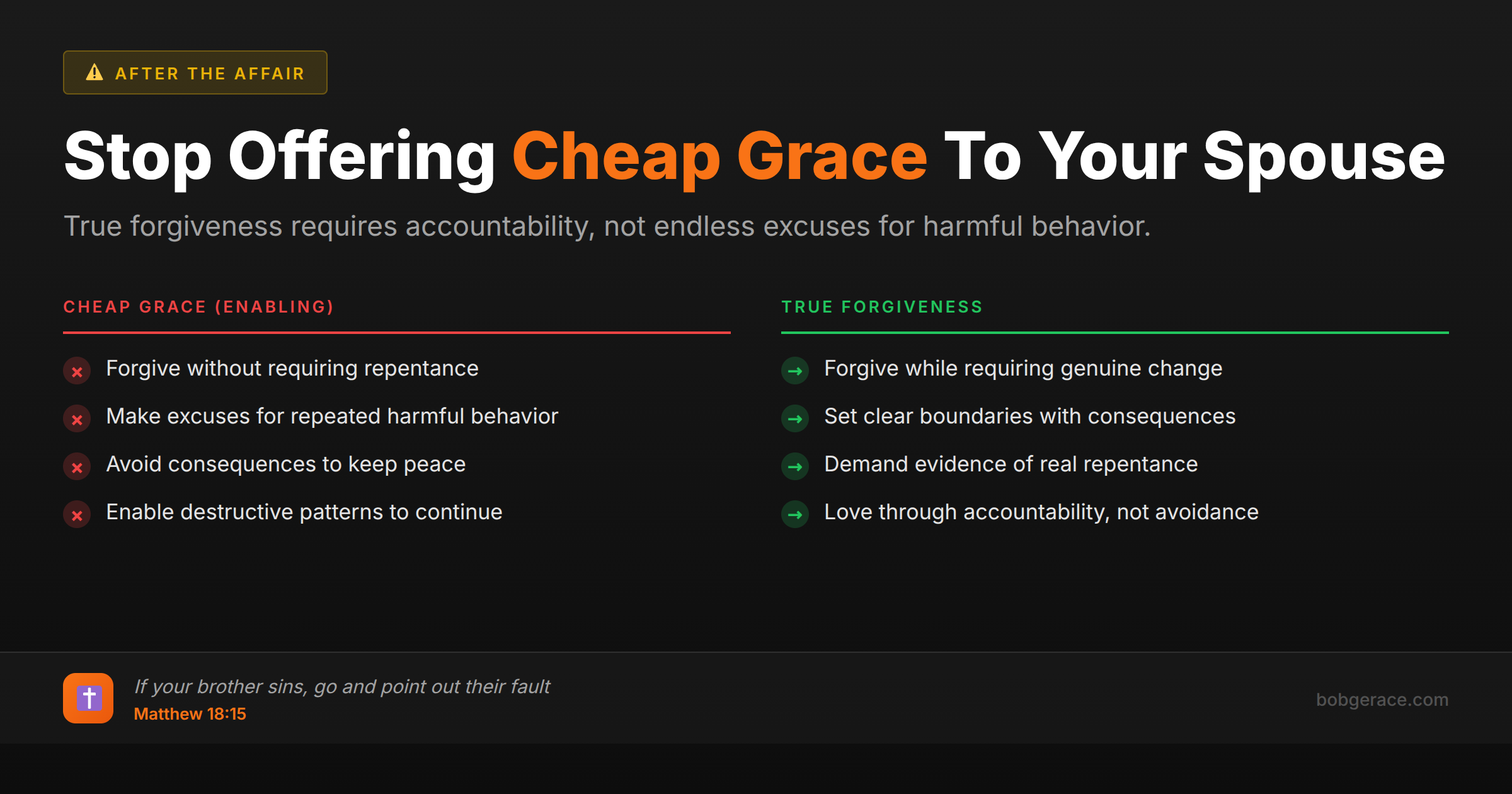
Cheap grace, a term coined by theologian Dietrich Bonhoeffer, is grace without repentance, transformation, or cost. It's offering forgiveness that requires nothing from the offender and expects no change. In marriage, this becomes enabling when we repeatedly excuse harmful behavior without requiring accountability or genuine repentance. True biblical forgiveness isn't cheap—it cost Christ His life. While we're called to forgive, we're not called to enable destructive patterns. Healthy forgiveness includes boundaries, consequences, and expectations of changed behavior. You can forgive your spouse while still requiring they address their harmful actions through counseling, addiction treatment, or other necessary steps toward genuine transformation.
The Full Picture
Cheap grace is one of the most dangerous distortions in Christian marriage. It sounds spiritual—"Just forgive and move on"—but it often enables destructive cycles that harm both spouses and dishonor God's design for marriage.
Bonhoeffer distinguished between cheap grace and costly grace. Cheap grace demands nothing, expects nothing, and changes nothing. It's grace as a principle rather than a transformative power. Costly grace, however, calls us to repentance, transformation, and discipleship.
In marriage, cheap grace looks like: - Repeatedly forgiving infidelity without requiring accountability measures - Excusing financial irresponsibility without addressing the underlying issues - Tolerating emotional or physical abuse under the guise of "Christian submission" - Avoiding difficult conversations about destructive patterns
This isn't biblical forgiveness—it's enabling. True forgiveness doesn't eliminate consequences or boundaries. When we practice cheap grace, we often: - Enable destructive behavior to continue - Prevent genuine repentance and growth - Harm ourselves and our children - Misrepresent God's character
Real forgiveness is costly. It required Christ's death, and it requires our willingness to engage in the hard work of restoration. This means confronting sin, establishing boundaries, and walking through the difficult process of rebuilding trust. Forgiveness is a decision, but reconciliation is a process that requires genuine change from both parties.
What's Really Happening
From a clinical perspective, cheap grace often masks deeper psychological patterns that prevent healthy relationship dynamics. When we repeatedly offer forgiveness without requiring //blog.bobgerace.com/christian-marriage-accountability-why-going-solo-fails/:accountability, we're often dealing with:
Codependency patterns where one spouse takes responsibility for the other's emotions and choices. This creates an unhealthy dynamic where the offending spouse never experiences the natural consequences of their actions.
Trauma responses can also drive cheap grace. Some individuals have learned to minimize harm or avoid conflict as a survival mechanism. They offer quick forgiveness not from a place of strength, but from fear of abandonment or confrontation.
Religious trauma compounds this issue when church teachings emphasize forgiveness without addressing justice, boundaries, or the need for genuine repentance. This leaves victims feeling guilty for having normal human responses to betrayal or abuse.
The neurological reality is that repeated exposure to harmful behavior without consequences actually rewires our brains to accept dysfunction as normal. We develop learned helplessness and lose our ability to recognize when boundaries are needed.
Healthy forgiveness, by contrast, engages our prefrontal cortex—the part of our brain responsible for executive decision-making. It allows us to forgive while still maintaining the cognitive clarity needed to establish appropriate boundaries and consequences. This creates space for genuine healing and relationship restoration.
What Scripture Says
Scripture never presents forgiveness and accountability as opposing forces—they work together to bring restoration and healing.
Matthew 18:15-17 gives us Jesus' framework for addressing sin: "If your brother or sister sins, go and point out their fault, just between the two of you. If they listen to you, you have won them over. But if they will not listen, take one or two others along..." Notice that love confronts sin—it doesn't ignore it.
Luke 17:3-4 shows the connection between repentance and forgiveness: "If your brother or sister sins against you, rebuke them; and if they repent, forgive them." Genuine repentance opens the door to restoration, but forgiveness doesn't eliminate the need for that repentance.
Galatians 6:1 calls us to restore those caught in sin: "Brothers and sisters, if someone is caught in a sin, you who live by the Spirit should restore that person gently." Restoration requires engagement with the sin, not avoidance of it.
Ephesians 4:15 commands us to "speak the truth in love." Truth-telling is an act of love, even when it's difficult. Avoiding hard conversations isn't loving—it's enabling.
1 Corinthians 5:11-13 shows that even the church must sometimes establish boundaries with unrepentant behavior. If the church can establish boundaries, so can marriages.
Proverbs 27:6 reminds us that "wounds from a friend can be trusted." Sometimes the most loving thing we can do is allow our spouse to experience the consequences of their choices.
What To Do Right Now
-
1
Examine your forgiveness patterns - Are you offering consequences-free forgiveness that enables continued harm?
-
2
Distinguish between forgiveness and reconciliation - You can forgive while still requiring genuine repentance and changed behavior
-
3
Establish clear boundaries - Communicate what behaviors you will and won't accept, with specific consequences
-
4
Require evidence of repentance - Look for genuine sorrow, ownership of wrongdoing, and concrete steps toward change
-
5
Seek wise counsel - Work with a biblical counselor who understands both grace and accountability
-
6
Practice costly grace - Offer forgiveness that calls your spouse to transformation, not just absolution
Related Questions
- What does biblical forgiveness require of me?
- Can I forgive without trusting?
- What's the difference between forgiveness and reconciliation?
- Does forgiveness mean no consequences?
- How do I forgive when she hasn't fully repented?
- What does forgiveness require from the offender?
- When does patience become enabling?
- When does grace become enabling sin?
- How do I model grace without enabling?
- What does loving confrontation look like biblically?
Also find Bob on
Subscribe for weekly videos on Christian marriage.
You Don't Have to Figure This Out Alone
Forgiveness with boundaries is hard to calibrate on your own. A coach who knows your marriage can help you hold the line without becoming the villain.
Talk to Bob →