What does restoration look like in Scripture?
6 min read
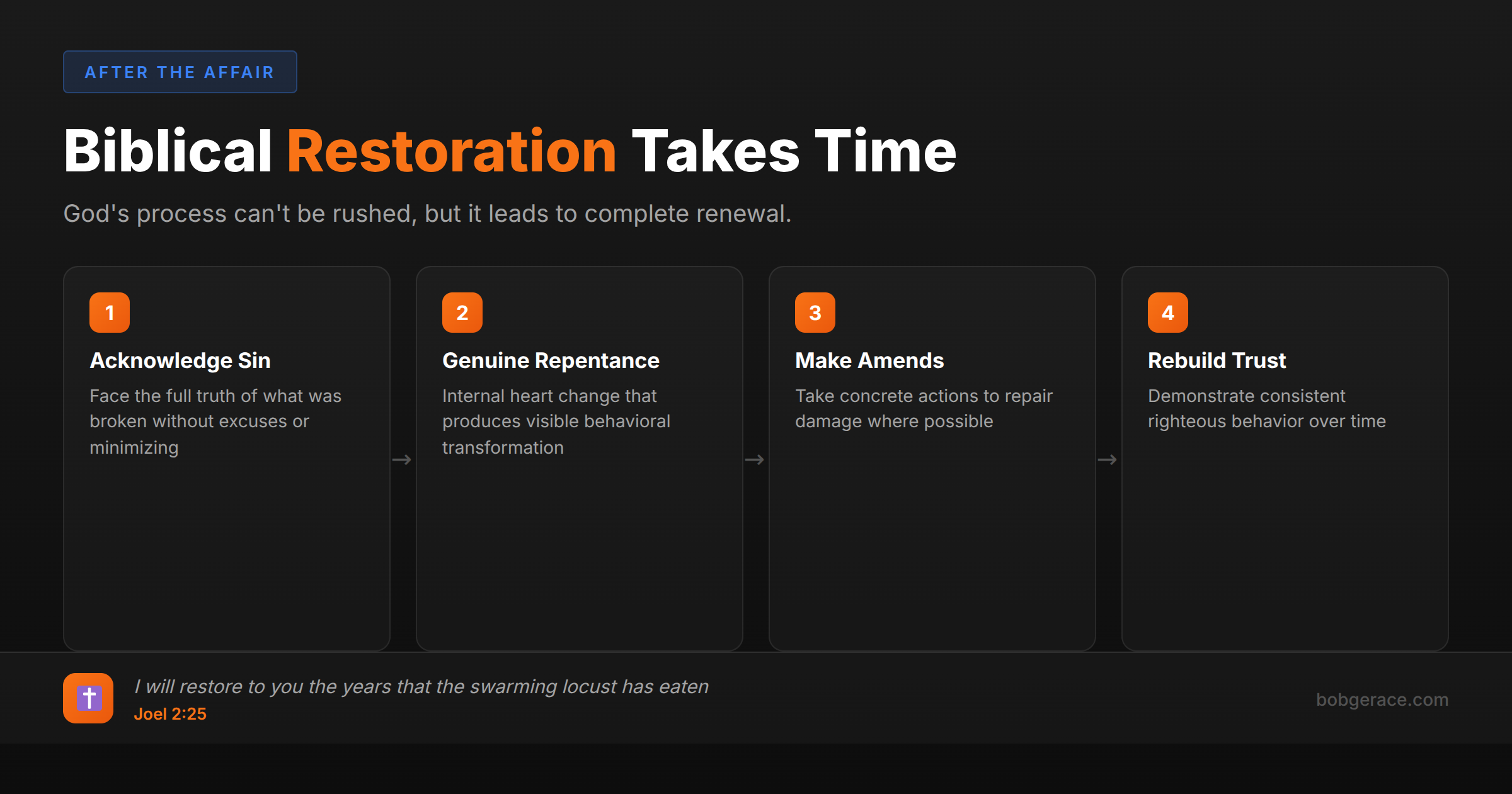
Biblical restoration is God's process of bringing back what was broken, damaged, or lost to its original purpose and beauty. In Scripture, restoration follows a clear pattern: acknowledgment of sin, genuine repentance, making amends where possible, and the gradual rebuilding of trust through consistent righteous behavior over time. Restoration isn't just forgiveness—it's the complete renewal of relationship. When David committed adultery with Bathsheba, his restoration involved confessing his sin (Psalm 51), accepting consequences, and rebuilding his relationship with God through sustained obedience. Similarly, marital restoration after infidelity requires the unfaithful spouse to demonstrate genuine repentance through changed behavior, transparency, and patient rebuilding of trust while the wounded spouse works through their own healing process.
The Full Picture
Restoration in Scripture is always God's heart for broken relationships, but it's never cheap or easy. It requires both parties to engage in a process that honors justice while extending mercy.
The biblical model shows us that restoration happens in stages, not moments. First comes conviction—the Holy Spirit reveals sin and its consequences. Then repentance—not just feeling sorry, but turning away from the destructive behavior. Next is confession—acknowledging wrongdoing to both God and those who were harmed. Then comes restitution—making things right where possible.
The final stage is rebuilding—patiently reconstructing trust through consistent, faithful behavior over time. This isn't about getting back to where you were; it's about becoming something better than before.
In marriage, this means the unfaithful spouse must be willing to be completely transparent, accept accountability, and prove their commitment through actions, not just words. The betrayed spouse must be willing to allow the process to unfold without demanding immediate trust while still protecting themselves appropriately.
Restoration requires both truth and grace. Truth means facing the full reality of what happened and its impact. Grace means choosing to work toward healing rather than seeking revenge. Both spouses need restoration—the unfaithful from their sin, the betrayed from their wounds.
Scripture shows us that God specializes in making beautiful things from broken pieces, but He does it His way, in His timing, through His process.
What's Really Happening
From a clinical perspective, biblical restoration aligns perfectly with what we know about trauma recovery and attachment repair. When infidelity occurs, it creates what we call 'attachment injury'—a fundamental breach of trust that affects the betrayed spouse's sense of safety and security.
The biblical restoration process addresses this systematically. The repentance phase allows the offending spouse to take full responsibility, which is crucial for the betrayed spouse's healing. Without this acknowledgment, the wounded partner remains in a state of hypervigilance, unable to begin recovery.
The //blog.bobgerace.com/christian-marriage-confession-psychology-her-secret/:confession and transparency elements create what we call 'earned security.' Trust isn't rebuilt through promises but through consistent, observable behavior over time. This matches biblical wisdom perfectly—restoration requires demonstrable change, not just emotional appeals.
Neurologically, betrayal trauma creates similar brain responses to PTSD. The betrayed spouse's brain literally rewires itself for survival mode. Biblical restoration's emphasis on patience and process gives the brain time to heal and form new neural pathways based on safety and security.
The restitution aspect addresses the need for justice that every betrayed spouse feels. This isn't about punishment but about the unfaithful spouse demonstrating their commitment to making things right. It helps restore the betrayed spouse's sense of worth and value.
Most importantly, biblical restoration recognizes that both spouses need healing. The unfaithful spouse must address whatever brokenness led to their choices, while the betrayed spouse must process their trauma and learn to trust again. This dual focus prevents the common mistake of making restoration only about the betrayed spouse 'getting over it.'
What Scripture Says
Scripture provides a clear framework for understanding restoration after betrayal. Joel 2:25 promises, "I will restore to you the years that the swarming locust has eaten," showing us that God specializes in restoring what seems completely destroyed.
Psalm 51:10-12 gives us David's prayer after his adultery: "Create in me a clean heart, O God, and renew a right spirit within me... Restore to me the joy of your salvation." Notice that David asks for internal transformation first—restoration begins with heart change.
Galatians 6:1 instructs us: "If anyone is caught in any transgression, you who are spiritual should restore him in a spirit of gentleness." Restoration requires both accountability and compassion. The goal isn't punishment but healing.
2 Corinthians 5:18 tells us that "God... gave us the ministry of reconciliation." We're called to be agents of restoration, following God's pattern of pursuing relationship despite betrayal.
Ezekiel 36:26 shows God's restoration process: "I will give you a new heart and put a new spirit within you." True restoration transforms the heart, not just the behavior. This is why biblical restoration takes time—God is doing deep work.
1 John 1:9 reminds us: "If we confess our sins, he is faithful and just to forgive us our sins and to cleanse us from all unrighteousness." Confession is the doorway to restoration, but cleansing is the ongoing process that follows.
What To Do Right Now
-
1
Stop trying to rush the process - Biblical restoration takes time and cannot be hurried by human effort or emotional pressure
-
2
Focus on your own heart first - Whether betrayed or unfaithful, ask God to reveal what He wants to change in you during this season
-
3
Seek wise biblical counsel - Don't attempt restoration alone; get help from mature believers who understand God's process
-
4
Practice radical honesty - Restoration requires complete truth-telling, even when it's painful or embarrassing
-
5
Commit to consistent prayer - Ask God daily for wisdom, strength, and the ability to see your spouse through His eyes
-
6
Be patient with setbacks - Restoration isn't linear; expect good days and bad days as part of God's refining process
Related Questions
- What does biblical forgiveness require of me?
- What's the difference between forgiveness and reconciliation?
- Does forgiveness mean no consequences?
- How do I model grace without enabling?
- What does 'seventy times seven' mean practically?
- What does 'godly sorrow' look like in practice?
- What does repentance look like for accumulated sin?
- How do I make amends for years of failure?
- What is restitution and do I owe it?
- What did Zacchaeus model about making things right?
Also find Bob on
Subscribe for weekly videos on Christian marriage.
Bring Your Marriage to a Coach
Biblical restoration isn't abstract—it's specific to what happened in your marriage, where you are now, and what the next right move is for you. A coach who knows your story can help you see it.
Talk to Bob →