Can I forgive without trusting?
6 min read
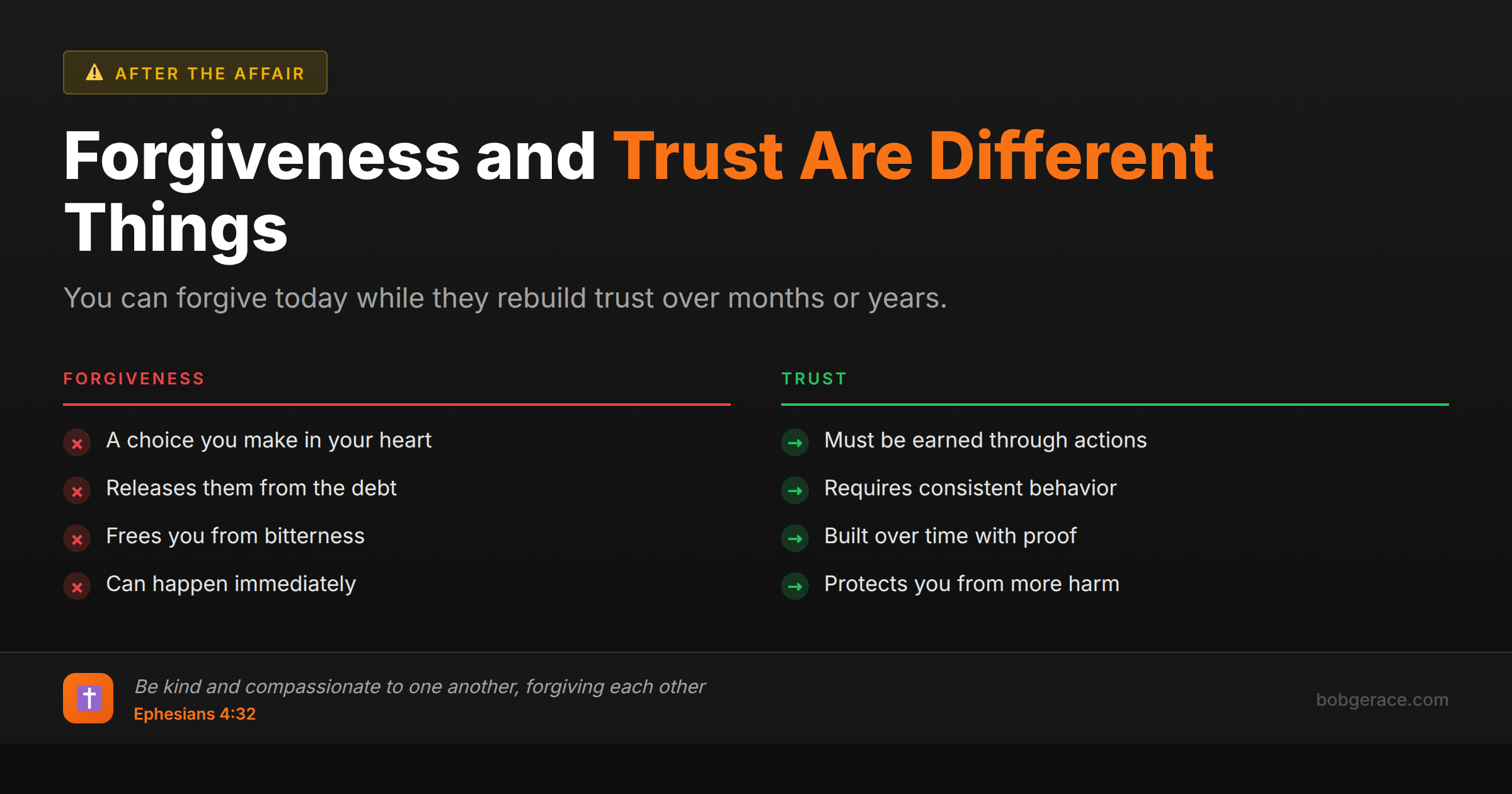
Yes, absolutely. Forgiveness and trust are two completely different things, and the Bible makes this clear. Forgiveness is a choice you make to release your spouse from the debt they owe you - it's about freeing yourself from bitterness and allowing God to work in your heart. Trust, however, is earned through consistent, trustworthy behavior over time. Think of it this way: Jesus forgave those who crucified Him, but He didn't immediately trust them with His mission. Forgiveness happens in your heart and is between you and God. Trust happens in relationship and requires your spouse to prove they're safe again. You can choose to forgive today while your spouse spends months or years rebuilding the trust they broke.
The Full Picture
This is one of the most important distinctions you'll ever understand in your marriage recovery. Too many people get stuck because they think forgiving means they have to trust immediately - or worse, they think they can't truly forgive until they trust again. Both are wrong.
Forgiveness is a decision, trust is a process. Forgiveness happens when you choose to release your spouse from the debt of their betrayal. You're essentially saying, "I'm not going to hold this against you anymore, and I'm not going to seek revenge." This is something you do for your own spiritual and emotional health, not for theirs.
Trust, on the other hand, is your confidence that your spouse will do what they say and be who they claim to be. Trust was broken when they chose to have an affair, and it can only be rebuilt through consistent, trustworthy actions over time. This isn't about punishment - it's about wisdom.
Here's what makes this confusing: our culture has mixed these up. We've been told that forgiveness means "forgive and forget" or "just get over it." That's not biblical forgiveness. Biblical forgiveness is choosing to love your enemy while still being wise about their character.
You can forgive completely while still requiring your spouse to prove they've changed. In fact, this is exactly what repentance looks like - not just saying sorry, but demonstrating through actions that they're trustworthy again. Your forgiveness creates the space for them to do this work, but it doesn't eliminate their responsibility to do it.
What's Really Happening
From a clinical perspective, separating forgiveness from trust is crucial for healthy recovery. When we conflate these concepts, we create unrealistic //blog.bobgerace.com/marriage-expectations-christian-reasonable-unreasonable/:expectations that often lead to re-traumatization.
Forgiveness is primarily an internal, cognitive process. It involves releasing resentment and the desire for revenge, which has measurable psychological and physical health benefits. Studies show that people who practice forgiveness experience lower levels of anxiety, depression, and stress-related illness.
Trust, however, is relational and behavioral. It's built on predictability, reliability, and safety. After an affair, the betrayed partner's nervous system has been dysregulated. Their brain has learned that their spouse is potentially dangerous. This is a normal, protective response.
Rebuilding trust requires what we call "earned security." The unfaithful partner must consistently demonstrate trustworthy behavior over time - typically 18-24 months minimum. This includes radical transparency, emotional availability, and complete cessation of deceptive behaviors.
When betrayed partners try to trust before their spouse has earned it, they often experience what we call "manufactured trust" - forcing themselves to trust because they think they should. This inevitably fails and creates additional trauma. Healthy trust rebuilding honors both the forgiveness process and the legitimate need for safety and consistency.
What Scripture Says
Scripture clearly distinguishes between forgiveness and trust, and gives us wisdom for both.
On Forgiveness: "Be kind and compassionate to one another, forgiving each other, just as in Christ God forgave you." - Ephesians 4:32
"Then Peter came to Jesus and asked, 'Lord, how many times shall I forgive my brother or sister who sins against me? Up to seven times?' Jesus answered, 'Not seven times, but seventy-seven times.'" - Matthew 18:21-22
Forgiveness is commanded and unlimited. But notice - nowhere does Scripture say that forgiveness equals immediate trust.
On Wisdom and Trust: "Above all else, guard your heart, for everything you do flows from it." - Proverbs 4:23
"The simple believe anything, but the prudent give thought to their steps." - Proverbs 14:15
On Repentance and Restoration: "Produce fruit in keeping with repentance." - Matthew 3:8
"If your brother or sister sins against you, rebuke them; and if they repent, forgive them." - Luke 17:3
Notice that repentance involves producing fruit - evidence of change. Even Jesus didn't just accept words; He looked for transformed lives. You can forgive immediately while waiting for the fruits of repentance before extending trust.
What To Do Right Now
-
1
Choose to forgive today - release your spouse from the debt of their betrayal, not because they deserve it, but because God commands it and you need freedom
-
2
Tell your spouse you forgive them, but explain that trust must be rebuilt through their consistent actions over time
-
3
Set clear, reasonable boundaries that protect your heart while your spouse proves they're trustworthy again
-
4
Ask your spouse to demonstrate repentance through specific actions: full disclosure, counseling, accountability, transparency with devices and schedule
-
5
Focus on your own healing - forgiveness is easier when you're getting stronger spiritually and emotionally through prayer, counseling, and community
-
6
Track trustworthy behaviors over time - look for consistent patterns of honesty, reliability, and emotional availability before extending deeper trust
Related Questions
- What does biblical forgiveness require of me?
- What's the difference between forgiveness and reconciliation?
- Does forgiveness mean no consequences?
- How do I forgive when she hasn't fully repented?
- What does real forgiveness look like?
- Can I forgive and still have boundaries?
- What boundaries should I set?
- What's the difference between boundary and ultimatum?
Also find Bob on
Subscribe for weekly videos on Christian marriage.
You Don't Have to Rebuild Trust Alone
Forgiveness is between you and God. Trust rebuilding is between you and your wife—and a coach who knows your specific story can help you calibrate what's actually happening in your marriage.
Talk to Bob →