What's the difference between forgiveness and reconciliation?
6 min read
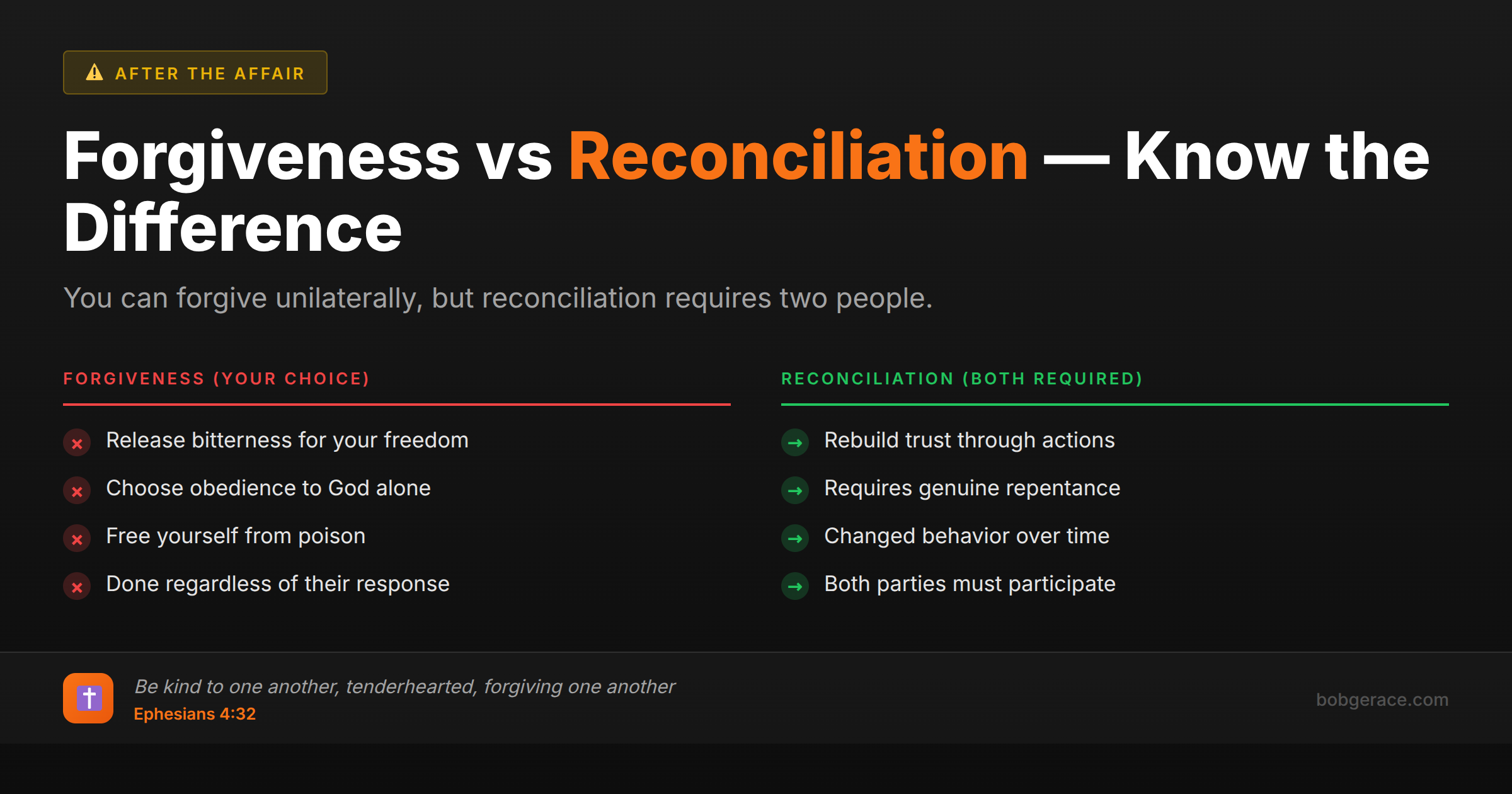
Forgiveness and reconciliation are two distinct biblical concepts that often get confused, especially after infidelity. Forgiveness is a unilateral decision you make to release resentment and the right to revenge - it's something you can do regardless of the other person's response. It's for your freedom and obedience to God. Reconciliation, however, is bilateral. It requires genuine repentance from the offending party, rebuilt trust over time, and mutual commitment to restored relationship. You can forgive someone who never acknowledges their wrong, but you cannot reconcile with someone who remains unrepentant. Forgiveness opens the door to potential reconciliation, but doesn't guarantee it or require it.
The Full Picture
Understanding the difference between forgiveness and reconciliation is absolutely crucial for your healing and your marriage's future. Too many people get stuck because they think forgiving their spouse means they must immediately reconcile, or they believe they can't truly forgive unless full reconciliation happens. Both assumptions are wrong and harmful.
Forgiveness is about your heart. It's a decision to release bitterness, the desire for revenge, and the debt you feel your spouse owes you. When Jesus commands us to forgive, He's commanding something we can actually do - regardless of whether the other person deserves it, asks for it, or even acknowledges they need it. Forgiveness is vertical first (between you and God) before it's horizontal (between you and your spouse).
Reconciliation is about the relationship. It requires two willing participants. Biblical reconciliation demands acknowledgment of wrong, genuine repentance (not just saying sorry), changed behavior over time, and rebuilt trust through consistent actions. You cannot reconcile with someone who continues in deception, minimizes their betrayal, or refuses to do the hard work of rebuilding.
Here's what this means practically: You may need to forgive your unfaithful spouse to free your own heart from bitterness, but that doesn't mean you're required to immediately trust them, resume normal marital intimacy, or pretend nothing happened. Forgiveness can happen in a moment; reconciliation is a process that takes time, effort, and proof of genuine change.
Don't let anyone pressure you into thinking forgiveness equals automatic reconciliation. That's not biblical, it's not wise, and it often enables continued destructive behavior.
What's Really Happening
From a therapeutic perspective, the confusion between forgiveness and reconciliation creates significant barriers to healthy recovery. I regularly see clients who feel guilty for setting boundaries with their unfaithful spouse because they believe forgiveness means removing all consequences.
Neurologically, forgiveness actually rewires our brain's stress response patterns. When we release resentment, we're literally changing how our nervous system processes the trauma. This is independent of the offending party's actions - it's an internal healing process that benefits the forgiver regardless of reconciliation outcomes.
Reconciliation, however, requires what we call 'earned security.' Trust isn't rebuilt through good intentions or promises - it's rebuilt through consistent, trustworthy behavior over time. The betrayed spouse's brain needs repeated positive experiences to override the trauma pathways created by the betrayal.
I often tell clients that premature reconciliation without genuine repentance creates what I call 'pseudo-healing.' It looks like restoration on the surface, but underneath, the fundamental issues remain unaddressed. This typically leads to repeated cycles of betrayal because the unfaithful spouse never faced real consequences or did the deep work necessary for //blog.bobgerace.com/christian-marriage-success-blueprint-lasting-legacy/:lasting change.
Healthy forgiveness actually strengthens your ability to set appropriate boundaries. When you're not driven by bitterness or the need for revenge, you can make clearer decisions about what reconciliation should require. Forgiveness gives you the emotional clarity to demand genuine change rather than accepting surface-level apologies.
What Scripture Says
Scripture clearly distinguishes between forgiveness and reconciliation, though both are important biblical concepts. Understanding what God's Word actually teaches will protect you from false guilt and unwise decisions.
On Forgiveness: *"Be kind to one another, tenderhearted, forgiving one another, as God in Christ forgave you"* (Ephesians 4:32). Notice this command doesn't depend on the other person's response. *"If your brother sins against you, rebuke him, and if he repents, forgive him"* (Luke 17:3) - but the rebuke comes first, showing that forgiveness doesn't mean ignoring sin.
On Reconciliation: *"If your brother sins against you, go and tell him his fault, between you and him alone. If he listens to you, you have gained your brother"* (Matthew 18:15). The word "if" is crucial - reconciliation depends on the offender listening and responding appropriately. *"Godly grief produces a repentance that leads to salvation without regret, whereas worldly grief produces death"* (2 Corinthians 7:10).
On Wisdom in Relationships: *"Do not give dogs what is holy, and do not throw your pearls before pigs"* (Matthew 7:6). Jesus Himself taught that we shouldn't give sacred things to those who will trample them. Your marriage is sacred - protect it wisely.
God forgave us while we were still sinners, but He still requires repentance for restored relationship. Even God doesn't reconcile with the unrepentant. You can follow His example by forgiving for your own freedom while requiring genuine repentance for reconciliation.
What To Do Right Now
-
1
Choose to forgive as an act of obedience to God, releasing your right to revenge and bitterness - this is for your freedom
-
2
Clearly communicate that forgiveness doesn't equal automatic reconciliation - your spouse must earn back trust through changed behavior
-
3
Set specific boundaries about what reconciliation requires: full disclosure, counseling, accountability, and consistent trustworthy behavior over time
-
4
Don't make major relationship decisions while emotions are highest - give yourself time to process what genuine repentance looks like
-
5
Seek wise counsel from mature Christians who understand both grace and wisdom - avoid those who pressure quick reconciliation
-
6
Focus on your own healing and relationship with God rather than trying to control your spouse's response to your forgiveness
Related Questions
- What does biblical forgiveness require of me?
- Can I forgive without trusting?
- Does forgiveness mean no consequences?
- How do I forgive when she hasn't fully repented?
- What does 'seventy times seven' mean practically?
- What does real forgiveness look like?
- What is a boundary vs. an ultimatum?
- What does reconciliation require that apology doesn't?
- What's the difference between acceptance and approval?
- How do I hold boundaries without hardening my heart?
Also find Bob on
Subscribe for weekly videos on Christian marriage.
Forgiveness is clear. Your marriage isn't.
A coach who knows your story can help you see what reconciliation actually requires in your specific situation — not just the concept, but the next right step.
Talk to Bob →