I broke something / punched a wall
6 min read
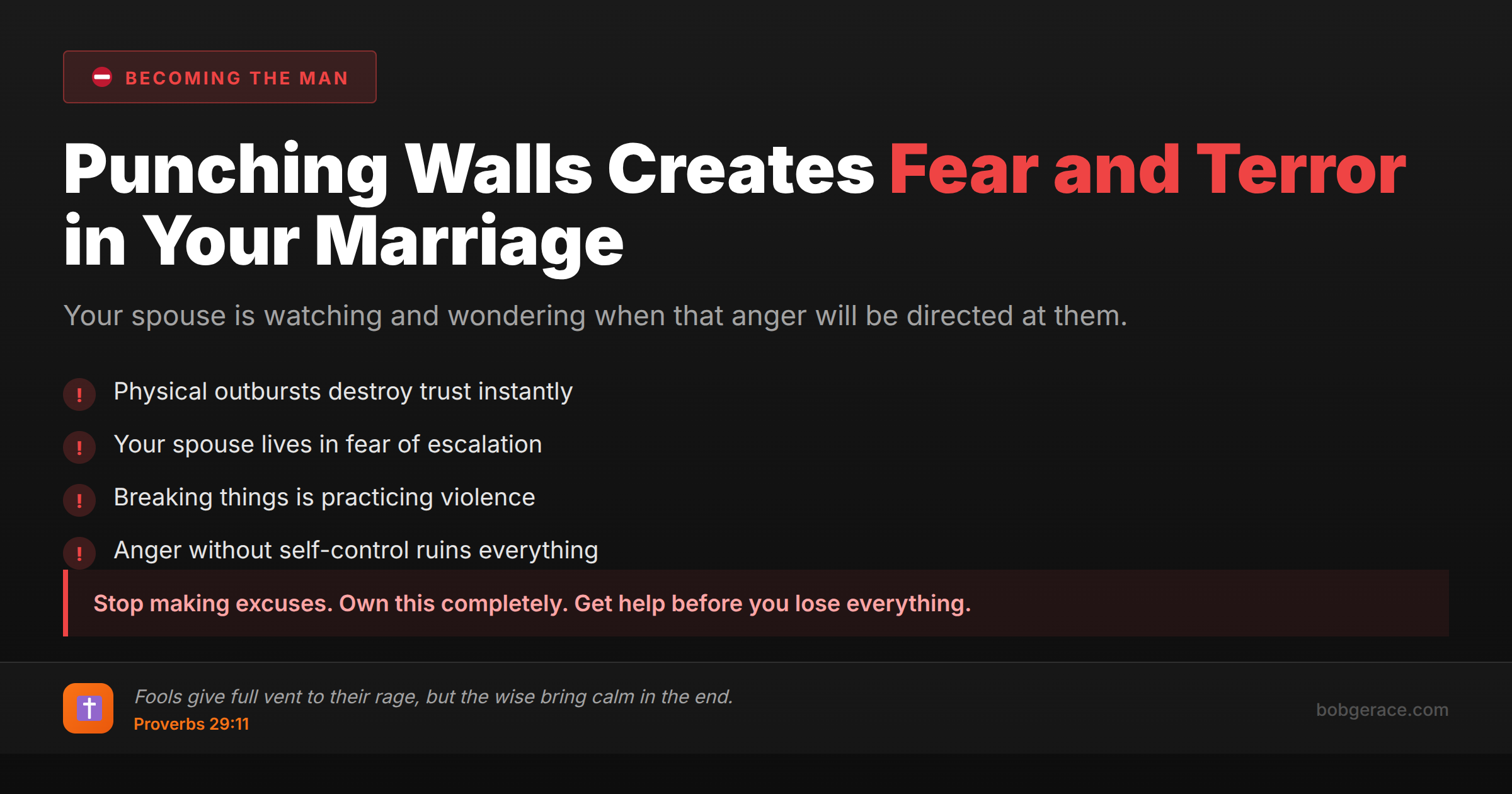
Breaking things or punching walls crosses a serious line. While it might feel like you're not hurting your spouse directly, physical outbursts create fear, damage trust, and often escalate to worse behavior. Your spouse is watching and wondering when that anger might be directed at them. This isn't just about managing stress - it's about fundamental respect and safety in your marriage. The good news is that recognizing this behavior as problematic is the first step toward change. But it requires immediate action, not just promises. You need practical tools to manage your anger before it reaches this breaking point, and you need to rebuild the trust you've damaged. Your marriage can recover from this, but only if you take it seriously and get the help you need.
The Full Picture
When you punch a wall or break something in anger, you've crossed from emotional expression into physical aggression. Your spouse doesn't see this as harmless property damage - they see it as a preview of what could happen to them. Even if you'd never hurt them directly, they can't know that for certain when you're in that state.
This behavior creates a climate of fear and walking on eggshells. Your spouse starts calculating their words and actions to avoid triggering your rage. That's not a marriage - that's survival mode. The emotional intimacy you both crave becomes impossible when one person is afraid of the other's explosive reactions.
The pattern typically escalates. What starts with slamming doors progresses to punching walls, then breaking valuable items, and sometimes advances to physical intimidation or violence toward people. Research shows that men who engage in property destruction during arguments are significantly more likely to become physically abusive toward their partners.
Your anger isn't inherently wrong - it's often signaling that something important to you feels threatened or violated. But your expression of that anger is causing more damage than whatever triggered it. When you explode physically, you're essentially having an adult tantrum, trying to control your environment and the people in it through intimidation.
The aftermath is always the same: guilt, shame, promises to change, maybe some repairs or replacements, and then... it happens again. Your spouse stops believing your apologies because they've heard them before. They start protecting themselves emotionally and sometimes physically. The marriage begins dying from a thousand cuts of broken trust.
What's Really Happening
Property destruction during conflicts represents a concerning escalation in aggressive behavior that we take very seriously in clinical settings. This behavior stems from poor emotional regulation - specifically, the inability to tolerate intense feelings without immediate discharge through physical action.
Neurologically, what's happening is a hijacking of your prefrontal cortex by your amygdala. When you're in this state, the rational part of your brain goes offline, and you're operating from pure fight-or-flight response. The temporary relief you feel after punching something reinforces this neural pathway, making it more likely to happen again.
This behavior serves multiple psychological functions: it provides immediate emotional release, it can intimidate others into compliance, and it gives you a sense of control when you feel powerless. However, these short-term 'benefits' come at enormous long-term costs to your relationships and self-respect.
What's particularly concerning is that property destruction often serves as a stepping stone to more serious aggression. In domestic violence research, we see this behavior as part of a continuum of abuse that includes emotional, psychological, and eventually physical violence toward people.
The good news is that anger management skills can be learned. Techniques like the 'pause and breathe' method, progressive muscle relaxation, and cognitive reframing can interrupt this cycle. But it requires consistent practice and often professional guidance to rewire these deeply ingrained response patterns.
What Scripture Says
Scripture is clear about the destructive nature of uncontrolled anger and calls us to a higher standard of self-control and gentleness, especially in our closest relationships.
Proverbs 29:11 reminds us: "Fools give full vent to their rage, but the wise bring calm in the end." When you punch walls or break things, you're giving full vent to your rage like a fool, rather than exercising the wisdom and self-control God calls you to demonstrate.
Ephesians 4:26-27 provides crucial guidance: "In your anger do not sin: Do not let the sun go down while you are still angry, and do not give the devil a foothold." Your anger itself isn't sinful, but your expression of it through property destruction absolutely is. You're giving the enemy a foothold in your marriage.
Galatians 5:22-23 lists self-control as a fruit of the Spirit: "But the fruit of the Spirit is love, joy, peace, forbearance, kindness, goodness, faithfulness, gentleness and self-control." Physical outbursts demonstrate the absence of self-control and grieve the Holy Spirit.
1 Corinthians 13:4-5 defines love as patient and kind, not easily angered. "Love is patient, love is kind... it is not easily angered, it keeps no record of wrongs." How can you claim to love your spouse while creating an atmosphere of fear through your explosive behavior?
Proverbs 16:32 elevates self-control above physical strength: "Better a patient person than a warrior, one with self-control than one who takes a city." True strength is demonstrated through restraint, not destruction.
James 1:19-20 gives us the biblical formula for handling conflict: "Everyone should be quick to listen, slow to speak and slow to become angry, because human anger does not produce the righteousness that God desires."
What To Do Right Now
-
1
Stop making excuses - Own this behavior completely. Don't blame stress, your spouse, or circumstances. This is about your choices and your self-control.
-
2
Apologize specifically - Tell your spouse exactly what you did wrong and acknowledge how it made them feel unsafe. Don't minimize it or promise it won't happen again until you have a plan.
-
3
Create a safety plan - Identify your warning signs and commit to leaving the room/house when you feel anger building. Share this plan with your spouse so they know what to expect.
-
4
Fix what you broke - Repair or replace damaged items immediately. This demonstrates that actions have consequences and shows respect for your shared property.
-
5
Get professional help - Find an anger management program or counselor who specializes in aggressive behavior. This isn't something you can typically fix on your own.
-
6
Establish accountability - Ask a trusted friend, pastor, or counselor to check in with you weekly about your anger management and hold you accountable for getting help.
Related Questions
Your Marriage Needs Immediate Help
Physical outbursts are a marriage emergency. Don't wait for it to get worse - get the professional guidance you need to break this destructive pattern.
Get Help Now →