I can't control my anger
6 min read
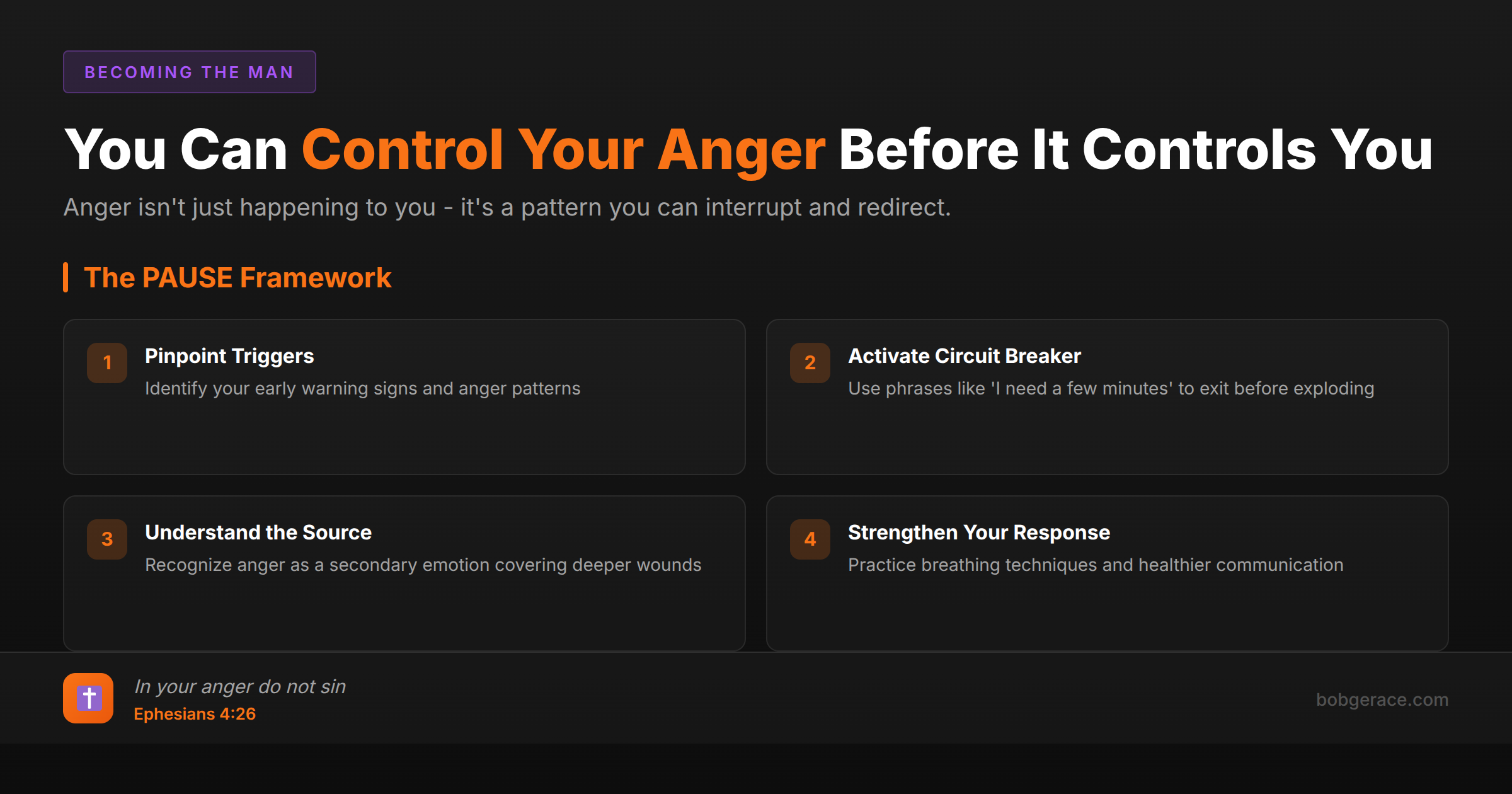
Feeling like you can't control your anger is more common than you think, and acknowledging this struggle is actually the first step toward change. Your anger isn't just happening to you - it's a response pattern that can be understood, interrupted, and redirected. The key is recognizing that anger is often a secondary emotion covering deeper issues like fear, hurt, or feeling powerless. The good news is that with the right tools and commitment, you can learn to manage your anger before it manages you. This involves identifying your triggers, developing pause techniques, and addressing the underlying wounds that fuel your rage. Your marriage doesn't have to be a casualty of your anger - it can actually become stronger as you learn healthier ways to communicate your needs and frustrations.
The Full Picture
When anger feels uncontrollable, it's like being hijacked by your own emotions. One moment you're fine, the next you're exploding over something that shouldn't warrant such a reaction. Your spouse is walking on eggshells, your kids are afraid, and you're left feeling ashamed and confused about why you keep losing it.
Here's what's really happening: anger is almost never the primary emotion. It's usually protecting something deeper - perhaps the fear of being disrespected, the pain of feeling unheard, or the powerlessness of watching your marriage struggle. Anger feels powerful and righteous, while these underlying emotions feel vulnerable and scary.
The anger cycle typically looks like this: A trigger occurs (your spouse comes home late without calling), you interpret it through your pain ("They don't respect me"), stress hormones flood your system, and you explode. The explosion temporarily relieves the pressure but damages the relationship and creates shame, setting up the next cycle.
Many people believe anger is either in you or it isn't - that you're either an "angry person" or you're not. This is false. Anger patterns are learned responses that developed for good reasons, often in childhood when you felt powerless or unsafe. Your nervous system learned to use anger as protection, and it's still trying to protect you now, even when the threat isn't real.
The impact on your marriage is devastating. Your spouse may shut down emotionally to protect themselves, creating the very disconnection that triggers more anger. Children learn that love includes fear, and they may carry this into their own relationships. The person you love most becomes the person who bears the brunt of your pain.
But here's the hope: anger can be managed and redirected. Your brain is capable of forming new patterns at any age. With understanding, tools, and practice, you can learn to feel anger without being controlled by it.
What's Really Happening
From a neurological perspective, uncontrolled anger involves the amygdala (your brain's alarm system) hijacking your prefrontal cortex (your rational thinking center). When triggered, your body floods with stress hormones like cortisol and adrenaline, preparing you for fight or flight. This happens faster than conscious thought, which is why anger can feel so sudden and overwhelming.
Trauma often plays a significant role. Many adults struggling with anger experienced childhood environments where they felt powerless, unsafe, or chronically misunderstood. The developing nervous system adapts by becoming hypervigilant to threats and quick to activate defensive responses. What feels like anger about your spouse being late may actually be your nervous system reacting to the familiar feeling of being unimportant or abandoned.
Attachment styles deeply influence anger patterns. Those with anxious attachment may explode when feeling disconnected from their partner, while those with avoidant attachment may rage when feeling controlled or suffocated. Understanding your attachment style helps you recognize what your anger is really trying to protect.
The good news is that neuroplasticity - your brain's ability to form new neural pathways - means change is always possible. Through practices like mindfulness, emotional regulation techniques, and trauma processing, you can literally rewire your brain's response patterns. The key is consistent practice and often professional support to help identify and heal the underlying wounds driving the anger.
Somatic approaches that work with the body's nervous system responses are particularly effective, as they address anger at the physiological level where it originates, not just the cognitive level where we try to talk ourselves out of it.
What Scripture Says
Scripture doesn't condemn anger itself - even Jesus expressed righteous anger. But it clearly distinguishes between righteous anger and destructive rage, calling us to handle our anger in ways that build up rather than tear down.
"In your anger do not sin: Do not let the sun go down while you are still angry" (Ephesians 4:26). This verse acknowledges that anger will happen, but warns against letting it lead to sin or allowing it to fester. God knows we'll experience anger, but He calls us to process it quickly and righteously.
"Everyone should be quick to listen, slow to speak and slow to become angry, because human anger does not produce the righteousness that God desires" (James 1:19-20). This passage gives us a practical framework: listen first, think before speaking, and be slow to anger. It reminds us that our anger, however justified it feels, doesn't accomplish God's purposes.
"A gentle answer turns away wrath, but a harsh word stirs up anger" (Proverbs 15:1). This wisdom shows us the power of our response in either escalating or de-escalating conflict. Our tone and approach can either feed anger or starve it.
"Above all else, guard your heart, for everything you do flows from it" (Proverbs 4:23). This reminds us that our external expressions of anger flow from internal heart conditions. True change requires addressing what's happening inside us, not just managing our external behavior.
"The Lord is compassionate and gracious, slow to anger, abounding in love" (Psalm 103:8). As we're called to be like Christ, this verse shows us God's character - slow to anger and quick to love. This is our model for handling frustration and conflict.
God's design is for us to experience full emotions, including anger, but to process them in ways that bring healing rather than harm to our relationships.
What To Do Right Now
-
1
Identify your early warning signs - tension in jaw, clenched fists, racing thoughts - and create a plan to pause when you notice them
-
2
Develop a 'circuit breaker' phrase like 'I need a few minutes' and use it to exit situations before you explode
-
3
Practice the 4-7-8 breathing technique: inhale for 4, hold for 7, exhale for 8 to activate your calm nervous system
-
4
Write down your anger triggers and look for patterns - what underlying need or fear is usually involved?
-
5
Apologize specifically for angry outbursts without defending your reasons - focus on the impact, not your intent
-
6
Seek professional help from a therapist who specializes in anger management and trauma if anger is impacting your relationships
Related Questions
- Why do I rage at the people I love?
- I said things I can't take back
- How do I stop exploding?
- What's underneath my anger?
- What is 'amygdala hijack' and how do I interrupt it?
- What does 'be angry and sin not' mean?
- She's scared of my anger
- What is 'betrayal trauma' and do I have it?
- How do I not lose my mind right now?
- What does healthy coping look like?
Also find Bob on
Subscribe for weekly videos on Christian marriage.
Your Anger Pattern Needs a Coach
A tool can't see what's underneath your rage or know what happened last Tuesday. A coach who hears your story can help you interrupt this before it costs you your marriage.
Talk to Bob →