I said things I can't take back
6 min read
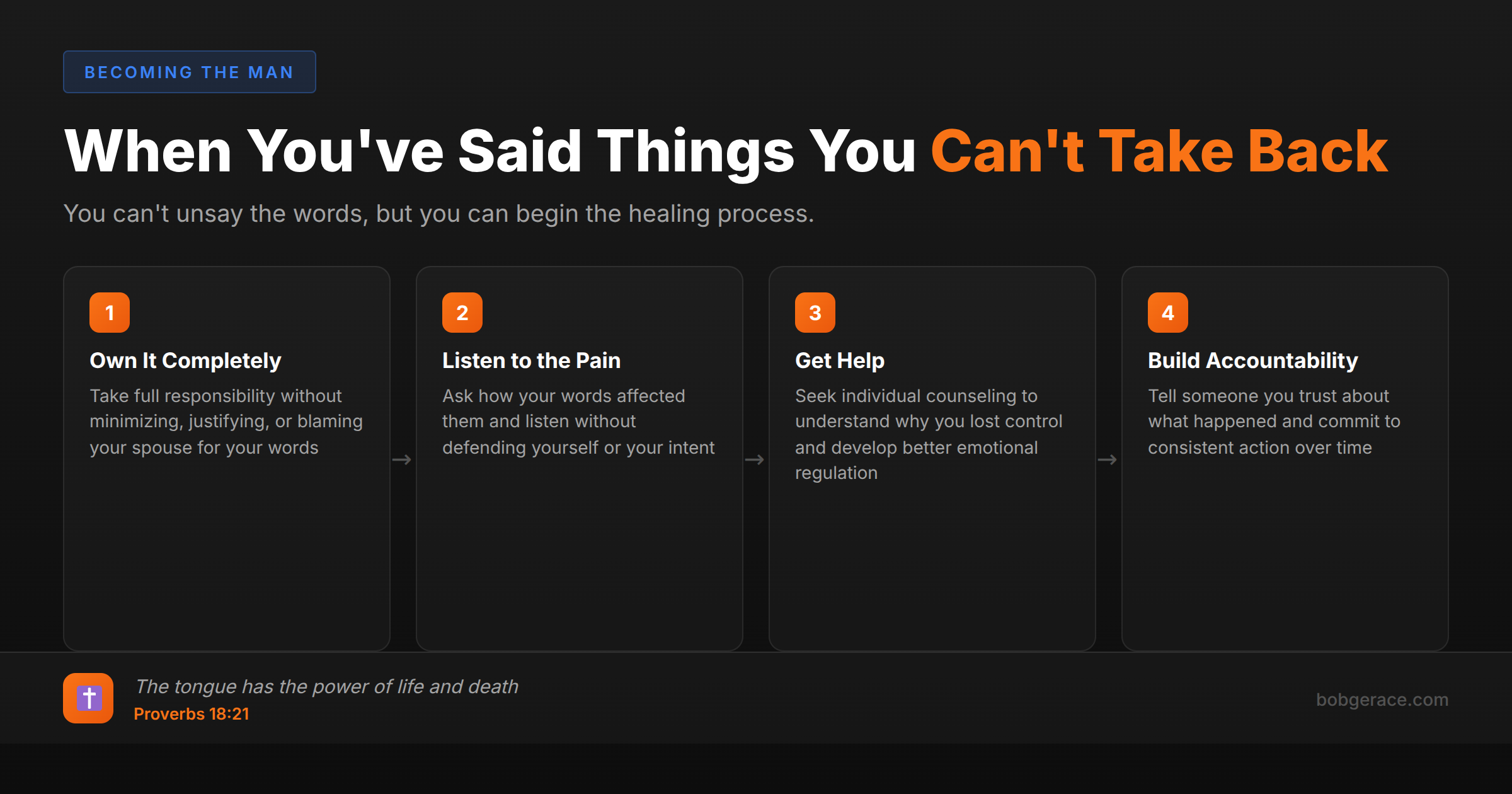
Words spoken in anger can cut deeper than any physical wound, and the weight of knowing you've said something that can't be unsaid is crushing. But here's what I need you to understand: while you can't take back the words, you absolutely can take responsibility for the damage and begin the healing process. The path forward isn't about minimizing what you said or expecting quick forgiveness. It's about genuine repentance, understanding the full impact of your words, and committing to the hard work of rebuilding trust. Your marriage isn't automatically over because of what you said, but restoration will require humility, patience, and consistent action over time.
The Full Picture
When we say things we can't take back, we're dealing with more than just 'bad communication.' We're facing the reality that our words have the power to wound at the deepest level, and we've used that power destructively.
The immediate aftermath is often filled with panic, regret, and the desperate wish that we could rewind time. You might find yourself saying things like 'I didn't mean it' or 'You know I don't really think that,' but the damage is done. Your spouse heard those words come out of your mouth, and they landed with full force.
What makes this particularly devastating is that it usually happens with someone we love most. We don't typically unleash our worst words on strangers or acquaintances – we save our most cutting remarks for the person who's supposed to be safest with us. This creates a unique kind of betrayal that goes beyond the words themselves.
The ripple effects extend far beyond the moment you spoke. Your spouse may begin questioning everything they thought they knew about how you really see them. They might wonder if the cruel things you said in anger are actually what you've been thinking all along. This can create a crisis of trust that affects every aspect of your relationship.
Here's what you need to understand: your spouse's reaction – whether it's withdrawal, counter-attacks, or emotional shutdown – is a normal response to being verbally wounded by someone they trusted. Their healing timeline isn't up to you, and their willingness to forgive isn't something you can demand or manipulate.
The good news is that marriages can heal from this kind of damage, but only when the person who caused the harm takes full responsibility and commits to real change.
What's Really Happening
From a clinical perspective, when we say things we can't take back, we're witnessing a breakdown in emotional regulation that often has deeper roots than the immediate trigger.
Neurologically, when we're in a state of high emotional arousal – what we call 'emotional hijacking' – the prefrontal cortex (our rational brain) goes offline, and the limbic system (our emotional brain) takes control. In this state, we lose access to empathy, perspective, and our usual moral filters. This explains why people often say things that are completely out of character for them.
The psychological aftermath involves what we call 'moral injury' – the deep shame and self-condemnation that comes from violating our own values. This can actually impede the healing process if it leads to defensive behaviors like minimizing, blame-shifting, or emotional withdrawal.
For the receiving partner, hurtful words can trigger what's known as 'betrayal trauma.' Their nervous system responds as if they're under threat, which can manifest as hypervigilance, emotional numbing, or fight-or-flight responses. Understanding this helps explain why they can't simply 'get over it' quickly.
The path to healing requires what we call 'earned security' – consistent actions over time that demonstrate genuine change. This involves developing better emotional regulation skills, understanding your triggers, and creating accountability systems to prevent future outbursts. The goal isn't just to avoid saying hurtful things, but to address the underlying issues that led to the emotional dysregulation in the first place.
What Scripture Says
Scripture has much to say about the power of our words and the path to restoration after we've wounded others with them.
The Power of Words: *"The tongue has the power of life and death, and those who love it will eat its fruit"* (Proverbs 18:21). God's Word acknowledges that our words carry incredible power – they can build up or tear down, heal or wound. When we've used this power destructively, we must take full responsibility for the damage caused.
The Reality of Sin: *"If we claim to be without sin, we deceive ourselves and the truth is not in us. If we confess our sins, he is faithful and just and will forgive us our sins and purify us from all unrighteousness"* (1 John 1:8-9). This isn't about making excuses, but acknowledging that our capacity to wound others with words is part of our fallen nature.
True Repentance: *"Godly sorrow brings repentance that leads to salvation and leaves no regret, but worldly sorrow brings death"* (2 Corinthians 7:10). There's a difference between feeling bad about consequences and genuine repentance that leads to change.
The Process of Restoration: *"Brothers and sisters, if someone is caught in a sin, you who live by the Spirit should restore that person gently"* (Galatians 6:1). While this verse is often applied to helping others, it also shows us God's heart for restoration rather than condemnation.
Patience in Healing: *"Be completely humble and gentle; be patient, bearing with one another in love"* (Ephesians 4:2). The healing process requires patience – both with yourself and with your spouse's timeline for healing.
New Creation: *"Therefore, if anyone is in Christ, the new creation has come: The old has gone, the new is here!"* (2 Corinthians 5:17). This reminds us that real change is possible through Christ, even after we've caused deep wounds.
What To Do Right Now
-
1
Take Full Responsibility - Don't minimize, justify, or blame your spouse for 'making you' say what you said. Own the damage completely.
-
2
Understand the Impact - Ask your spouse how your words affected them and listen without defending yourself. Their pain is valid regardless of your intent.
-
3
Seek Professional Help - Get individual counseling to understand why you lost control and develop better emotional regulation skills.
-
4
Create Accountability - Tell someone you trust about what happened and ask them to help you stay accountable for change.
-
5
Develop New Patterns - Learn and practice healthy conflict resolution skills, including taking timeouts when emotions escalate.
-
6
Be Patient with the Process - Understand that rebuilding trust takes time and your spouse's healing can't be rushed or demanded.
Related Questions
- I can't control my anger
- Why do I rage at the people I love?
- I broke something / punched a wall
- She's scared of my anger
- How do I stop exploding?
- What's underneath my anger?
- She brings up things from years ago
- How do I address years of built-up hurt?
- What does genuine repair look like for old wounds?
- What is an 'apology' vs. 'repair' vs. 'attunement'?
Also find Bob on
Subscribe for weekly videos on Christian marriage.
Don't Navigate This Damage Alone
You need someone who knows your specific marriage, hears what actually happened, and can help you rebuild trust in the next 30 days. This is what coaching is for.
Talk to Bob →