What is 'deactivation' and has she done it?
6 min read
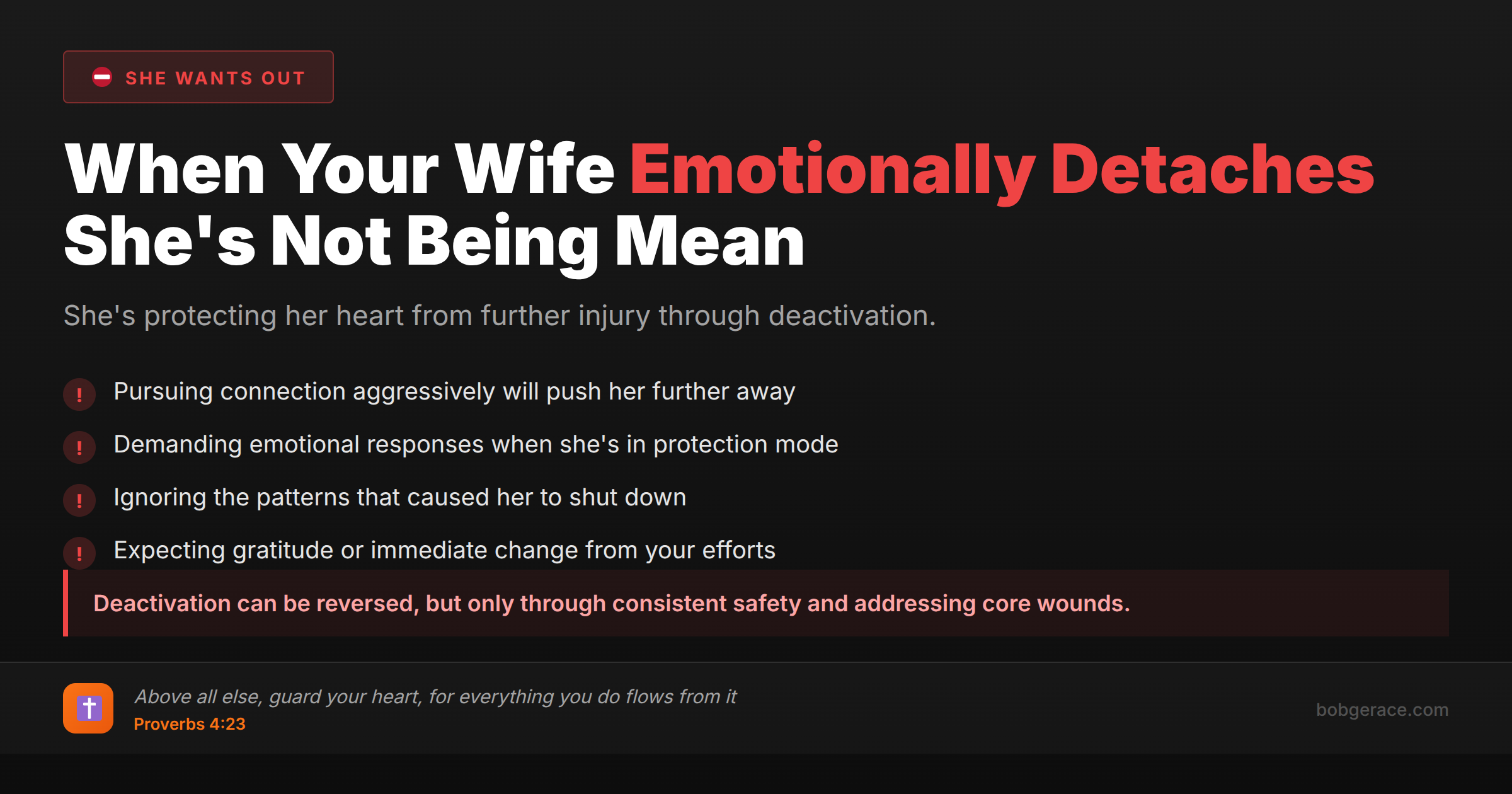
Deactivation is when your wife systematically shuts down her emotional attachment to you as a protective mechanism. It's not anger or temporary withdrawal - it's a deliberate psychological strategy where she turns off her need for connection to avoid further pain. Think of it as emotional anesthesia. You'll recognize deactivation when she stops seeking your comfort, stops sharing her inner world, and becomes functionally independent in ways that feel cold and distant. She's not trying to hurt you - she's trying to survive what feels like repeated relationship injuries. This often happens after years of feeling unheard, unseen, or unsafe in the marriage. If she's done this, the good news is that deactivation can be reversed, but it requires understanding what drove her to this protective state and addressing those core wounds with consistency and genuine change.
The Full Picture
Deactivation is one of the most misunderstood dynamics in struggling marriages. When your wife deactivates, she's essentially turning off her attachment system - the biological drive that makes us seek comfort, closeness, and connection from our spouse.
This isn't the same as having a bad day or being temporarily upset. Deactivation is a systematic emotional withdrawal that can include:
• Emotional numbing - She feels little to nothing about relationship issues that used to upset her • Self-reliance - She stops coming to you for support, comfort, or decision-making • Reduced physical affection - Hugs, kisses, and intimacy feel mechanical or disappear entirely • Conversational distance - She shares less about her day, feelings, or inner world • Future planning changes - She makes decisions without including you or considering "us"
The most dangerous aspect of deactivation is that it often looks like improvement to husbands. The fighting stops, she seems calmer, and there's less conflict. Many men mistakenly think things are getting better when actually their wife has emotionally checked out.
Deactivation typically happens after what attachment researchers call cumulative attachment injuries - repeated experiences where she felt dismissed, criticized, or emotionally unsafe. Her brain essentially says, "This isn't working, so I'll stop needing it." It's a survival mechanism, not a character flaw.
The timeline matters too. Recent deactivation (weeks to months) is generally more reversible than chronic deactivation (years). If she's been emotionally shut down for years, the neural pathways for connection have been essentially rewired, making restoration more challenging but not impossible.
What's Really Happening
From an attachment theory perspective, deactivation represents a shift toward avoidant attachment behaviors as a protective response to chronic relationship injuries. Research by Dr. Sue Johnson and others shows that when our primary attachment bond feels unsafe, the nervous system adapts by suppressing attachment needs.
Neurologically, deactivation involves downregulation of the attachment system in the brain. The anterior cingulate cortex, which processes emotional connection and social pain, essentially reduces its sensitivity. This explains why deactivated spouses often report feeling "numb" or "nothing" about their marriage - their brain has literally turned down the volume on attachment-related emotions.
This process typically follows a predictable pattern I call the "Protest-Despair-Detachment" cycle. Initially, she protests through conflict, criticism, or emotional appeals. When those fail to create lasting change, she moves into despair - a period of sadness and grief. Finally, she reaches detachment, where she stops expecting the relationship to meet her needs.
The clinical challenge is that deactivation serves an important adaptive function - it reduces emotional pain and allows her to function. This means that simply asking her to "reconnect" or "try harder" often fails because you're essentially asking her to make herself vulnerable to the same injuries that caused the shutdown.
Successful reactivation requires what I term "earned security" - consistent, safe experiences that demonstrate the attachment system can be trusted again. This process typically involves addressing the original injuries, establishing new patterns of emotional responsiveness, and gradually rebuilding neural pathways for connection. The timeframe varies, but research suggests it takes approximately six months of consistent positive experiences to begin reversing chronic deactivation patterns.
What Scripture Says
Scripture speaks directly to the heart's protective mechanisms and the process of restoration. Proverbs 4:23 reminds us to "Above all else, guard your heart, for everything you do flows from it." When your wife deactivates, she's essentially doing what this verse instructs - protecting her heart from further injury.
Proverbs 18:14 says, "The human spirit can endure in sickness, but a crushed spirit who can bear?" This captures the essence of deactivation - when someone's spirit has been repeatedly wounded in marriage, the soul finds ways to protect itself, even if that means emotional withdrawal.
The restoration process is beautifully illustrated in Hosea 2:14: "Therefore I am now going to allure her; I will lead her into the wilderness and speak tenderly to her." Notice God doesn't force or pressure - He allures and speaks tenderly. This is the pathway back from deactivation: gentle, consistent, tender pursuit that proves safety.
1 Peter 3:7 instructs husbands to live with their wives "in an understanding way, showing honor to the woman as the weaker vessel, since they are heirs with you of the grace of life." Understanding deactivation is part of this calling - recognizing when your wife has had to protect herself and responding with honor rather than frustration.
Isaiah 42:3 describes God's gentle approach: "A bruised reed he will not break, and a smoldering wick he will not snuff out." When deactivation has occurred, your wife's heart is like that bruised reed. Harsh approaches, demands for immediate change, or frustration will only drive her further into protection mode.
Finally, Ephesians 5:29 calls husbands to nourish and cherish their wives "just as Christ does the church." The word "nourish" means to bring to maturity, while "cherish" means to warm and comfort. Reversing deactivation requires both - patient development of safety and consistent emotional warmth.
What To Do Right Now
-
1
Stop pursuing connection aggressively - pressuring a deactivated wife pushes her further into protection mode
-
2
Acknowledge the deactivation directly: 'I can see that you've had to protect your heart, and I understand why'
-
3
Focus on consistent small acts of service and kindness without expecting emotional response or gratitude
-
4
Address the specific behaviors and patterns that contributed to her need to deactivate
-
5
Create predictable safety through reliable follow-through on commitments, both large and small
-
6
Give her time and space to observe your changes without demanding that she engage or respond emotionally
Related Questions
- What is 'attachment shutdown'?
- When does a wife's attachment system shut off completely?
- What is 'emotional disengagement'?
- Is her shutdown protective or permanent?
- What does avoidant attachment look like in a wife?
- Why did she stop fighting?
- What is 'deactivation' and did I cause it?
- What is 'earned avoidance' from marriage pain?
- Can deactivated attachment reactivate?
Also find Bob on
Subscribe for weekly videos on Christian marriage.
Your Marriage Isn't a Textbook Case
If she's deactivated, the path back depends on what broke trust in your specific story. A coach who knows your marriage can tell you what to do next week, not just what deactivation means.
Talk to Bob →