What is the 'distance and isolation cascade'?
6 min read
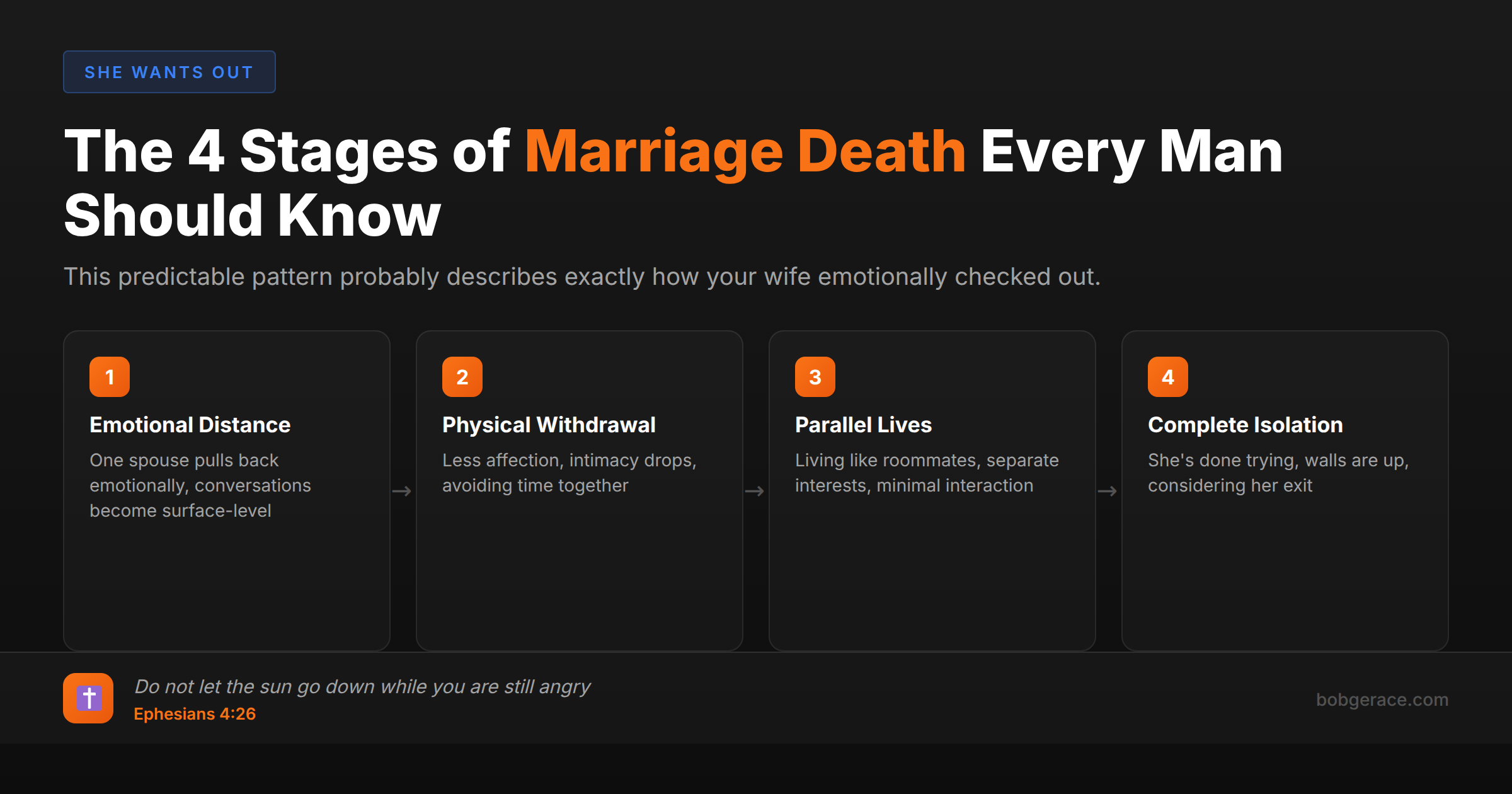
The distance and isolation cascade is a research-backed pattern that shows how marriages deteriorate through predictable stages of emotional withdrawal. It starts when one or both spouses begin pulling back emotionally, which triggers the other to do the same, creating an escalating cycle of disconnection. This isn't just relationship theory - it's likely the exact pattern that led your wife to where she is today. The cascade typically unfolds over months or years: first comes emotional distance, then physical withdrawal, followed by parallel lives, and finally complete isolation. Each stage makes the next one more likely, which is why your marriage probably didn't collapse overnight but slowly eroded until she reached her breaking point.
The Full Picture
The distance and isolation cascade follows a predictable pattern that most struggling marriages experience:
Stage 1: Initial Withdrawal - One partner starts pulling back emotionally, often due to unresolved conflict, feeling unheard, or growing resentment. This might look like shorter conversations, less physical affection, or avoiding deeper topics.
Stage 2: Reciprocal Distance - The other partner senses the withdrawal and responds by pulling back themselves, either as protection or retaliation. Now both spouses are operating from a defensive position.
Stage 3: Parallel Lives - Couples start functioning more like roommates than partners. They handle logistics and responsibilities but share little emotional intimacy. Conversations become transactional.
Stage 4: Complete Isolation - Partners feel like strangers living in the same house. Physical and emotional intimacy virtually disappears. This is often when one spouse starts contemplating separation.
The Momentum Factor - Each stage builds momentum toward the next. What makes this cascade so dangerous is that it feels natural to both partners. When someone withdraws from you, your instinct is to protect yourself by withdrawing back.
Common Triggers - The cascade often begins after major stressors: job changes, financial pressure, parenting challenges, or unresolved conflicts that never got properly addressed. Many men miss the early warning signs because the changes seem minor at first.
Why It Accelerates - The longer this pattern continues, the more each partner interprets neutral behaviors negatively. A simple "how was your day" becomes loaded with tension. Both spouses start assuming the worst intentions from each other.
What's Really Happening
From a clinical perspective, the distance and isolation cascade represents a breakdown in what we call the "emotional safety system" of marriage. Research by Dr. Sue Johnson shows that humans are biologically wired for attachment, and when that attachment feels threatened, we automatically engage in protest behaviors or withdrawal.
The cascade follows the attachment theory framework: when one partner perceives threat to the relationship bond, they either pursue (criticism, demands for attention) or withdraw (emotional shutdown, physical distance). The tragic irony is that both responses - intended to protect the relationship - actually damage it further.
Neurologically, chronic relationship stress keeps both partners in a state of emotional dysregulation. The prefrontal cortex, responsible for rational thinking and empathy, goes offline while the limbic system drives survival responses. This is why logical conversations become impossible during later stages of the cascade.
What many couples don't realize is that this pattern creates what we call "negative sentiment override" - a state where neutral or even positive behaviors from your spouse get interpreted negatively. Your brain literally rewires to expect threat from your partner.
The cascade also involves what researchers term "emotional contagion" - emotions spread between partners unconsciously. When one spouse consistently operates from anxiety, resentment, or withdrawal, the other inevitably absorbs those emotional states.
Clinically, I see this pattern as entirely reversible when both partners understand what's happening and commit to interrupting the cycle. However, it requires conscious effort to override these deeply ingrained emotional and behavioral patterns.
What Scripture Says
Scripture speaks directly to the patterns that create distance in marriage. Ephesians 4:26-27 warns us: "In your anger do not sin: Do not let the sun go down while you are still angry, and do not give the devil a foothold." Unresolved anger and resentment are primary drivers of the distance cascade.
Proverbs 18:19 tells us that "A brother wronged is more unyielding than a fortified city; disputes are like the barred gates of a citadel." Once emotional walls go up in marriage, they become increasingly difficult to breach. This verse captures exactly what happens in the isolation cascade.
1 Peter 4:8 instructs us that "Above all, love each other deeply, because love covers over a multitude of sins." The cascade often begins when spouses stop extending grace to each other and start keeping score of offenses instead of covering them with love.
Matthew 18:15 provides the antidote: "If your brother or sister sins, go and point out their fault, just between the two of you." Many cascades could be prevented if couples addressed issues directly instead of withdrawing into silent resentment.
Ecclesiastes 4:12 reminds us that "Though one may be overpowered, two can defend themselves. A cord of three strands is not quickly broken." The cascade represents the weakening of that cord - when couples stop fighting together and start fighting each other.
God designed marriage as a covenant of intimacy and oneness. The distance and isolation cascade represents the enemy's strategy to destroy what God intended to be unbreakable. Recognizing this spiritual dimension helps us understand why rebuilding requires both practical effort and divine intervention.
What To Do Right Now
-
1
Map your cascade timeline by writing down when you first noticed emotional distance and how it progressed to where you are today
-
2
Identify your typical withdrawal patterns - do you shut down, get busy with work, avoid difficult conversations, or something else
-
3
Stop all pursuit behaviors immediately - no more trying to force conversations, demanding explanations, or overwhelming her with attention
-
4
Take responsibility for your role in creating distance without expecting her to do the same or waiting for her acknowledgment
-
5
Create safety through consistent, small gestures that demonstrate change rather than grand romantic gestures that create pressure
-
6
Begin individual therapy or coaching to understand your attachment patterns and learn healthier responses to relationship stress
Related Questions
- What is 'negative sentiment override' and does she have it?
- What are the Four Horsemen and which ones killed us?
- What does Gottman research say about how marriages die?
- What are 'failed bids for connection' and how many did I miss?
- What is 'turning away' vs. 'turning against'?
- Why does she remember everything differently than I do?
- What is 'emotional disengagement'?
- What's the difference between conflict and disengagement?
- She doesn't want to be touched
- What is 'accumulated resentment'?
Also find Bob on
Subscribe for weekly videos on Christian marriage.
Your Marriage Has Its Own Cascade
Understanding the pattern is step one. Knowing where you are in it—and what to do next in your specific situation—requires a coach who sees your marriage, not just the theory.
Talk to Bob →