How do I change patterns that feel hardwired?
6 min read
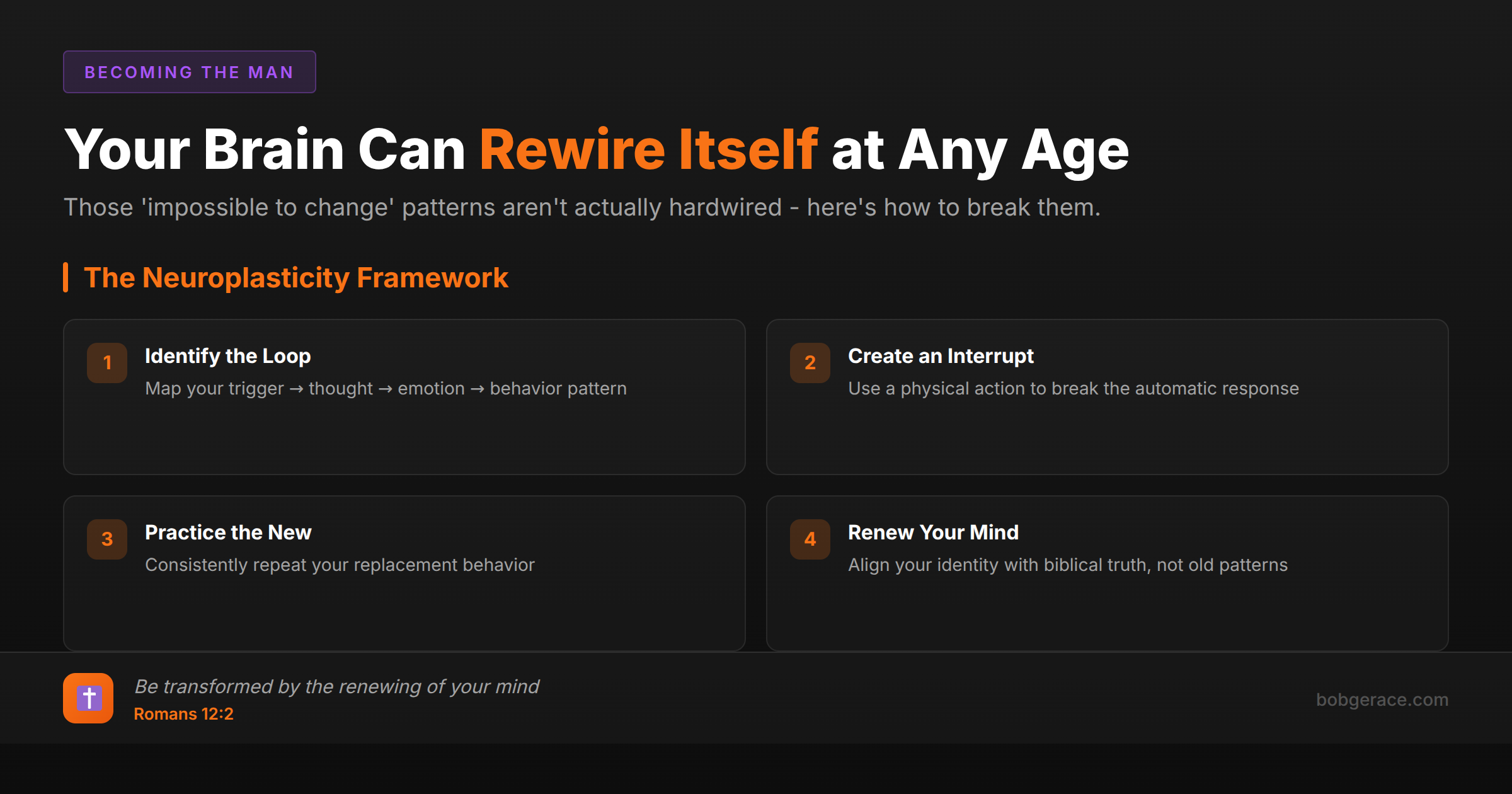
Those patterns that feel impossible to change aren't actually hardwired - they're just well-worn neural pathways that have become automatic through repetition. Your brain has something called neuroplasticity, which means it can literally rewire itself at any age. The key is understanding that change requires both disrupting the old pattern and consistently practicing the new one. This isn't about willpower alone. It's about strategically creating new neural pathways through repetition, environmental changes, and conscious interruption of automatic responses. Combined with biblical truth that reminds you of your new identity in Christ, you can absolutely change patterns that have controlled you for years. It takes time and intentionality, but transformation is not only possible - it's promised.
The Full Picture
Here's what's actually happening in your brain when patterns feel hardwired: every time you've reacted with anger, withdrawn emotionally, or defaulted to criticism, you've strengthened specific neural pathways. Think of it like walking across a field - the first time is difficult, but after hundreds of trips, there's a clear path that requires no thought to follow.
But here's the game-changer: your brain retains neuroplasticity throughout your entire life. This means you can literally create new neural pathways and weaken old ones. The "hardwired" feeling is just familiarity and automaticity, not permanence.
The challenge is that changing these patterns requires three things most men struggle with: patience, consistency, and vulnerability. You need patience because new neural pathways take 60-90 days of consistent practice to become automatic. You need consistency because sporadic effort actually reinforces the old pattern by proving it's "stronger." And you need vulnerability because change requires admitting the old way isn't working.
Environmental factors play a huge role. If you're trying to change your communication patterns but you're still stressed about work, sleep-deprived, and avoiding difficult conversations, you're fighting an uphill battle. Your environment needs to support the new pattern, not sabotage it.
The most important thing to understand is that identity drives behavior, not the other way around. If you see yourself as "someone who gets angry" or "someone who shuts down," you'll unconsciously protect that identity. But when you start seeing yourself as someone who is learning to love like Christ, your brain begins working with you instead of against you.
What's Really Happening
From a neurological perspective, what feels "hardwired" is actually the result of myelination - a process where frequently used neural pathways become coated with a fatty substance called myelin, making signal transmission faster and more automatic. This is why your defensive reactions can happen before you even consciously choose them.
The good news is that neuroplasticity research shows us that new pathways can be created and strengthened at any age through what we call "deliberate practice." This means consciously interrupting automatic responses and choosing different behaviors repeatedly until new pathways become myelinated.
The key is understanding the neurological cycle: trigger → automatic thought → emotional response → behavioral reaction. Most men try to change at the behavioral level, which requires enormous willpower and usually fails. Instead, we need to intervene earlier in the cycle, at the automatic thought level.
Stress hormones like cortisol actually strengthen old pathways and make new learning more difficult. This is why pattern change is so much harder when you're overwhelmed, sleep-deprived, or in conflict. Your brain literally defaults to the most practiced response under stress.
Successful pattern change requires what we call "state management" - learning to recognize your internal state and creating conditions that support new choices. This includes everything from breathing techniques that activate your parasympathetic nervous system to environmental modifications that reduce triggers while you're building new patterns.
What Scripture Says
Scripture is clear that transformation is not only possible but expected for believers. Romans 12:2 commands us: *"Do not conform to the pattern of this world, but be transformed by the renewing of your mind. Then you will be able to test and approve what God's will is—his good, pleasing and perfect will."* The word "transformed" here is *metamorphoo* - the same word used for a caterpillar becoming a butterfly. Complete structural change.
2 Corinthians 5:17 reminds us of our new identity: *"Therefore, if anyone is in Christ, the new creation has come: The old has gone, the new is here!"* This isn't just positional truth - it's neurological reality. You literally have a new nature that enables new patterns.
Ephesians 4:22-24 gives us the process: *"You were taught, with regard to your former way of life, to put off your old self, which is being corrupted by its deceitful desires; to be made new in the attitude of your minds; and to put on the new self, created to be like God in true righteousness and holiness."* Notice the three steps: put off, renew your mind, put on.
Philippians 4:8 provides the mental framework for new patterns: *"Finally, brothers and sisters, whatever is true, whatever is noble, whatever is right, whatever is pure, whatever is lovely, whatever is admirable—if anything is excellent or praiseworthy—think about such things."* Your thought patterns directly influence your behavioral patterns.
God doesn't just command change - He enables it through His Spirit and His truth.
What To Do Right Now
-
1
Identify your specific trigger-response pattern - Write down exactly what happens: trigger → automatic thought → emotion → behavior. Awareness is the first step to interruption.
-
2
Create a pattern interrupt - Choose a physical action (deep breath, count to five, touch your wedding ring) that you'll do every time you notice the trigger. Practice this when you're calm.
-
3
Design your replacement behavior - Don't just stop the old pattern; have a specific new response ready. If you used to withdraw, your new pattern might be to say "I need a moment to think about this."
-
4
Modify your environment - Remove triggers where possible and add cues for new behaviors. If stress triggers the pattern, address the stress. If certain conversations trigger it, change the setting.
-
5
Practice the new pattern daily in low-stakes situations - Don't wait for the trigger. Rehearse your new response when you're calm so it's available when you're stressed.
-
6
Track your progress for 90 days - Use a simple journal to note triggers, responses, and wins. The pattern becomes neurologically automatic around day 60-90 of consistent practice.
Related Questions
Ready to Break the Patterns Holding You Back?
You don't have to stay stuck in cycles that are destroying your marriage. Let's work together to create lasting change.
Start Today →