Why does feedback feel like attack?
6 min read
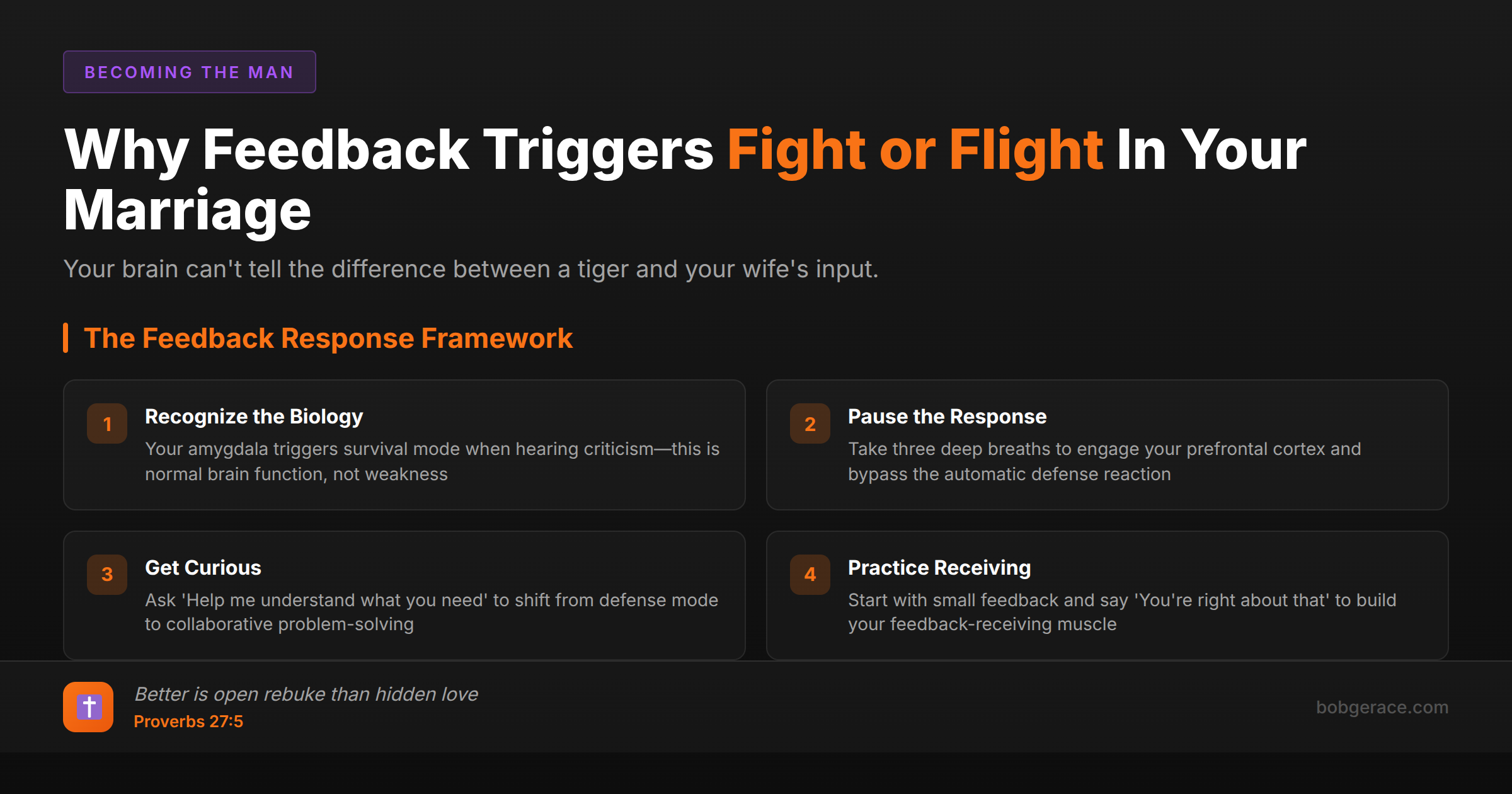
Feedback feels like attack because your brain's threat-detection system can't distinguish between physical danger and emotional vulnerability. When your spouse offers input about your behavior, your amygdala triggers the same fight-or-flight response you'd have facing a predator. This isn't weakness—it's biology. Your past experiences with criticism, shame messages from childhood, and fear of rejection all contribute to this hair-trigger response. The brain prioritizes survival over accuracy, so it interprets feedback as evidence that you're fundamentally flawed or that your relationship is in danger. Understanding this neurological reality is the first step toward receiving feedback with less reactivity.
The Full Picture
Your defensive reactions to feedback aren't character flaws—they're survival mechanisms gone haywire. When your spouse says "You always leave dishes in the sink," your brain doesn't hear a simple request for changed behavior. It hears "You're inadequate, irresponsible, and I'm disappointed in who you are."
The Neurological Reality
Your amygdala, the brain's alarm system, processes emotional threats faster than your prefrontal cortex can apply logic. Within milliseconds, stress hormones flood your system, your heart rate spikes, and your capacity for rational thinking plummets. This isn't melodrama—it's measurable brain chemistry.
The Shame Connection
Defensiveness often masks deeper shame wounds. If you grew up with perfectionist parents, harsh criticism, or conditional love, your nervous system learned that feedback equals rejection. Every piece of input from your spouse unconsciously connects to those early experiences of not being enough.
The Identity Threat
Feedback challenges your self-concept. You see yourself as loving and responsible, so when your spouse points out areas for growth, it creates cognitive dissonance. Rather than expanding your self-awareness, your brain's default is to protect your existing identity by discrediting the messenger.
The Relationship Fear
Underneath defensiveness lies terror that your spouse is building a case against you—collecting evidence to justify leaving or withdrawing love. This fear makes feedback feel like relationship threats rather than improvement opportunities.
Recognizing these patterns doesn't eliminate them overnight, but awareness creates space between stimulus and response where growth becomes possible.
What's Really Happening
From a neurological perspective, defensive reactions to feedback involve three key brain systems working against effective communication. The amygdala's threat detection, the anterior cingulate cortex's pain processing, and the prefrontal cortex's executive function all activate simultaneously when we perceive criticism.
Research shows that social rejection activates the same neural pathways as physical pain. When your spouse offers feedback, your brain literally experiences it as injury. This explains why feedback can feel so intensely uncomfortable—you're not overreacting, you're having a genuine pain response.
Attachment Patterns Matter
Your early attachment relationships created internal working models about safety and worth. If caregivers used criticism as control or withdrew affection when you made mistakes, your nervous system learned that feedback signals relationship danger. These implicit memories activate faster than conscious thought.
The Negativity Bias
Humans evolved with a negativity bias—we notice and remember criticism more intensely than praise. While this kept our ancestors alive, it makes modern relationships challenging. Your brain naturally amplifies the emotional impact of feedback while minimizing positive interactions.
Shame vs. Guilt Processing
Healthy guilt focuses on behavior: "I did something wrong." Toxic shame attacks identity: "I am wrong." When feedback triggers shame rather than guilt, defensiveness becomes inevitable. The key is learning to translate identity attacks back into behavioral requests.
Understanding these mechanisms helps normalize your reactions while pointing toward specific interventions that can retrain your nervous system's response to feedback.
What Scripture Says
Scripture acknowledges the pain of correction while emphasizing its value for growth and relationship health. God's approach to feedback provides a model for both giving and receiving input in marriage.
Proverbs 27:5-6 reminds us that "Better is open rebuke than hidden love. Wounds from a friend can be trusted, but an enemy multiplies kisses." Your spouse's feedback, even when it stings, comes from love and commitment to your growth.
Proverbs 19:20 instructs us to "Listen to advice and accept discipline, and at the end you will be counted among the wise." Wisdom requires the humility to receive input, especially from those closest to us who see our blind spots.
Hebrews 12:11 acknowledges that "No discipline seems pleasant at the time, but painful. Later on, however, it produces a harvest of righteousness and peace for those who have been trained by it." The temporary discomfort of feedback leads to long-term blessing.
1 Corinthians 13:5 teaches that love "keeps no record of wrongs." When your spouse offers feedback, they're not building a case against you—they're investing in your relationship's health and your personal growth.
God himself models gentle correction. Revelation 3:19 says "Those whom I love I rebuke and discipline." Divine feedback comes from love, not condemnation, and the same spirit should characterize marital communication.
Galatians 6:1 instructs us to restore others "gently" when they struggle. Your spouse's feedback should come with gentleness, and your reception should reflect humility and trust in their good intentions.
What To Do Right Now
-
1
Pause before responding—take three deep breaths to engage your prefrontal cortex and bypass the amygdala's alarm response
-
2
Ask clarifying questions like 'Help me understand what you need' to shift from defense mode to curiosity and collaboration
-
3
Separate the message from the delivery—focus on the underlying request even if the tone triggers your defensiveness
-
4
Practice the phrase 'You're right about that' for small issues to build your feedback-receiving muscle gradually
-
5
Schedule regular check-ins with your spouse to normalize feedback as relationship maintenance rather than crisis intervention
-
6
Identify your specific triggers and share them with your spouse so they can adjust their approach while you work on your reactions
Related Questions
Ready to Transform Your Communication Patterns?
Stop letting defensiveness sabotage your marriage. Get personalized strategies to receive feedback with confidence and strengthen your connection.
Work With Bob →