I turn everything into an argument
6 min read
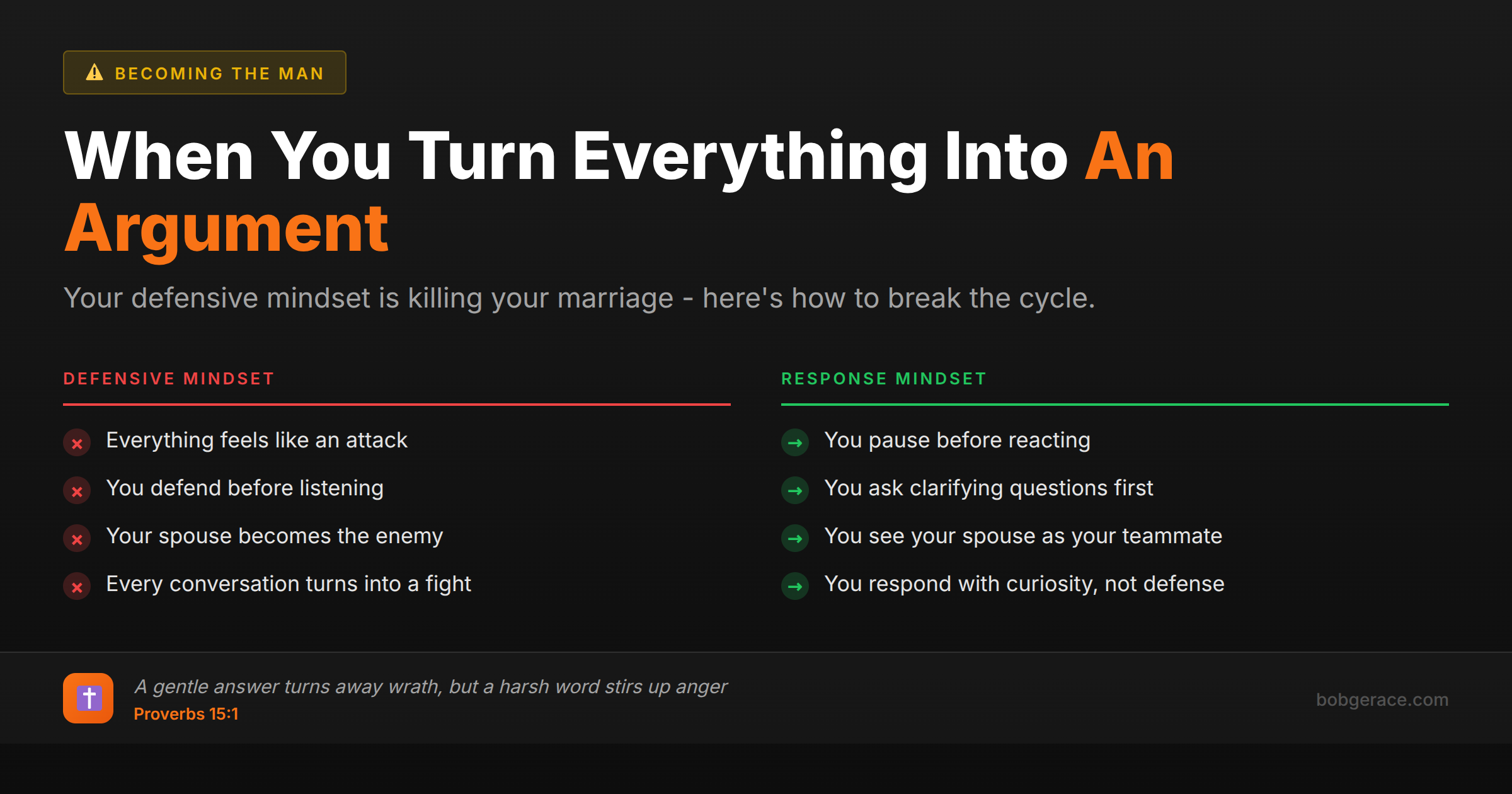
When you turn everything into an argument, you're likely operating from a defensive mindset that sees criticism or attack where none exists. This pattern usually stems from feeling misunderstood, unappreciated, or unsafe in your relationship. Your brain is essentially in fight-or-flight mode, interpreting your spouse's words as threats rather than attempts at communication. The good news? This is a learned response that can be unlearned. It starts with recognizing the pattern, taking responsibility for your part, and developing new ways to respond when you feel triggered. You can break this cycle, but it requires intentional effort and often some outside help to see your blind spots clearly.
The Full Picture
Let's be honest - if you're turning everything into an argument, your marriage is in crisis mode whether you realize it or not. Your spouse is likely walking on eggshells, choosing their words carefully, or maybe they've just stopped talking altogether. This isn't about who's right or wrong; it's about a communication pattern that's slowly strangling your relationship.
The Defensive Spiral
Here's how it typically works: Your spouse makes a simple comment or request. Something inside you interprets this as criticism, disrespect, or attack. Before you know it, you're defending yourself, counter-attacking, or turning their concern back on them. What started as "Can you help with dinner?" becomes a full-blown argument about appreciation, fairness, or past grievances.
This isn't just happening in your marriage - it's probably showing up at work, with friends, maybe even with your kids. When defensiveness becomes your default setting, it affects every relationship you have.
The Cost Is Higher Than You Think
Every argument chips away at trust and intimacy. Your spouse starts editing themselves around you, which kills authentic connection. They may appear to "lose" arguments with you, but what they're really losing is the desire to engage with you at all. The real tragedy isn't the arguments themselves - it's the conversations that stop happening because your spouse gives up trying to communicate with you.
Why This Matters Now
Marriages don't usually die from one big blow-up. They die from the slow erosion of a thousand small arguments that could have been conversations instead. If you're recognizing this pattern in yourself, that awareness is actually a gift. It means you still have time to change course before your spouse emotionally checks out completely.
What's Really Happening
From a clinical perspective, chronic defensiveness often indicates an overactive threat-detection system. Your nervous system has learned to interpret neutral or even positive interactions as potential dangers. This hypervigilance typically develops from past experiences where you felt criticized, abandoned, or emotionally unsafe.
Neurologically, when you feel threatened, your amygdala (the brain's alarm system) hijacks your prefrontal cortex (responsible for rational thinking). This is why you might say things in arguments that you later regret - your thinking brain literally went offline. The defensive response happens so quickly that by the time you're aware of it, you're already in fight mode.
What's particularly destructive about this pattern is that it creates a self-fulfilling prophecy. Your defensiveness actually produces the very rejection and criticism you're trying to avoid. Your spouse, faced with your defensive walls, becomes frustrated and may indeed become critical, confirming your belief that you need to defend yourself.
The attachment system also plays a crucial role here. If you experienced inconsistent emotional safety in childhood or previous relationships, your attachment system may be chronically activated, constantly scanning for signs of abandonment or rejection. Every conversation becomes a potential threat to your emotional security.
Healing this pattern requires rewiring both your nervous system's threat responses and your attachment expectations. This typically involves learning to pause between trigger and response, developing emotional regulation skills, and often addressing underlying attachment wounds that keep you in a defensive stance.
What Scripture Says
Scripture has a lot to say about how we respond when we feel attacked or misunderstood. The Bible doesn't sugarcoat human nature - it acknowledges that our hearts are prone to defensiveness, pride, and self-protection. But it also offers a better way.
Proverbs 15:1 reminds us that "A gentle answer turns away wrath, but a harsh word stirs up anger." When you turn everything into an argument, you're choosing the harsh word every time. The gentle answer isn't weakness - it's wisdom and strength under control.
James 1:19-20 gives us the practical framework: "Everyone should be quick to listen, slow to speak and slow to become angry, because human anger does not produce the righteousness that God desires." Notice the order - listen first, then speak carefully, and be slow to anger. Defensiveness reverses this entire sequence.
Proverbs 18:2 cuts right to the heart of defensive behavior: "Fools find no pleasure in understanding but delight in airing their own opinions." When you're defensive, you're not trying to understand your spouse - you're just trying to be right and protect yourself.
Ephesians 4:29 challenges us to speak only what builds up: "Do not let any unwholesome talk come out of your mouths, but only what is helpful for building others up according to their needs." Ask yourself: are your defensive responses building up your spouse or tearing them down?
The biblical model isn't about being a doormat - it's about responding from security in God's love rather than from fear and self-protection. 1 John 4:18 tells us that "perfect love drives out fear." When you're secure in God's love, you don't need to defend yourself so fiercely because your worth isn't on trial in every conversation.
Philippians 2:3-4 calls us to "do nothing out of selfish ambition or vain conceit. Rather, in humility value others above yourselves, not looking to your own interests but each of you to the interests of the others." This is the antidote to defensiveness - focusing on understanding and serving your spouse rather than protecting and defending yourself.
What To Do Right Now
-
1
Recognize your triggers - Start noticing what topics, tones, or times of day make you most defensive. Write them down without judgment.
-
2
Practice the pause - When you feel that defensive surge, count to three before responding. Tell your spouse 'Let me think about that for a second.'
-
3
Ask clarifying questions - Instead of defending, ask 'Help me understand what you mean by that' or 'What would be most helpful to you right now?'
-
4
Own your pattern - Tell your spouse 'I realize I've been turning our conversations into arguments. I'm working on this and I'm sorry.'
-
5
Create a code word - Ask your spouse to gently point out when you're getting defensive. Agree on a signal that helps you reset.
-
6
Get outside perspective - Work with a counselor or coach who can help you see your defensive patterns and learn new response skills.
Related Questions
- Why do I get defensive every time?
- I can't take criticism without exploding
- She says she can't talk to me
- How do I hear her without defending myself?
- I justify instead of listen
- What does 'taking responsibility' actually look like?
- What is 'stonewalling' and why does she do it?
- She shuts down when I try to connect
- What are the Four Horsemen and which ones killed us?
- I said things I can't take back
Also find Bob on
Subscribe for weekly videos on Christian marriage.
Your Marriage Can't Wait on Trial and Error
If you're turning everything into a fight, you need someone who sees what you can't see in your own patterns. Bob works with men in active crisis—your specific triggers, your marriage, your next 30 days.
Talk to Bob →