What's the difference between stonewalling and self-protection?
6 min read
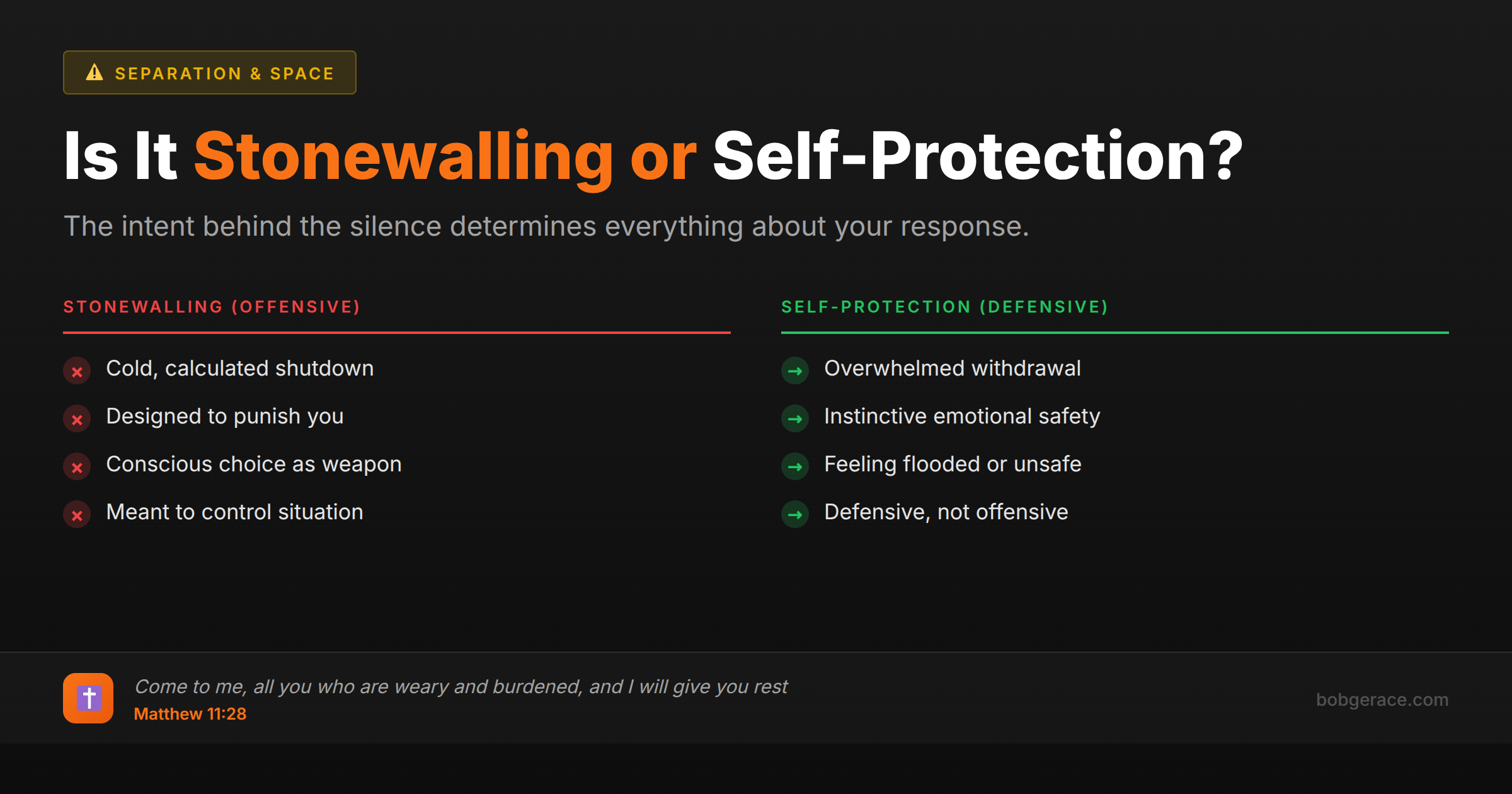
Stonewalling is an intentional shutdown designed to punish or control your partner - it's cold, calculated, and meant to hurt. Self-protection, however, is an emotional withdrawal that happens when someone feels overwhelmed, threatened, or emotionally flooded. The key difference lies in intent and awareness. When someone stonewalls, they're making a conscious choice to withhold engagement as a weapon. When someone self-protects, they're instinctively pulling back because they're emotionally dysregulated or feel unsafe. One is offensive, the other is defensive. Understanding this difference is crucial because it determines how you should respond and whether there's hope for breakthrough in your marriage.
The Full Picture
Here's what most marriage advice gets wrong: it lumps all emotional withdrawal into one category and tells you to "break through" it. That's not just unhelpful - it's potentially harmful.
Stonewalling is warfare. It's when your spouse deliberately shuts down to punish you, manipulate the situation, or assert control. They know exactly what they're doing. There's often a cold, calculated quality to it. They might give you the silent treatment for days, refuse to engage in problem-solving, or act like you don't exist. The goal is to make you feel powerless and force you to back down.
Self-protection is survival. This happens when someone's nervous system gets overwhelmed. They're not trying to hurt you - they're trying to protect themselves from what feels like emotional danger. Maybe they grew up in a chaotic home where conflict meant someone got hurt. Maybe they've been criticized or attacked so much in the marriage that withdrawal feels like the only safe option.
The tricky part? They can look identical from the outside. Both involve silence, both involve withdrawal, both leave you feeling shut out. But the heart behind them is completely different.
Stonewalling requires confrontation and boundaries. Self-protection requires patience and safety-building. Get this wrong, and you'll either enable bad behavior or traumatize someone who's already struggling. The stakes are higher than most people realize, especially when your marriage is already hanging by a thread.
What's Really Happening
From a clinical perspective, we're looking at two completely different neurobiological processes. Stonewalling typically involves the prefrontal cortex - the thinking brain - making deliberate choices about engagement. Self-protection involves the limbic system and autonomic nervous system responding to perceived threats.
When someone is self-protecting, their nervous system has likely shifted into a dorsal vagal state - what we call "shutdown mode." This isn't a choice; it's an involuntary response to feeling overwhelmed or unsafe. Their heart rate may actually slow down, they might feel disconnected from their body, and accessing words or emotions becomes genuinely difficult.
Stonewalling, conversely, maintains higher cortical function. The person can choose when to engage, they're tracking your reactions, and they're often strategically timing their responses for maximum impact. They might suddenly "come back online" when they sense you're about to give up or when they want something.
The assessment tools I use include looking at physiological markers, timing patterns, and responsiveness to different approaches. Someone who's self-protecting will often respond positively to genuine safety cues and gentle invitations to connect. Someone who's stonewalling will typically escalate their withdrawal when you stop pursuing or create consequences.
This distinction is crucial for treatment planning. Stonewalling requires addressing power dynamics and often underlying personality patterns. Self-protection requires trauma-informed approaches and nervous system regulation skills.
What Scripture Says
Scripture gives us clear guidance on both situations, and the responses are markedly different.
For those who are genuinely overwhelmed and need protection, Jesus shows incredible gentleness: "Come to me, all you who are weary and burdened, and I will give you rest" (Matthew 11:28). When people are in self-protection mode, they need the kind of patient love that "bears all things, believes all things, hopes all things, endures all things" (1 Corinthians 13:7).
But stonewalling - the deliberate withholding of love and engagement - is addressed differently. "If your brother or sister sins, go and point out their fault, just between the two of you. If they listen to you, you have won them over" (Matthew 18:15). Notice Jesus doesn't say to just be patient indefinitely with sin patterns.
The Apostle Paul is even more direct about manipulative behavior: "Have nothing to do with fruitless deeds of darkness, but rather expose them" (Ephesians 5:11). Stonewalling is often a deed of darkness - it's designed to hurt and control.
Wisdom helps us discern the difference: "The simple believe anything, but the prudent give thought to their steps" (Proverbs 14:15). We're called to be wise about people's motivations, not naive.
Ultimately, both situations require us to "speak the truth in love" (Ephesians 4:15), but truth looks different when addressing fear versus addressing rebellion. One needs an invitation to safety, the other needs a call to accountability.
What To Do Right Now
-
1
Test the waters carefully. Approach with genuine warmth and see if they soften at all. Self-protection often responds to authentic kindness; stonewalling usually doesn't.
-
2
Look for patterns. Does the withdrawal happen when they're overwhelmed (self-protection) or when they don't get their way (stonewalling)?
-
3
Check your own behavior. Have you been critical, demanding, or unsafe? If so, you might be dealing with self-protection and need to rebuild safety first.
-
4
Set appropriate boundaries. If it's stonewalling, stop pursuing and start requiring respectful engagement. If it's self-protection, create space but stay warmly available.
-
5
Address the root, not just the symptom. Stonewalling requires confronting the power dynamic. Self-protection requires healing underlying wounds or trauma.
-
6
Get professional help for accurate assessment. A skilled therapist can help you distinguish between these patterns and develop the right response strategy.
Related Questions
- What is 'stonewalling' and why does she do it?
- What does 'emotional flooding' feel like for her?
- Why did she stop fighting?
- What does giving up look like vs. regulating?
- Is she protecting herself or punishing me?
- What is 'emotional disengagement'?
- She shuts down when I try to connect
- She won't talk about our problems
- Why does she seem numb/flat/dead inside?
- What is 'window of tolerance' and how do I widen mine?
Also find Bob on
Subscribe for weekly videos on Christian marriage.
Ready to Apply This to Your Marriage?
Knowing the difference is one thing. Figuring out which one is happening in your specific situation—and what to do about it—is another. That's where a coach helps.
Talk to Bob →