Why did she stop fighting?
6 min read
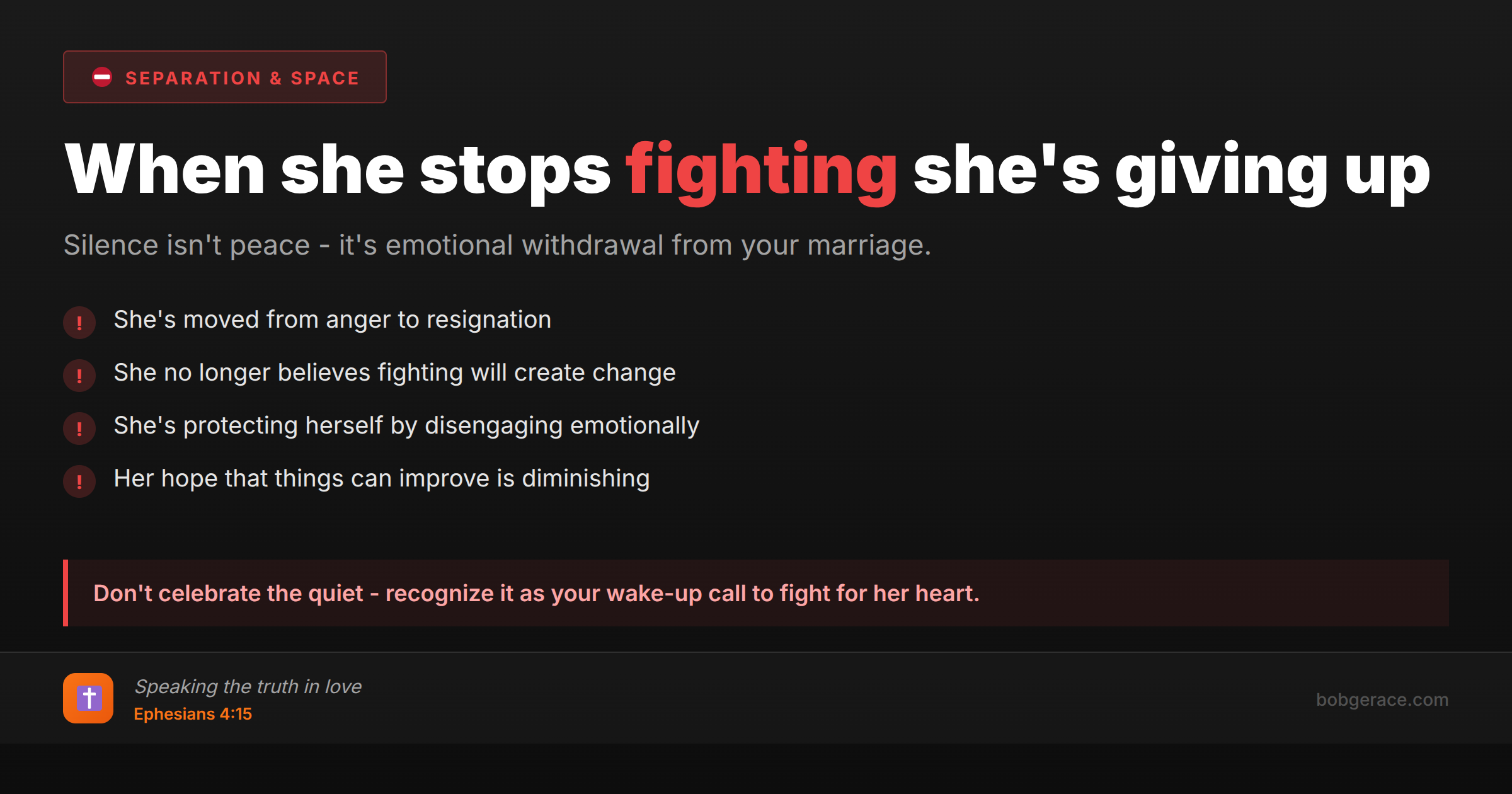
When your wife stops fighting, it's not because the problems are solved – it's because she's emotionally withdrawing. This shift from active conflict to silence often indicates she's moving from anger to resignation. She may have reached a point where she no longer believes fighting will create change, so she's protecting herself by disengaging. This withdrawal is actually more concerning than active conflict because it signals she's pulling her emotional investment out of the relationship. The energy it takes to fight requires hope that things can improve. When that hope diminishes, the fighting stops – but so does her emotional availability.
The Full Picture
The transition from fighting to silence is one of the most misunderstood dynamics in marriage. Many husbands feel relief when the arguments stop, interpreting it as peace returning to their home. But what's actually happening is far more serious – your wife is emotionally checking out.
Fighting requires emotional energy and investment. When she was arguing, expressing frustration, or even yelling, she was still engaged. She still cared enough to expend energy trying to communicate her needs, even if it came out in unhealthy ways. The conflict, while uncomfortable, indicated she still had hope that things could change.
The shift to silence represents a fundamental change in her emotional state. She's moved from "this needs to change" to "this will never change." This transition often happens gradually after repeated cycles where she felt unheard, dismissed, or like her concerns weren't being taken seriously. Each unresolved conflict chips away at her hope.
This withdrawal is a protective mechanism. When someone repeatedly feels hurt or disappointed in a relationship, their emotional system naturally begins to protect itself by reducing investment. It's less painful to not care than to keep caring and getting hurt. She's not choosing to be distant – her heart is protecting itself.
The absence of conflict doesn't equal the presence of connection. A quiet house doesn't mean a healthy marriage. In fact, research shows that couples who never fight often have one partner who has simply given up trying to address issues. The problems haven't disappeared; they've just gone underground where they continue to erode the foundation of your relationship.
What's Really Happening
From a clinical perspective, when a spouse stops fighting, we're observing what's called "emotional flooding followed by withdrawal." This is a predictable pattern where someone becomes so overwhelmed by repeated unsuccessful attempts at resolution that their nervous system essentially shuts down the fighting response.
This withdrawal activates what we call the 'protest-despair cycle.' Initially, when needs aren't met, we protest (fight, argue, demand attention). If the protest doesn't work, we move into despair (withdrawal, emotional numbing, disengagement). This is actually a trauma response – the repeated experience of not being heard or valued creates relational trauma.
Neurologically, her brain is now associating conflict with futility. Each time she tried to address issues and felt dismissed or unheard, her brain logged that experience. After enough repetitions, her neural pathways essentially say, 'Don't bother – it won't work anyway.' This isn't a conscious choice; it's how our brains protect us from repeated disappointment.
The attachment system is also involved here. When we feel securely attached, we can engage in healthy conflict because we trust the relationship can handle it. When that security is compromised through repeated negative cycles, we begin to emotionally distance ourselves to avoid further injury. This withdrawal often triggers abandonment fears in the partner, creating a pursue-distance dynamic that further damages the relationship.
What Scripture Says
Scripture shows us that healthy relationships involve both truth and grace, speaking honestly while maintaining love. When fighting stops, often both elements are missing – truth isn't being spoken and grace isn't being felt.
Ephesians 4:15 calls us to "speak the truth in love," indicating that avoiding difficult conversations isn't the goal. When your wife stops fighting, she may have stopped believing that truth can be spoken in love in your relationship.
Proverbs 27:5-6 tells us, "Better is open rebuke than hidden love. Wounds from a friend can be trusted, but an enemy multiplies kisses." This passage shows that conflict, when done righteously, is actually a sign of care and investment. When she stops giving you those "wounds from a friend," she may be emotionally moving from friend to stranger.
Matthew 18:15 provides the framework for addressing offense: "If your brother or sister sins, go and point out their fault, just between the two of you." This assumes ongoing relationship and hope for restoration. When someone stops following this pattern, they may have lost hope in the restoration process.
1 Corinthians 13:7 reminds us that love "always hopes." When fighting stops, hope may be diminishing. The absence of conflict often signals the absence of hope – and without hope, love cannot thrive.
Ecclesiastes 3:7 acknowledges there is "a time to be silent and a time to speak." Chronic silence in marriage, however, often indicates something is broken in the communication dynamic that needs urgent attention.
What To Do Right Now
-
1
Acknowledge what's really happening – Don't celebrate the quiet; recognize it as a warning sign that she's emotionally withdrawing from the relationship.
-
2
Take responsibility without defensiveness – Approach her and acknowledge that you understand her silence likely means she's feeling unheard, not that problems are resolved.
-
3
Create safety for her voice – Tell her explicitly that you want to hear her concerns and that you're committed to listening without getting defensive or dismissive.
-
4
Address the pattern, not just current issues – Recognize that this withdrawal happened because of repeated experiences where she felt unheard; focus on changing that dynamic.
-
5
Seek professional help immediately – This level of emotional withdrawal often requires professional intervention to rebuild trust and communication patterns.
-
6
Be patient with the process – Understand that if she's withdrawn, it will take time and consistent behavior change from you to rebuild her willingness to engage emotionally.
Related Questions
- What is 'stonewalling' and why does she do it?
- What does giving up look like vs. regulating?
- Why does indifference feel worse than anger?
- What is 'emotional disengagement'?
- What does it mean when contempt has replaced anger?
- Is she protecting herself or punishing me?
- She seems happier when I'm not around
- She's physically present but emotionally gone
- She stopped fighting — is that worse?
- Nothing I do seems to matter to her
Also find Bob on
Subscribe for weekly videos on Christian marriage.
When She Goes Silent, Talk to Bob
This withdrawal window closes fast. A coach who knows your specific marriage can help you read what's happening and move before she's fully gone.
Talk to Bob →