What should change in his responsiveness to you?
6 min read
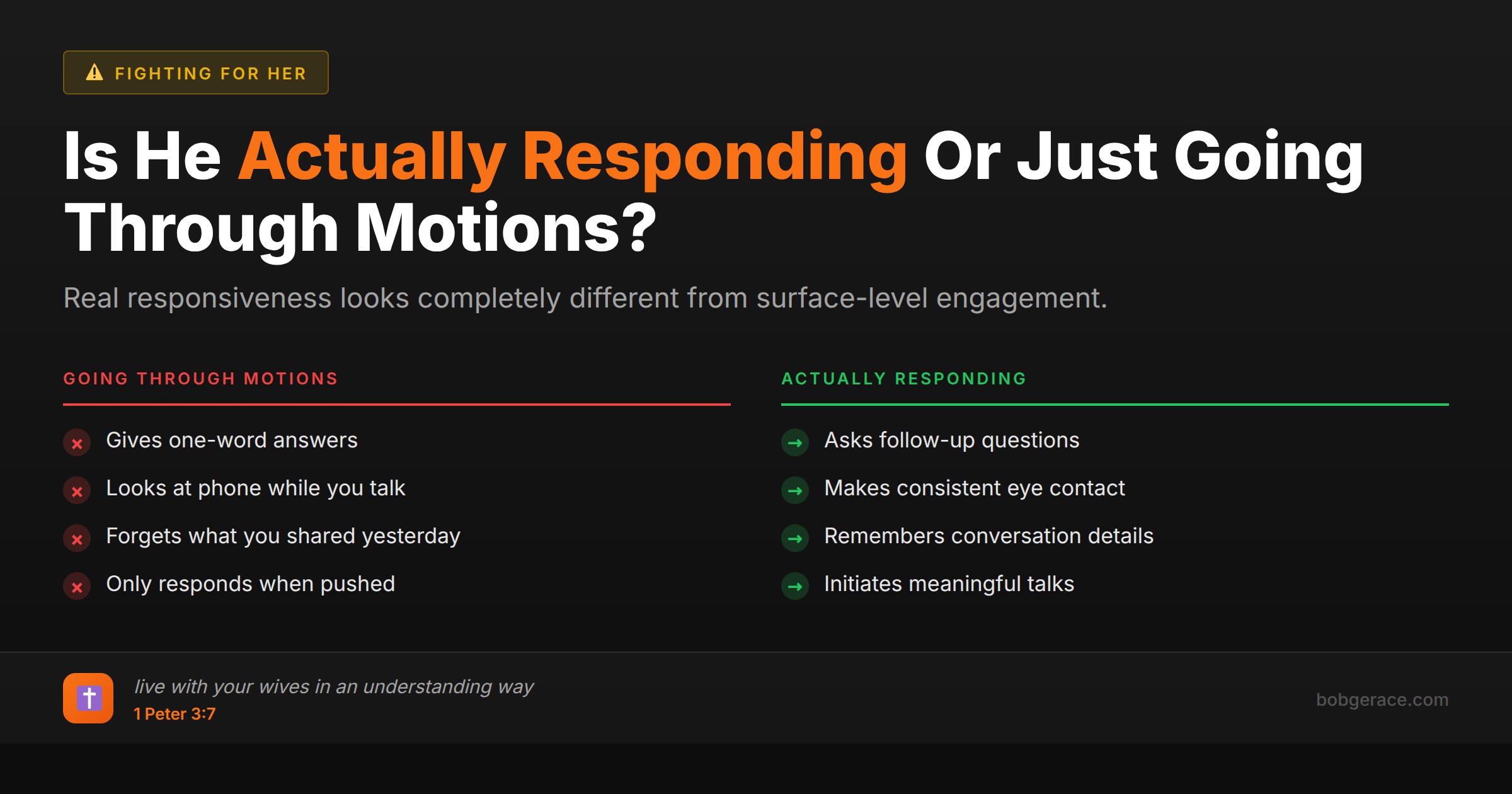
When a marriage is healing, you should see your husband become more emotionally available and attentive to your needs. This means he'll respond faster to your attempts at connection, show genuine interest in your thoughts and feelings, and prioritize conversations with you over distractions like his phone or work. Real responsiveness looks like him asking follow-up questions when you share something important, remembering details from previous conversations, and making consistent eye contact during discussions. He'll also start initiating meaningful conversations rather than just responding to yours. These changes indicate he's actively choosing to engage with you rather than going through the motions.
The Full Picture
Responsiveness is the heartbeat of a healthy marriage. It's not just about answering when you speak—it's about your husband's entire emotional posture toward you changing from defensive or distracted to genuinely engaged and available.
The transformation happens in layers. First, you'll notice he stops the obvious dismissive behaviors—no more scrolling his phone while you're talking, no more giving one-word answers to important questions. Then comes the deeper change: he starts leaning into conversations instead of away from them.
Watch for these specific shifts: He'll begin asking "How was your day?" and actually wait for the full answer. When you express concerns, he'll respond with curiosity instead of defensiveness. His body language will change—turning toward you, making eye contact, setting down whatever he's holding to give you his full attention.
The timeline matters. Don't expect overnight transformation, but you should see consistent improvement over weeks and months. Early changes might feel forced or effortful on his part—that's normal. Genuine responsiveness takes practice, especially if he's been checked out for months or years.
Quality over quantity is key. A husband who's truly becoming more responsive might not talk more, but when he does engage, it will feel substantial and meaningful. He'll remember what you've shared and follow up on things that matter to you. This is the difference between performing responsiveness and actually becoming a responsive partner.
What's Really Happening
From a clinical perspective, responsiveness is a measurable predictor of relationship satisfaction and stability. When I work with couples, I look for what we call "turning toward" behaviors—moments when one partner makes a bid for connection and the other responds positively.
Men who have been emotionally unavailable often operate from a place of learned helplessness or avoidance. They've convinced themselves that they can't do anything right, so they stop trying. The transformation begins when they realize that small, consistent responses create positive feedback loops in the relationship.
Neurologically, responsiveness requires emotional regulation and empathy—skills that can be developed but take intentional practice. When a man starts becoming more responsive, his brain is literally rewiring to prioritize relationship connection over self-protection mechanisms.
I often tell wives to look for effort over perfection. A husband who's genuinely changing will make mistakes in how he responds, but he'll keep trying and adjusting based on your feedback. The key indicator is consistency over time, not flawless execution from day one.
It's also important to understand that increased responsiveness might initially feel overwhelming to both partners. After months or years of disconnection, sudden emotional availability can create its own adjustment period. This is normal and healthy as you both learn to navigate this new dynamic.
What Scripture Says
Scripture calls husbands to a high standard of responsiveness and attentiveness to their wives. This isn't just practical advice—it's a reflection of how Christ relates to His church.
Ephesians 5:25 commands husbands to "love your wives, just as Christ loved the church and gave himself up for her." This sacrificial love requires constant responsiveness to needs, feelings, and concerns.
1 Peter 3:7 instructs husbands to "live with your wives in an understanding way, showing honor to the woman as the weaker vessel, since they are heirs with you of the grace of life, so that your prayers may not be hindered." Understanding requires active listening and thoughtful response.
Proverbs 18:13 warns that "if one gives an answer before he hears, it is his folly and shame." True responsiveness starts with genuine listening—not formulating responses while your wife is still talking.
James 1:19 teaches us to be "quick to hear, slow to speak, slow to anger." A responsive husband prioritizes understanding before being understood.
Ecclesiastes 3:7 reminds us there is "a time to keep silence, and a time to speak." Godly responsiveness includes knowing when to listen quietly and when to engage actively.
1 Corinthians 13:4-5 describes love as patient and kind, not self-seeking. Responsive love puts your needs and feelings ahead of his comfort or convenience.
When a husband operates from these biblical principles, his responsiveness becomes an act of worship and obedience to God, not just relationship maintenance.
What To Do Right Now
-
1
Notice and acknowledge small improvements in his responsiveness, even if they're imperfect
-
2
Be specific when you communicate what kind of response you need in different situations
-
3
Create phone-free conversation times where distractions are eliminated
-
4
Share your observations about positive changes you're seeing in his attentiveness
-
5
Ask direct questions about his thoughts and feelings to encourage deeper engagement
-
6
Set clear expectations about response times for important conversations or decisions
Related Questions
- What should change in his communication?
- What should change in his conflict behavior?
- What should change in his emotional regulation?
- What does proactive repair look like?
- What daily practices indicate commitment?
- What does humility in process look like?
- What does emotional attunement look like?
- How do I become a safe emotional presence?
- What does 'taking responsibility' actually look like?
- What does non-defensive response look like?
Also find Bob on
Subscribe for weekly videos on Christian marriage.
Your Marriage Isn't a Generic Case Study
A coach who knows your specific situation can see what's blocking responsiveness in your marriage and help you address it directly.
Talk to Bob →