What should change in his communication?
6 min read
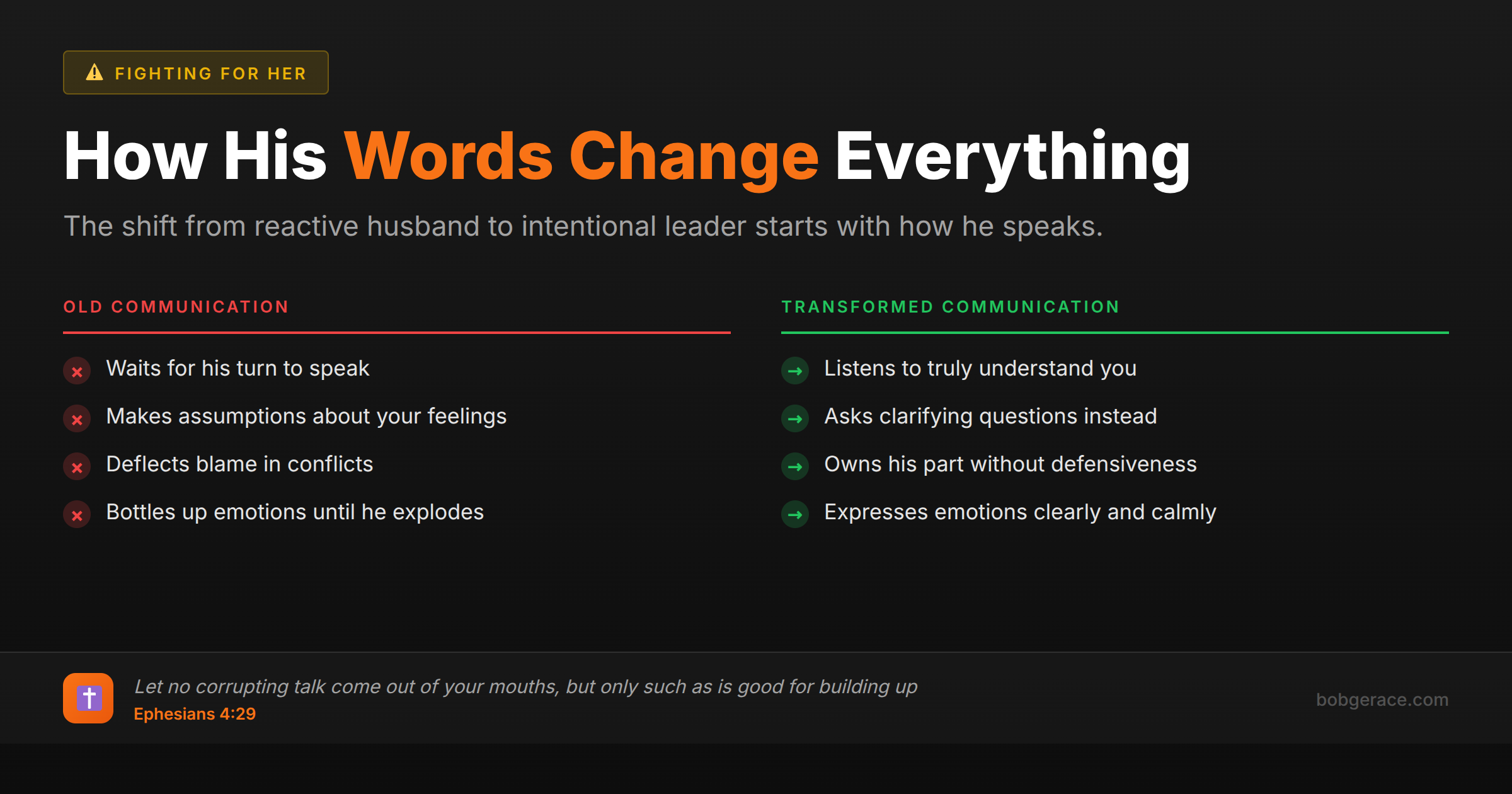
When your husband's communication begins to change, you should see him shift from reactive patterns to intentional engagement. He'll start listening to understand rather than just waiting for his turn to speak. You'll notice him asking clarifying questions instead of making assumptions about your feelings or intentions. The most significant change will be his willingness to own his part in conflicts without deflecting or becoming defensive. He'll begin expressing his own emotions more clearly rather than bottling them up or exploding later. You should also see him initiating difficult conversations instead of avoiding them, and following through on what he says he'll do.
The Full Picture
Most wives can spot unhealthy communication patterns from a mile away, but recognizing what healthy communication looks like is just as important. When your husband's communication truly begins to shift, it's not just about him talking more or differently—it's about a fundamental change in how he approaches connection with you.
Active listening becomes his default. Instead of mentally preparing his rebuttal while you speak, he'll focus entirely on understanding your perspective. You'll see him put down his phone, turn his body toward you, and ask follow-up questions that show he's genuinely engaged.
Emotional vocabulary expands beyond 'fine' and 'stressed.' Many men struggle to articulate their inner world, but growth means he'll start naming specific emotions: disappointed, overwhelmed, grateful, concerned. This precision helps you understand what's really going on inside him.
Conflict becomes collaborative, not competitive. Rather than trying to win arguments, he'll approach disagreements as problems to solve together. You'll hear phrases like "Help me understand..." and "What would work better for you?" instead of defensive statements or blame.
Follow-through becomes consistent. His words will align with his actions. When he says he'll handle something, consider it done. When he commits to changing a behavior, you'll see concrete steps, not just good intentions.
Timing and tone improve dramatically. He'll learn when you're ready for serious conversations and when you need space. His voice will carry respect and care, even during difficult discussions.
What's Really Happening
From a therapeutic standpoint, communication changes in men often reflect deeper neurological and emotional shifts. Research shows that men's brains process emotional information differently, often requiring more time to access and articulate feelings. When communication improves, we're seeing evidence of new neural pathways forming.
The shift from defensive to curious communication indicates emotional regulation development. Men who previously felt overwhelmed by their wife's emotions learn to stay present instead of shutting down or fighting back. This represents significant growth in distress tolerance.
One critical marker I look for is metacommunication—his ability to talk about how you're communicating, not just what you're discussing. Statements like "I notice we're both getting heated" or "I think we're talking about two different things" show advanced emotional intelligence.
The integration of vulnerability is perhaps most significant. Traditional masculine socialization often discourages emotional expression, so when a man begins sharing fears, disappointments, or uncertainties openly, it represents a conscious choice to prioritize intimacy over self-protection. This vulnerability creates the safety necessary for deep marital connection and often catalyzes reciprocal openness from wives.
What Scripture Says
Scripture provides clear guidance on how communication should transform in marriage. Ephesians 4:29 instructs us: *"Let no corrupting talk come out of your mouths, but only such as is good for building up, as fits the occasion, that it may give grace to those who hear."* Your husband's words should become tools for building you up, not tearing you down.
James 1:19 offers the foundational principle: *"Know this, my beloved brothers: let every person be quick to hear, slow to speak, slow to anger."* You should see him implementing this order—listening first, speaking thoughtfully, and managing his emotional reactions.
Proverbs 18:13 warns against premature responses: *"If one gives an answer before he hears, it is his folly and shame."* Healthy communication means he'll stop interrupting or assuming he knows what you're going to say.
Colossians 4:6 shapes the manner of speech: *"Let your speech always be gracious, seasoned with salt, so that you may know how you ought to answer each person."* Even during conflict, his tone and word choice should reflect grace and respect.
1 Peter 3:7 specifically addresses husbands: *"Husbands, live with your wives in an understanding way, showing honor to the woman as the weaker vessel, since they are heirs with you of the grace of life."* This means he should communicate with understanding and honor, recognizing your unique perspective and needs.
These passages collectively paint a picture of communication rooted in love, respect, patience, and genuine care for your wellbeing.
What To Do Right Now
-
1
Document current communication patterns by noting specific examples of both helpful and harmful interactions over the next week
-
2
Identify one specific communication behavior you'd like to see change and have a calm conversation about it using "I" statements
-
3
Establish a weekly 20-minute check-in time where you both practice active listening without trying to fix or defend
-
4
Create a simple signal system for when conversations are becoming unproductive so you can pause and reset
-
5
Acknowledge and appreciate small improvements in his communication immediately when you notice them
-
6
Seek professional help together if communication patterns remain destructive or if progress stalls consistently
Related Questions
- What should change in his conflict behavior?
- What should change in his emotional regulation?
- What should change in his responsiveness to you?
- What does proactive repair look like?
- What daily practices indicate commitment?
- What does humility in process look like?
- How do I listen without fixing?
- What does non-defensive response look like?
- How do I express emotion without dumping?
- What does taking responsibility sound like?
Also find Bob on
Subscribe for weekly videos on Christian marriage.
Your Husband's Communication Won't Fix Itself
A coach who knows your marriage can tell you what's actually blocking him and what to do about it in your specific situation.
Talk to Bob →