What should change in his conflict behavior?
6 min read
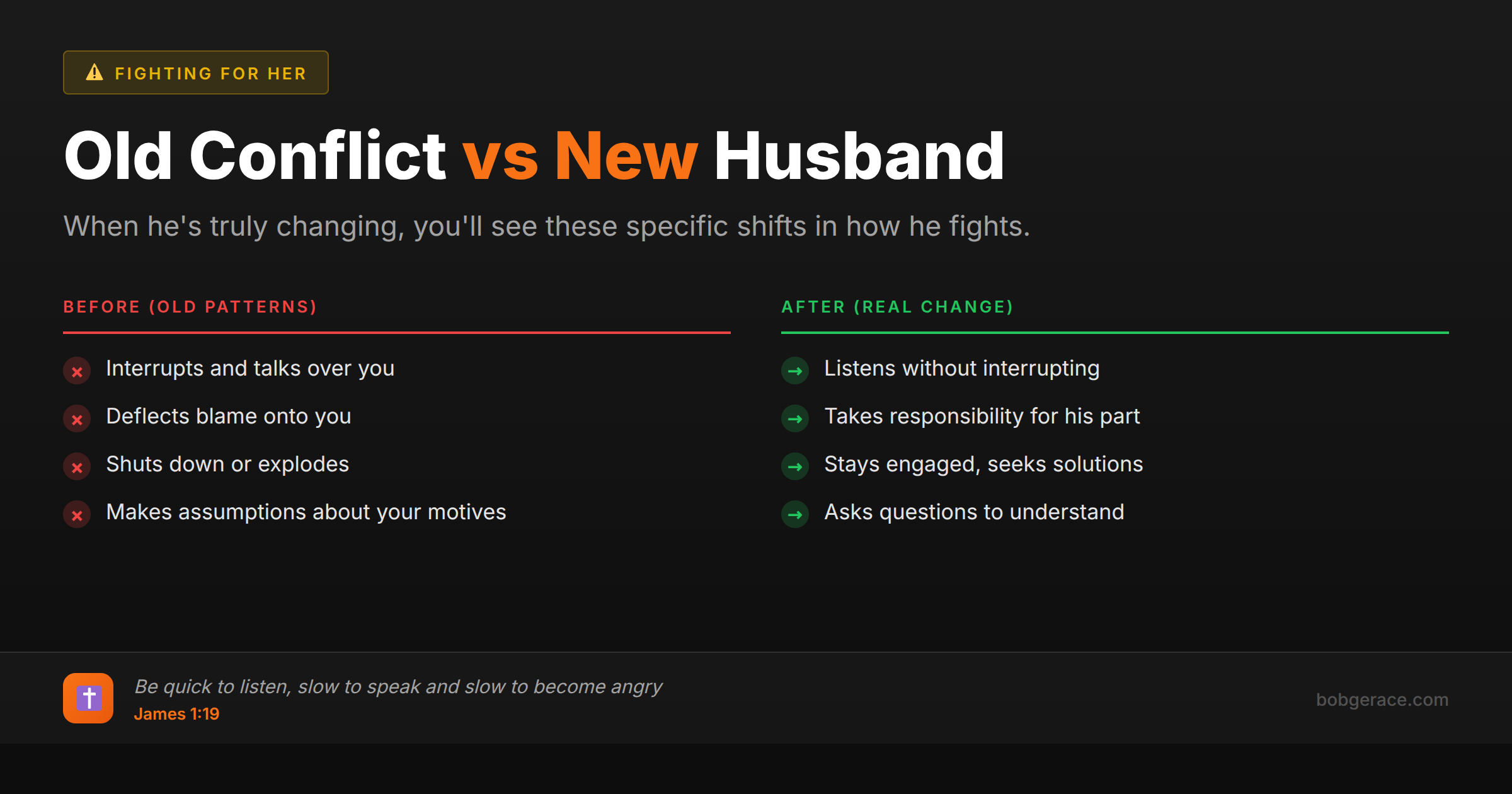
When your husband is truly working on himself, you'll notice specific changes in how he handles conflict. He'll start listening without interrupting, take responsibility for his part without deflecting blame, and show genuine empathy for your feelings. Instead of shutting down or exploding, he'll stay engaged and work toward solutions together. The most telling sign is his willingness to pause when things get heated, rather than pushing through in anger. You'll see him ask clarifying questions instead of making assumptions, and he'll validate your perspective even when he disagrees. These changes don't happen overnight, but when they're genuine, they create a completely different dynamic in your marriage.
The Full Picture
Real change in conflict behavior goes far deeper than just 'being nicer' during arguments. When a man is genuinely transforming how he handles conflict, you'll see a fundamental shift in his approach to disagreement itself.
Before transformation, most men default to one of two extremes: they either become aggressive and controlling, or they withdraw and shut down completely. Both responses are rooted in self-protection rather than genuine care for the relationship. The aggressive husband tries to 'win' every argument, while the withdrawing husband tries to avoid conflict altogether.
After genuine change, you'll notice he approaches conflict as a team sport rather than a competition. He stops seeing you as the enemy to defeat and starts seeing the problem as something you need to solve together. This shows up in practical ways:
- He stays present instead of walking away or checking out mentally - He asks questions to understand rather than making statements to defend - He takes breaks when emotions run high, but always comes back to finish the conversation - He owns his mistakes quickly without lengthy justifications or blame-shifting - He shows curiosity about your perspective instead of immediately countering it
The timeline for these changes varies greatly. Some men make quick adjustments in their external behavior but take months to truly internalize new patterns. Others resist initially but make deeper, more lasting changes once they commit. What matters most is consistency over time and his willingness to keep working when he fails.
What's Really Happening
From a clinical perspective, healthy conflict behavior stems from emotional regulation and secure attachment patterns. When men learn to manage their nervous system responses during conflict, everything changes.
Most problematic conflict behavior comes from a dysregulated nervous system. When threatened, men often default to fight-or-flight responses that served them in childhood but damage adult relationships. The angry, controlling husband is in 'fight' mode, while the withdrawn, silent husband is in 'flight' mode.
Genuine change requires developing what we call 'window of tolerance' - the ability to stay emotionally regulated even when triggered. You'll know he's developing this capacity when he can:
- Hear criticism without immediately defending - Express his needs without attacking yours - Take responsibility without shame spiraling - Stay curious about your experience even when he disagrees
This isn't about perfect behavior - it's about recovery time. A man with healthy conflict skills might still get triggered, but he recovers quickly and repairs any damage done. He develops what researchers call 'relational resilience' - the ability to navigate conflict while maintaining connection.
Watch for physiological changes too. His breathing stays more controlled, his body language remains open rather than defensive, and he can make eye contact even during difficult conversations. These are signs that his nervous system is learning to stay regulated during relational stress.
What Scripture Says
Scripture gives us clear patterns for how believers should handle conflict, and these principles apply powerfully to marriage relationships.
James 1:19 tells us, *'Everyone should be quick to listen, slow to speak and slow to become angry.'* When your husband is changing, you'll see this verse lived out practically. He'll stop rushing to defend himself and start genuinely listening to understand your heart.
Ephesians 4:15 calls us to *'speak the truth in love'* - and this transforms how he communicates during conflict. Instead of harsh words meant to win or wound, he'll learn to express truth wrapped in genuine care for your wellbeing.
Proverbs 27:5-6 reminds us that *'better is open rebuke than hidden love. Wounds from a friend can be trusted.'* A husband growing in godliness will learn to address issues directly but lovingly, rather than avoiding conflict or handling it poorly.
Matthew 7:3-5 addresses the tendency to focus on your speck while ignoring his own plank. Transformed conflict behavior means he takes responsibility for his part first, before pointing out where you might need to grow.
Philippians 2:3-4 challenges him to *'consider your interests above his own'* - this doesn't mean becoming a doormat, but it does mean his primary concern shifts from protecting himself to understanding and caring for you.
When these biblical principles take root in his heart, conflict becomes an opportunity for deeper intimacy rather than a threat to be managed or avoided.
What To Do Right Now
-
1
Document patterns - Keep a simple record of how conflicts typically unfold so you can recognize genuine changes when they occur
-
2
Affirm progress - When you see positive changes, acknowledge them specifically rather than waiting for perfection
-
3
Set clear boundaries - Don't accept harmful behavior while 'waiting for change' - healthy boundaries actually help him grow
-
4
Practice your own skills - Work on staying regulated during conflict so you can model the behavior you want to see
-
5
Create safety for growth - Make it safe for him to admit mistakes and try new approaches without harsh criticism
-
6
Seek professional help - If conflict patterns are deeply entrenched or abusive, get qualified guidance to navigate change safely
Related Questions
- What should change in his communication?
- What should change in his emotional regulation?
- What should change in his responsiveness to you?
- What does proactive repair look like?
- What does humility in process look like?
- What daily practices indicate commitment?
- Why do I get defensive every time?
- How do I hear her without defending myself?
- What does 'taking responsibility' actually look like?
- What does non-defensive response look like?
Also find Bob on
Subscribe for weekly videos on Christian marriage.
When the Pattern Won't Break Alone
If conflict keeps looping the same way in your marriage, a coach who knows your specific dynamic can see what you can't. Bob works with men who are ready to change how they show up, not just understand it.
Talk to Bob →