What does proactive repair look like?
6 min read
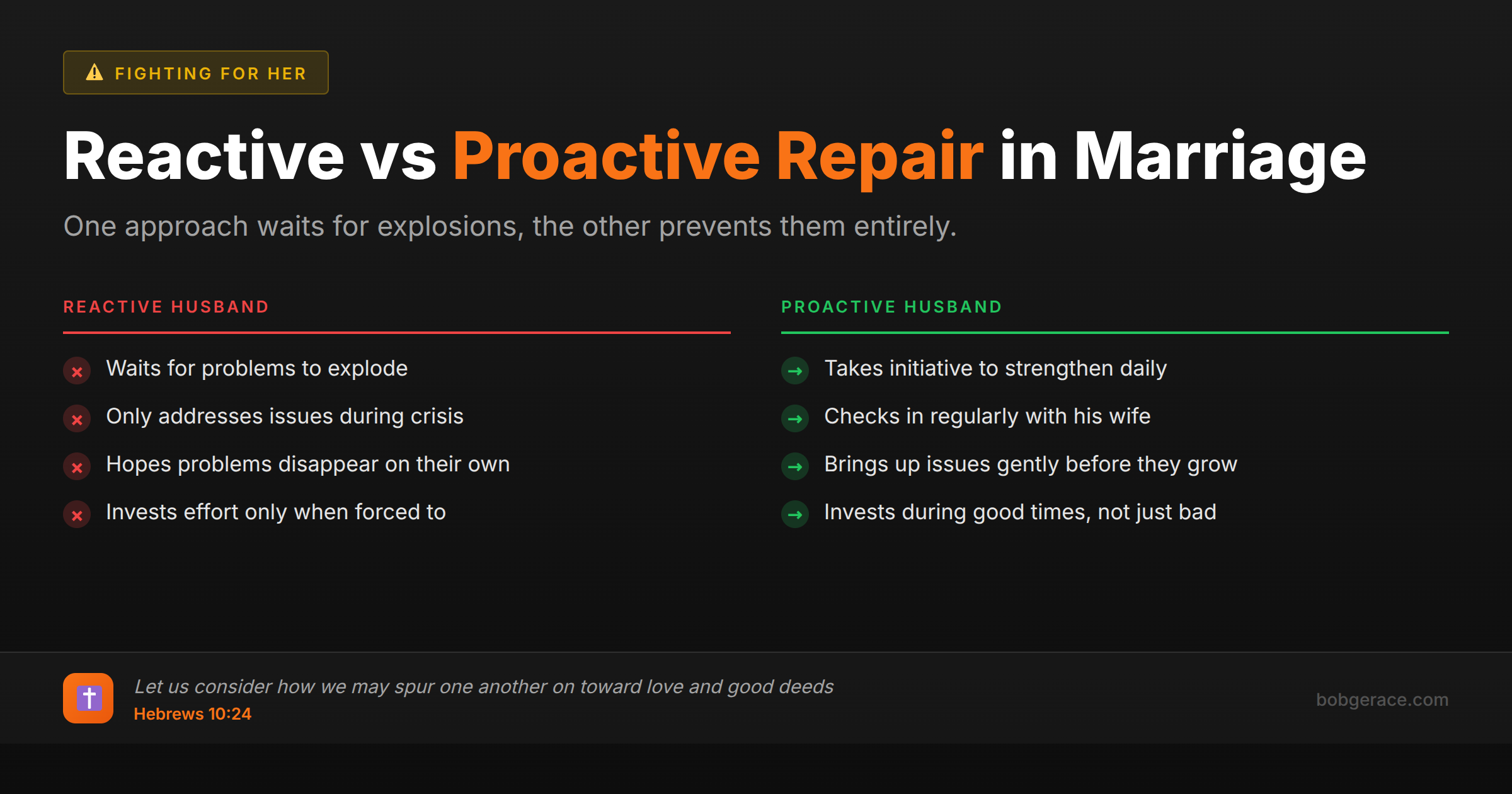
Proactive repair means your husband doesn't wait for problems to explode before addressing them. Instead of being reactive, he takes initiative to strengthen your marriage daily through small gestures, honest conversations, and preventive care for your relationship. This looks like him checking in with you regularly, apologizing quickly when he's wrong, and working on issues before they become major conflicts. He notices when something feels off between you and brings it up gently rather than hoping it goes away. Most importantly, he invests in your connection during good times, not just during crisis moments.
The Full Picture
Proactive repair is like preventive maintenance for your marriage - it's what happens when your husband understands that relationships require ongoing investment, not just damage control.
Daily Investment Over Crisis Management
Instead of waiting for you to explode or for problems to reach a breaking point, a husband practicing proactive repair stays tuned in to the temperature of your relationship. He notices when you seem distant, when stress is building, or when old patterns are creeping back in. Rather than hoping these things resolve themselves, he addresses them directly.
Small Actions, Big Impact
Proactive repair shows up in seemingly small but significant ways. He asks how you're feeling about "us" during calm moments. He brings up his own struggles before they affect you. He apologizes for minor irritations before they compound. He suggests date nights when he senses you're drifting apart, not just when you complain about lack of connection.
Emotional Leadership
This approach requires emotional maturity and leadership. Your husband takes responsibility for the health of your marriage, recognizing that both of you contribute to problems but someone needs to take initiative in addressing them. He doesn't wait for you to be the relationship manager or the one who always brings up difficult conversations.
Building Versus Fixing
The key difference is that proactive repair focuses on building strength rather than just fixing damage. It's the difference between going to the gym regularly to stay healthy versus only seeing a doctor when you're sick. Your husband invests in your marriage's health when things are good, creating resilience for when challenges inevitably come.
What's Really Happening
From a clinical perspective, proactive repair represents a fundamental shift from reactive to responsive relationship patterns. Research shows that couples who engage in preventive relationship maintenance have significantly lower divorce rates and higher satisfaction scores.
What we're seeing neurologically is fascinating. When someone practices proactive repair, they're literally rewiring their brain's default responses. Instead of the amygdala hijacking rational thought during conflict, they've trained their prefrontal cortex to stay engaged and solution-focused. This creates what we call 'emotional regulation mastery.'
The Gottman Institute's research on relationship success identifies proactive repair as a key predictor of marital stability. Couples who address issues early, before contempt and defensiveness take root, maintain what researchers call 'positive sentiment override' - where partners give each other the benefit of the doubt rather than assuming negative intent.
From an attachment theory standpoint, proactive repair creates security. When your husband consistently addresses issues before they escalate, your nervous system learns that conflict doesn't equal abandonment. This reduces your fight-or-flight responses and allows for more authentic intimacy.
The key clinical marker I look for is whether someone can tolerate the discomfort of bringing up difficult topics when things are calm. This requires emotional intelligence, distress tolerance, and genuine care for the relationship's wellbeing over personal comfort.
What Scripture Says
Scripture calls us to be proactive in all our relationships, especially marriage. God's design for marriage includes ongoing investment, not just crisis intervention.
Taking Initiative in Love
*"Let us consider how we may spur one another on toward love and good deeds"* (Hebrews 10:24). This verse captures the essence of proactive repair - actively looking for ways to encourage and strengthen your spouse, not waiting for problems to demand attention.
Addressing Issues Quickly
*"In your anger do not sin: Do not let the sun go down while you are still angry"* (Ephesians 4:26). God instructs us to deal with conflicts quickly, not let them fester. Proactive repair means addressing tensions before they turn into resentment or bitterness.
Gentle Restoration
*"Brothers and sisters, if someone is caught in a sin, you who live by the Spirit should restore that person gently"* (Galatians 6:1). When your husband practices proactive repair, he approaches issues with gentleness and restoration in mind, not punishment or proving he's right.
Love in Action
*"Dear children, let us not love with words or speech but with actions and in truth"* (1 John 3:18). Proactive repair is love in action - not just saying you care about the marriage, but consistently investing in its health through specific, intentional behaviors.
Building Each Other Up
*"Therefore encourage one another and build each other up"* (1 Thessalonians 5:11). God calls husbands to actively build up their wives, creating strength in the relationship rather than just managing damage when it occurs.
What To Do Right Now
-
1
Recognize and acknowledge when your husband demonstrates proactive repair - positive reinforcement encourages more of this behavior
-
2
Share specific examples of how his proactive efforts make you feel more secure and connected in your marriage
-
3
Create regular 'relationship check-ins' together where you both can address small issues before they grow
-
4
Practice proactive repair yourself - model the behavior you want to see and work as a team
-
5
Express gratitude when he brings up difficult topics during calm moments rather than waiting for crisis
-
6
If he's not yet practicing proactive repair, gently explain how this approach could strengthen your marriage
Related Questions
- What does genuine repair look like for old wounds?
- What is an 'apology' vs. 'repair' vs. 'attunement'?
- Why didn't my past apologies work?
- What does she need to hear that I haven't said?
- What is 'felt understanding' and how do I give it?
- How do I make amends for years of failure?
- What does 'taking responsibility' actually look like?
- What's the antidote to defensiveness?
- How do I receive feedback without counter-attacking?
- What does humility in conflict look like?
Also find Bob on
Subscribe for weekly videos on Christian marriage.
Your Marriage Needs More Than Good Intentions
A coach who knows your specific story can help you build the repair patterns your marriage actually needs—not just generic advice.
Talk to Bob →