What is 'flooded' and did she shut down because of it?
6 min read
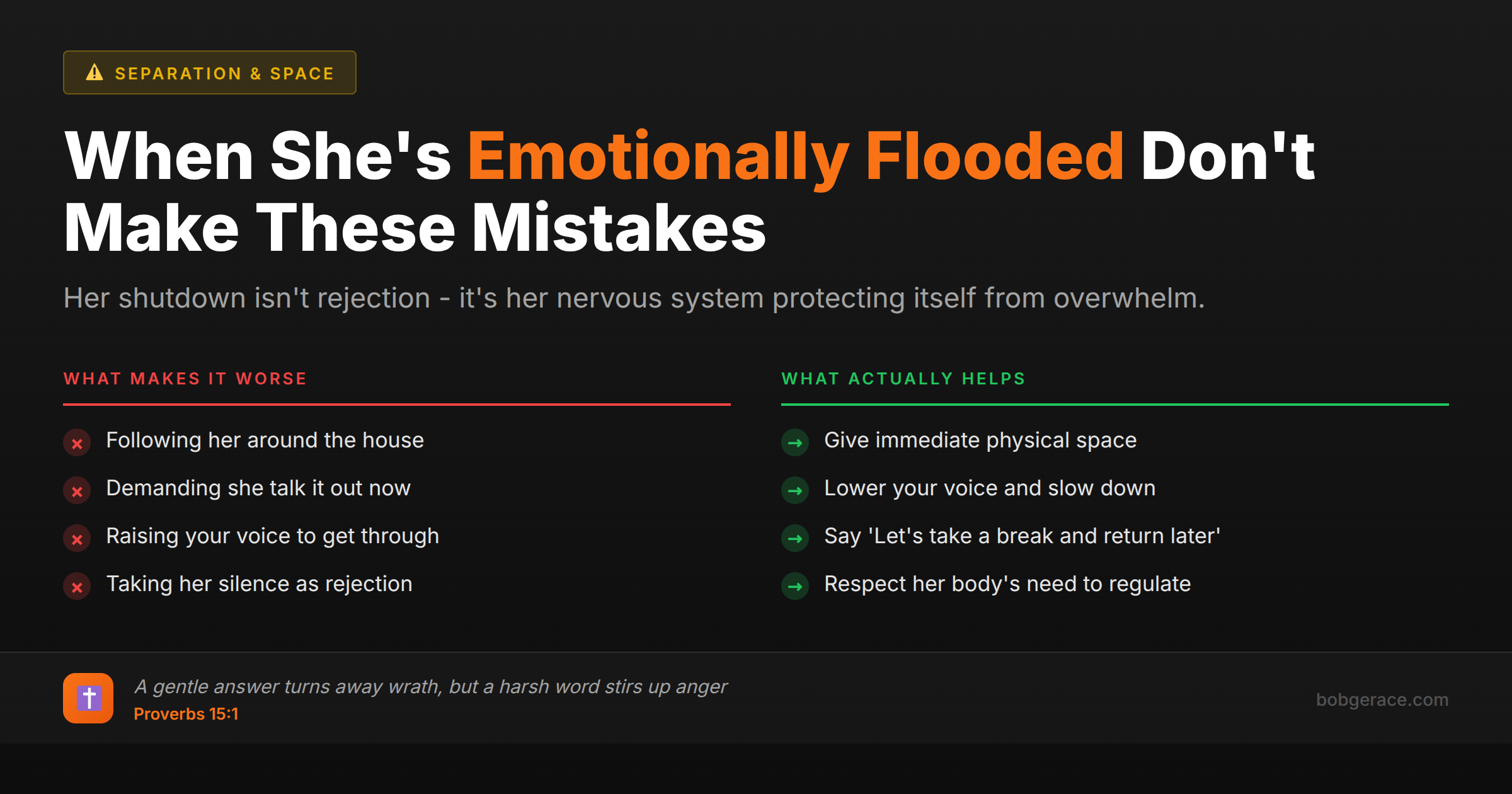
Being 'flooded' refers to when your wife's nervous system becomes completely overwhelmed during intense emotional situations, particularly conflict. When this happens, her body literally goes into survival mode - heart rate spikes, stress hormones flood her system, and her ability to think clearly or communicate effectively shuts down. This isn't a choice or manipulation; it's a biological response. Yes, flooding is often why she shuts down. When overwhelmed, her brain prioritizes survival over connection. She may become silent, leave the room, or seem to 'check out' emotionally. This shutdown is actually her nervous system's attempt to regulate itself and return to safety. Understanding this can transform how you approach conflict and help you create the emotional safety she needs to stay engaged.
The Full Picture
Emotional flooding is one of the most misunderstood dynamics in marriage. When your wife becomes flooded, her entire nervous system goes into overdrive. Heart rate jumps above 100 beats per minute, stress hormones like cortisol and adrenaline surge through her body, and her prefrontal cortex - the part of the brain responsible for rational thinking and communication - essentially goes offline.
This isn't weakness or manipulation. It's pure biology. Her body has determined that the current situation is a threat and has activated survival mechanisms. In this state, she literally cannot access the parts of her brain needed for healthy conflict resolutionn, empathy, or clear communication.
The shutdown that follows flooding serves a purpose. When she goes quiet, leaves the room, or seems to emotionally disappear, she's not punishing you or being difficult. Her nervous system is attempting to regulate itself and return to a state where connection is possible again. Think of it like a circuit breaker that trips to prevent damage to the electrical system.
Many husbands interpret this shutdown as rejection or defiance. They pursue harder, raise their voice, or demand engagement - all of which actually increase the flooding and prolong the shutdown. Understanding that her withdrawal is protective, not punitive, changes everything about how you respond.
Flooding doesn't just happen during big fights. It can occur during any intense emotional conversation, especially if there's been a pattern of conflict in your marriage. Some wives become so sensitized that even minor disagreements trigger their flood response. The good news? This pattern can be changed when you understand what's happening and adjust your approach accordingly.
What's Really Happening
From a clinical perspective, emotional flooding activates the sympathetic nervous system's fight-flight-freeze response. When your wife becomes flooded, her amygdala hijacks her prefrontal cortex, making rational discourse neurologically impossible. This isn't a character flaw - it's neurobiology.
Research shows that women often have lower thresholds for emotional flooding than men, particularly in intimate relationships where attachment security is at stake. The shutdown response is actually a freeze mechanism - one of three primary survival responses when the nervous system perceives threat.
The key insight is that her nervous system isn't distinguishing between physical and emotional threat. Whether you're raising your voice or a bear is chasing her, her body responds similarly. This explains why she might seem 'over-reactive' to what feels like normal conversation to you.
Recovery from flooding takes time - typically 20-30 minutes minimum. During this period, her nervous system needs to metabolize stress hormones and return to baseline. Attempting to re-engage before she's regulated often triggers immediate re-flooding.
Chronic flooding creates lasting changes in the nervous system. When someone experiences repeated flooding in their marriage, they develop hypervigilance around conflict and may begin shutting down preemptively. This is why some wives seem to shut down before conversations even become intense - their nervous system has learned to anticipate threat.
The solution involves creating consistent experiences of safety that allow her nervous system to recalibrate and develop trust that engagement won't lead to overwhelming activation.
What Scripture Says
Scripture speaks directly to how we should handle overwhelming emotions and create safety for one another. Proverbs 15:1 reminds us, 'A gentle answer turns away wrath, but a harsh word stirs up anger.' When your wife is flooded, gentleness isn't just wise counsel - it's neurologically necessary for her system to calm down.
Ephesians 4:29 instructs us to speak 'only what is helpful for building others up according to their needs, that it may benefit those who listen.' When she's flooded, what she needs most is space and gentleness, not more words or intensity. Biblical love considers her neurological needs, not just your desire to resolve things quickly.
James 1:19 provides the perfect framework: 'Everyone should be quick to listen, slow to speak and slow to become angry.' This isn't just good communication advice - it's exactly what prevents flooding. Being slow to speak gives her nervous system time to process. Being slow to anger keeps your own intensity from triggering her flood response.
First Corinthians 13:4-5 tells us that love 'is patient, is kind... is not easily angered, it keeps no record of wrongs.' When she shuts down due to flooding, patience isn't passive waiting - it's actively creating the conditions for her nervous system to feel safe enough to re-engage.
Proverbs 27:14 warns that 'blessing someone with a loud voice early in the morning will be taken as a curse.' The principle is that even good intentions delivered with too much intensity can feel threatening. Ecclesiastes 3:7 reminds us there's 'a time to be silent and a time to speak.' When she's flooded, it's time to be silent and let her nervous system recover.
What To Do Right Now
-
1
Recognize flooding immediately - Watch for signs: rapid breathing, eyes darting, sudden silence, or her saying she needs space. Don't argue with her biology.
-
2
Back off instantly - Lower your voice, slow your speech, and give physical space. Say 'I can see this is intense. Let's take a break and come back to this later.'
-
3
Don't pursue or pressure - Resist the urge to finish the conversation or get resolution immediately. Pursuing a flooded person increases their overwhelm exponentially.
-
4
Give genuine recovery time - Allow at least 30 minutes before attempting re-engagement. Better yet, ask her when she'll be ready to talk again.
-
5
Return with gentleness - When you do reconnect, start with care for her experience: 'How are you feeling? What do you need from me right now?'
-
6
Address the pattern - If flooding is frequent, have a calm conversation about creating new ground rules for difficult discussions that honor both your needs.
Related Questions
Ready to Break the Flooding Cycle?
Learn specific techniques to create emotional safety and prevent flooding from destroying your conversations. Get personalized strategies that work.
Get Help Now →