What role does wise counsel play?
6 min read
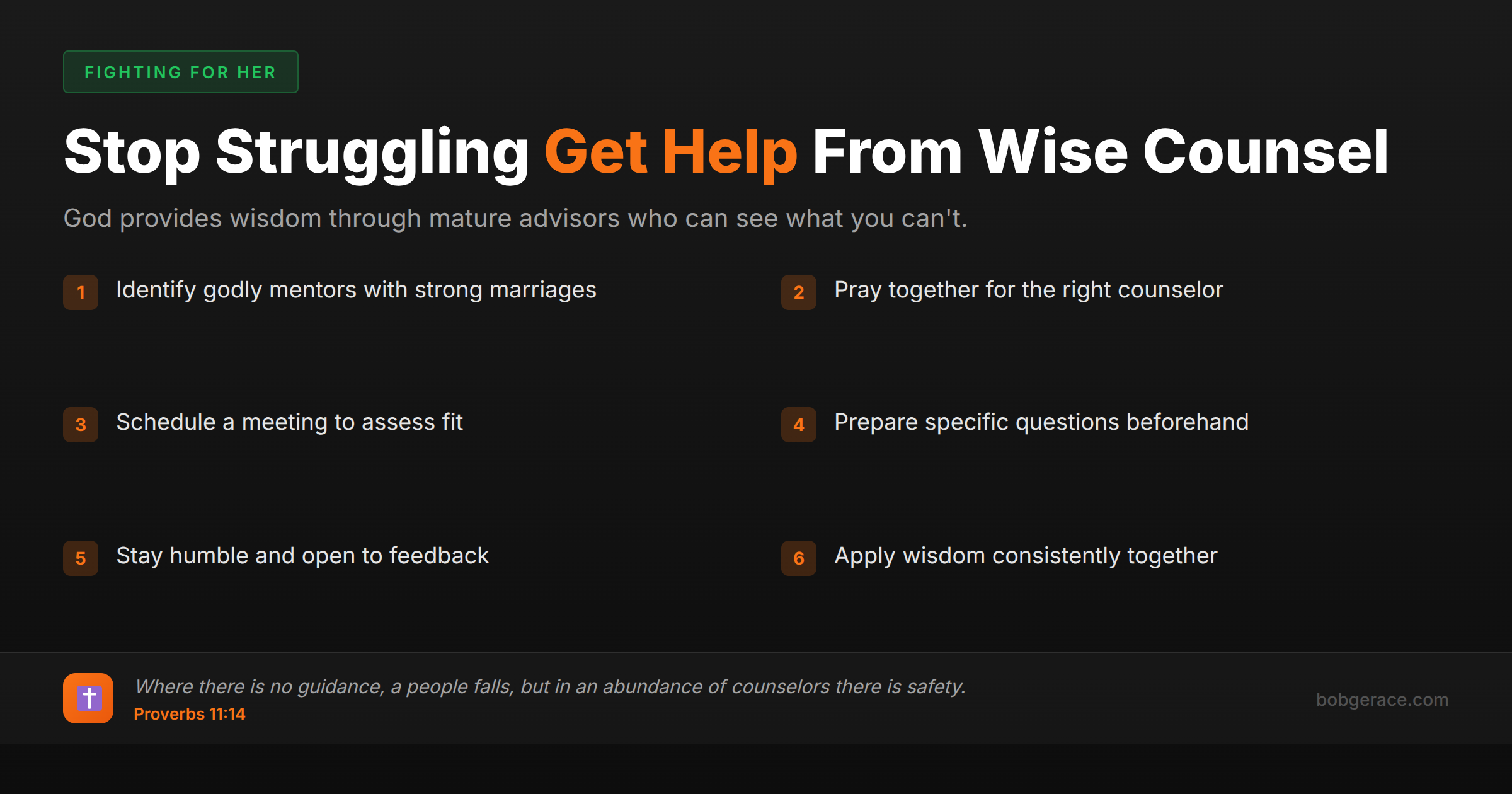
Wise counsel serves as God's provision for navigating life's complexities, especially in marriage. Scripture consistently emphasizes the value of seeking guidance from mature, godly advisors who can offer perspective we can't see ourselves. In marriage, wise counselors help us identify blind spots, challenge unhealthy patterns, and provide biblical wisdom during difficult seasons. The role of wise counsel isn't to make decisions for us, but to illuminate truth, offer accountability, and help us discern God's will. Whether it's a pastor, mentor, or Christian counselor, these advisors serve as instruments of God's wisdom, helping couples build stronger, more Christ-centered relationships through biblical insight and practical guidance.
The Full Picture
Wise counsel is one of God's primary means of guiding His people. Throughout Scripture, we see God using human advisors to provide direction, correction, and encouragement. In marriage, this becomes especially crucial because we're often too close to our situations to see clearly.
Wise counselors serve multiple vital functions. First, they provide objective perspective. When you're in the middle of a marital conflict, emotions run high and objectivity disappears. A wise counselor can see patterns, dynamics, and issues that you're blind to. They help you step back and view your situation through a clearer lens.
Second, they offer accountability. It's easy to make commitments to change when you're motivated, but much harder to follow through when emotions cool. Wise counselors help you stay committed to growth and healthy choices, even when it's difficult.
Third, they provide biblical wisdom and practical tools. Experienced counselors have walked with many couples through similar struggles. They can offer time-tested strategies, biblical principles, and practical steps that have helped others overcome similar challenges.
The key is choosing counsel wisely. Not all advice is good advice. Look for counselors who are grounded in Scripture, have demonstrated wisdom in their own lives, and show genuine care for your marriage. Avoid those who simply tell you what you want to hear or encourage decisions that contradict biblical principles.
Remember, seeking counsel isn't a sign of weakness—it's a sign of wisdom. The strongest marriages are often those where couples have been humble enough to seek guidance and mature enough to receive correction.
What's Really Happening
From a clinical perspective, wise counsel provides what we call 'external cognitive resources'—essentially borrowing someone else's clear thinking when ours is compromised by stress, emotion, or proximity to problems. In marriage therapy, I often see couples who have been stuck in destructive cycles for months or years, simply because they lacked an outside perspective to help them see what was happening.
Wise counsel serves several psychological functions. It provides cognitive reframing—helping you see situations from new angles. It offers emotional regulation support—helping you manage overwhelming feelings so you can think clearly. And it provides behavioral modeling—showing you healthier ways to handle conflict and communicate.
The research is clear: couples who engage with wise mentors, counselors, or advisors show significantly better outcomes in conflict resolution, communication skills, and overall relationship satisfaction. This isn't just about getting advice—it's about accessing the wisdom and experience of others who have successfully navigated similar challenges.
However, the quality of counsel matters enormously. Effective counselors don't just offer opinions—they help you discover your own insights, challenge unhealthy thinking patterns, and provide tools for lasting change. They create a safe space where both spouses can be honest about their struggles without fear of judgment.
From a biblical counseling perspective, wise counsel becomes even more powerful because it's grounded in God's truth rather than just human wisdom. This provides a stable foundation for growth that secular approaches often lack.
What Scripture Says
Scripture consistently emphasizes the vital importance of seeking and receiving wise counsel. Proverbs 11:14 tells us, 'Where there is no guidance, a people falls, but in an abundance of counselors there is safety.' This principle applies powerfully to marriage—couples who isolate themselves from wise input often find themselves struggling unnecessarily.
Proverbs 19:20 instructs us: 'Listen to advice and accept instruction, that you may gain wisdom in the future.' Notice that it's not enough to just hear counsel—we must actively listen and be willing to accept instruction, even when it challenges our preferences or assumptions.
Proverbs 27:6 provides crucial insight: 'Faithful are the wounds of a friend; profuse are the kisses of an enemy.' True wise counsel sometimes involves hearing difficult truths. A counselor who only affirms your perspective without challenging unhealthy patterns isn't serving you well. Sometimes the most loving thing a counselor can do is point out blind spots or destructive behaviors.
Proverbs 15:22 reminds us: 'Without counsel plans fail, but with many advisers they succeed.' Your marriage plans and goals are more likely to succeed when you're receiving input from wise, godly advisors who can help you navigate challenges and avoid common pitfalls.
Galatians 6:1-2 shows us the heart behind wise counsel: 'Brothers, if anyone is caught in any transgression, you who are spiritual should restore him in a spirit of gentleness... Bear one another's burdens, and so fulfill the law of Christ.' Wise counselors don't condemn—they restore with gentleness while helping carry the weight of your struggles.
The goal of wise counsel is always restoration, growth, and alignment with God's design for marriage.
What To Do Right Now
-
1
Identify potential counselors—look for pastors, mature Christian couples, or professional counselors who demonstrate biblical wisdom and successful marriages
-
2
Pray together as a couple, asking God to lead you to the right advisor and to prepare your hearts to receive counsel humbly
-
3
Schedule an initial meeting with a potential counselor to assess whether they're a good fit for your situation and communication styles
-
4
Prepare specific questions or areas where you need guidance—don't just seek general advice but identify particular challenges you're facing
-
5
Commit to being completely honest during counseling sessions—hiding problems or presenting only your side of issues will limit the effectiveness of counsel
-
6
Create an accountability plan with your counselor that includes regular check-ins and specific goals for implementing their guidance in your marriage
Related Questions
- How do I make this decision?
- What factors should I weigh?
- How do I separate fear from wisdom?
- How do I separate hope from denial?
- What does discernment require?
- How do you hear God in this?
- How do I discern God's will for my marriage?
- What role does Scripture play in discernment?
- What if godly people disagree on what I should do?
- How do I hear God when I'm in crisis?
Also find Bob on
Subscribe for weekly videos on Christian marriage.
Ready for Wise Counsel in Your Marriage?
Don't navigate marriage challenges alone. Get the biblical guidance and practical tools you need to build a thriving relationship.
Get Help Now →