What is 'emotional disengagement'?
6 min read
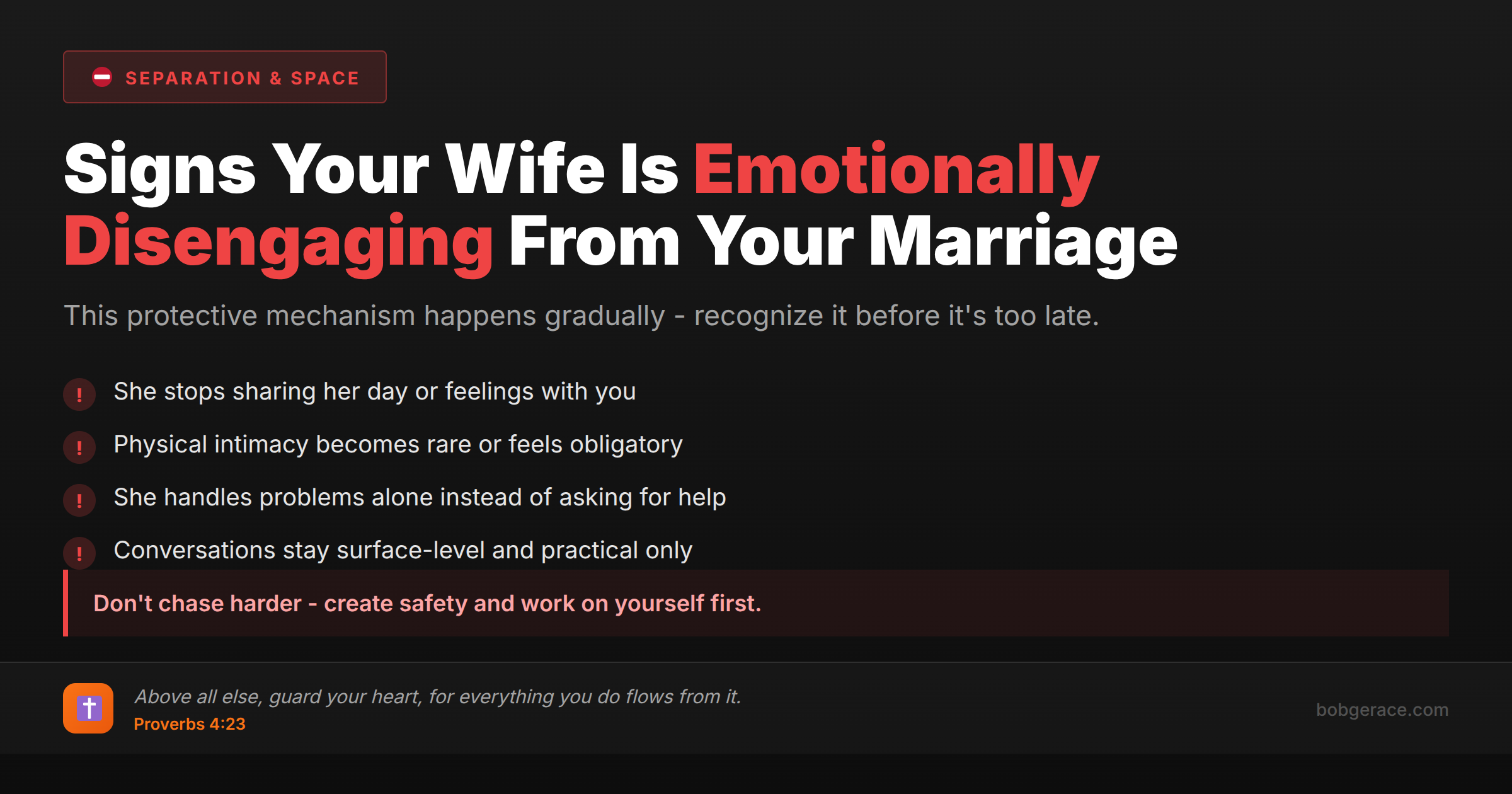
Emotional disengagement is a protective mechanism where your wife mentally and emotionally withdraws from the marriage relationship. It's not just being upset or having a bad day - it's a systematic pulling back of emotional investment, intimacy, and connection. Think of it as her heart going into 'survival mode' after repeated hurts, unmet needs, or overwhelming relationship stress. This isn't about love disappearing overnight. It's about emotional self-preservation. When someone feels consistently unheard, undervalued, or unsafe in a relationship, their psyche naturally begins to disengage to prevent further pain. The scary part? This process often happens gradually and can become deeply entrenched before you even realize what's happening.
The Full Picture
Emotional disengagement doesn't happen in a vacuum - it's typically the end result of a long process. Your wife didn't wake up one morning and decide to check out. This withdrawal usually follows a predictable pattern that many couples miss until it's reached crisis levels.
The Progressive Nature of Disengagement
It often starts with small disappointments that accumulate over time. Maybe she tried to share something important and felt dismissed. Perhaps she expressed needs that went unmet repeatedly. Or she experienced moments where she felt unseen, unheard, or undervalued. Each incident might seem minor in isolation, but they compound like interest on debt.
As these experiences pile up, she begins to protect herself by investing less emotionally. She stops sharing her deeper thoughts and feelings. She becomes less available for meaningful conversation. Physical affection decreases. She starts making decisions without consulting you or considering the marriage as a partnership.
What It Looks Like in Real Life
Emotionally disengaged wives often become functionally polite roommates. They might handle household responsibilities, care for children, and maintain the external appearance of marriage while internally having already begun the process of letting go. They're physically present but emotionally absent.
You might notice she no longer argues about things that used to matter to her. While this might initially feel like peace, it's actually concerning - it often means she's stopped caring enough to fight for the relationship. She may respond with one-word answers, show little interest in your day, or seem indifferent to plans and decisions that affect both of you.
The most challenging aspect is that by the time disengagement is obvious, significant damage has already occurred. The emotional infrastructure of your marriage has been steadily eroding, and rebuilding requires intentional, sustained effort from both partners.
What's Really Happening
From a clinical perspective, emotional disengagement is a trauma response - specifically, it's a form of emotional numbing that occurs when someone's nervous system has been overwhelmed by relationship stress. The brain literally rewires itself to feel less in order to hurt less.
When we examine this through attachment theory, disengagement often represents a shift toward avoidant attachment patterns. Even individuals who were previously securely attached can develop avoidant tendencies when their bids for connection are consistently rejected or ignored. The brain learns that emotional investment equals pain, so it reduces investment as a protective measure.
Neurologically, chronic relationship stress floods the system with cortisol and other stress hormones. Over time, this creates what we call 'emotional exhaustion' - the person literally doesn't have the biochemical resources to maintain emotional connection. Their nervous system prioritizes survival over connection.
What's particularly important to understand is that this isn't a conscious choice. Your wife isn't sitting there thinking, 'I'm going to emotionally disengage now.' This is happening at a subconscious, physiological level. Her brain is protecting her from what it perceives as ongoing emotional threat.
The concerning clinical reality is that once someone reaches true emotional disengagement, they often report feeling relief rather than sadness. This isn't because they're cold or uncaring - it's because their nervous system has finally found a way to stop the pain. This is why disengagement can feel so final and why re-engagement requires professional intervention and significant changes in relationship dynamics.
What Scripture Says
Scripture speaks directly to the heart conditions that lead to emotional disengagement and God's design for restoration in relationships. The Bible acknowledges that hearts can become hardened and distant, but it also provides hope for renewal.
The Reality of Hardened Hearts
*'Above all else, guard your heart, for everything you do flows from it.'* - Proverbs 4:23
This verse reveals that when someone emotionally disengages, they're actually guarding their heart - often from legitimate hurt. The challenge is that this guarding, while protective, can also prevent the love and connection God intends for marriage.
*'A heart at peace gives life to the body, but envy rots the bones.'* - Proverbs 14:30
Emotional disengagement often stems from a heart that has lost its peace within the marriage relationship. When trust erodes and safety disappears, the natural response is withdrawal.
God's Heart for Restoration
*'I will give you a new heart and put a new spirit in you; I will remove from you your heart of stone and give you a heart of flesh.'* - Ezekiel 36:26
God specializes in transforming hardened hearts. Even when emotional disengagement feels permanent, our God is in the business of making hearts soft and responsive again.
*'Therefore, if anyone is in Christ, the new creation has come: The old has gone, the new is here!'* - 2 Corinthians 5:17
This doesn't minimize the real work required to rebuild connection, but it establishes that transformation is possible through Christ's power.
The Call to Pursue
*'Husbands, love your wives, just as Christ loved the church and gave himself up for her.'* - Ephesians 5:25
Christ pursued the church even when she was distant and unresponsive. This doesn't mean tolerating harmful behavior, but it does mean taking initiative in love and restoration.
*'Love is patient, love is kind... it always protects, always trusts, always hopes, always perseveres.'* - 1 Corinthians 13:4,7
What To Do Right Now
-
1
Stop trying to force connection - Pursuing harder when she's disengaged often pushes her further away. Give her emotional space while working on yourself.
-
2
Acknowledge the pattern without blame - Have one honest conversation: 'I've noticed we've grown distant, and I want to understand what's happened between us.'
-
3
Focus on safety, not solutions - Before working on connection, she needs to feel emotionally safe with you again. This means consistent, trustworthy behavior over time.
-
4
Get professional help immediately - Emotional disengagement rarely resolves without professional intervention. Find a qualified marriage counselor now.
-
5
Examine your own contributions - Look honestly at patterns of dismissiveness, criticism, or emotional unavailability that may have contributed to her withdrawal.
-
6
Pray for heart transformation - Ask God to soften both your hearts and give you wisdom for the long road of rebuilding trust and connection.
Related Questions
- What's the difference between conflict and disengagement?
- What are Gottman's signs of 'turning away'?
- What does research say about emotional disconnection patterns?
- What is the 'pursuer-distancer' dynamic?
- What's the difference between her being withdrawn and being done?
- Is her shutdown protective or permanent?
- She won't talk about our problems
- She shuts down when I try to connect
- She's physically present but emotionally gone
- She stopped fighting — is that worse?
Also find Bob on
Subscribe for weekly videos on Christian marriage.
Your Marriage Can't Wait on Guesswork
If she's already emotionally gone, the next 30 days matter. Bob works with men in crisis—he'll see what's happening in your specific situation and help you move fast.
Talk to Bob →