What does secure response to criticism look like?
6 min read
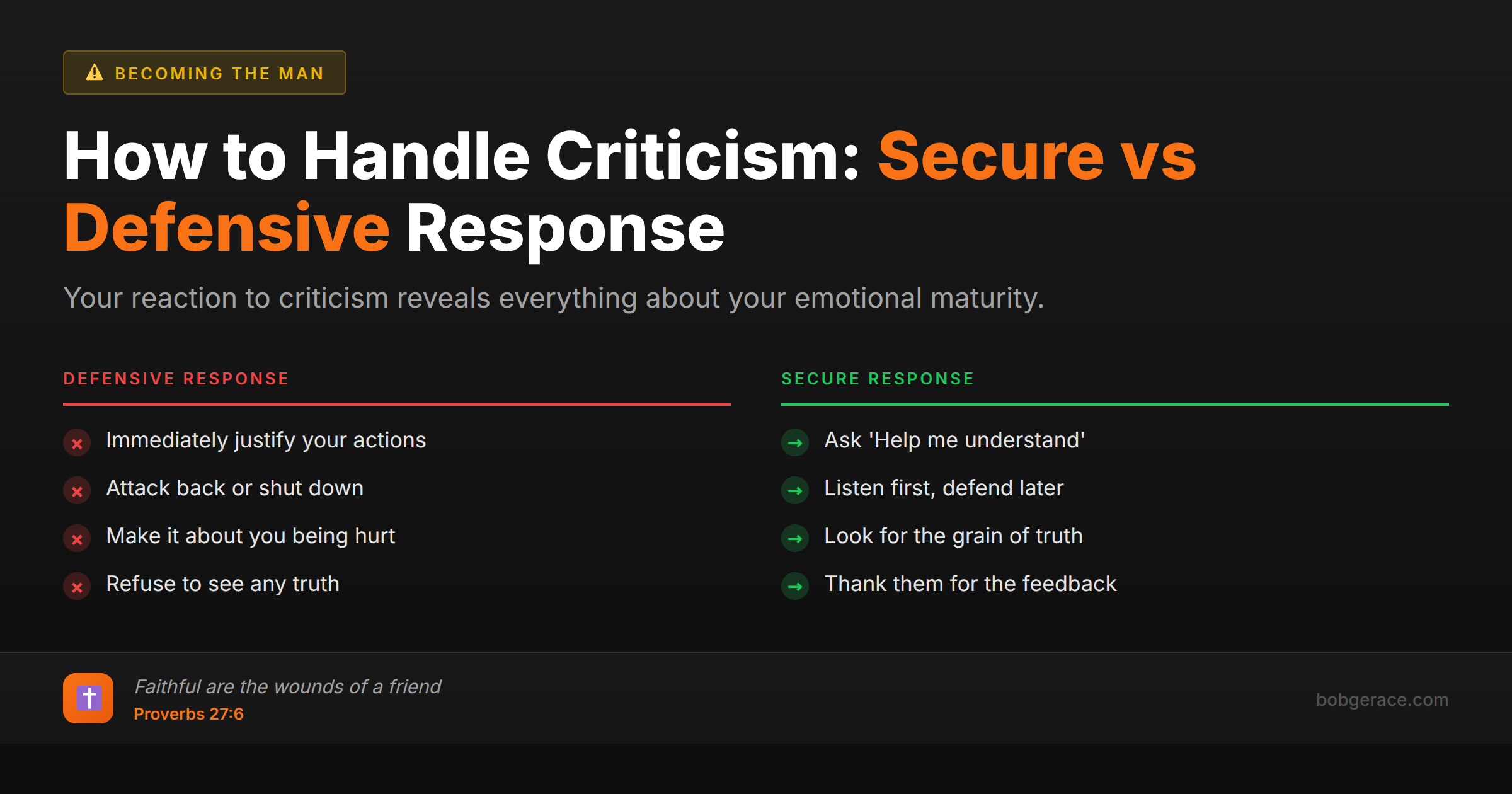
A secure response to criticism looks like staying calm and curious instead of defensive and reactive. Securely attached people can receive feedback without their entire sense of self crumbling because their identity isn't dependent on being perfect or always right. This means listening first, asking clarifying questions, taking time to consider if there's truth in what's being said, and responding thoughtfully rather than immediately defending yourself. You might say something like 'Help me understand what you mean' or 'I can see how my actions affected you that way.' Even when criticism is unfair or poorly delivered, secure people can separate the delivery from any kernel of truth and address what needs addressing without losing their cool or sense of worth.
The Full Picture
Most of us learned to handle criticism based on how our families dealt with conflict and feedback. If you grew up in a home where criticism meant attack, rejection, or abandonment, your nervous system still reacts to feedback as if it's a threat to your very survival.
Insecure responses typically look like immediate defensiveness ('That's not true!'), counter-attacking ('Well what about when you...'), minimizing ('It's not that big a deal'), or completely shutting down and withdrawing. These responses are designed to protect us, but they actually damage intimacy and prevent growth.
Secure responses come from a different place entirely. When you're secure, criticism doesn't threaten your core sense of worth because you know you're loved and valuable even when you mess up. This allows you to stay present and engaged instead of going into survival mode.
Secure people understand that receiving feedback well is actually a strength, not a weakness. They recognize that their spouse's criticism often contains important information about the relationship, even if it's delivered imperfectly. They can separate their spouse's emotional delivery from the underlying concern and address what really matters.
The goal isn't to become someone who never feels defensive - it's to develop the capacity to notice that defensive feeling and choose a different response. This takes practice and often requires healing old wounds that make criticism feel so threatening in the first place.
What's Really Happening
From an attachment perspective, your response to criticism reveals how safe you feel in your relationships and within yourself. Secure attachment develops when we experience consistent, attuned caregiving that teaches us we're worthy of love even when we're imperfect.
When someone with secure attachment receives criticism, their nervous system remains relatively calm because they've internalized the belief that relationships can handle conflict and repair. Their brain doesn't interpret feedback as rejection or abandonment, so they can access their prefrontal cortex - the part responsible for thoughtful responses rather than reactive ones.
Insecure attachment styles respond differently. Those with anxious attachment often become hypervigilant and people-pleasing, desperately trying to repair any rupture immediately. Those with avoidant attachment tend to dismiss or minimize criticism to protect themselves from feeling vulnerable. Disorganized attachment can lead to unpredictable responses that swing between these extremes.
The beautiful thing is that attachment styles aren't fixed. Through new relational experiences - whether in marriage, therapy, or community - we can develop what's called 'earned security.' This means you can learn to respond to criticism more securely even if you didn't develop that capacity in childhood. It requires recognizing your triggers, understanding their origins, and practicing new responses until they become more natural.
What Scripture Says
Scripture consistently calls us toward humility and the wisdom that comes from receiving correction well. Proverbs 27:5-6 reminds us that 'Better is open rebuke than hidden love. Faithful are the wounds of a friend; profuse are the kisses of an enemy.' This suggests that criticism from someone who loves us, even when it stings, is actually a gift.
Proverbs 15:31-32 says 'The ear that listens to life-giving reproof will dwell among the wise. Whoever ignores instruction despises himself, but he who listens to reproof gains intelligence.' God's design is for us to grow through feedback, not be destroyed by it.
Ephesians 4:15 calls us to 'speak the truth in love,' which applies both to giving and receiving difficult truths. When our spouse offers criticism, we have an opportunity to practice this principle by receiving it with love and grace.
James 1:19 instructs us to be 'quick to hear, slow to speak, slow to anger.' This perfectly describes the secure response to criticism - listening first, considering carefully, and responding thoughtfully rather than reactively.
The security that allows us to receive criticism well ultimately comes from knowing our identity is rooted in Christ, not in being perfect or always right. Romans 8:1 reminds us there is 'no condemnation for those who are in Christ Jesus,' which means we can face our imperfections honestly because our worth isn't dependent on our performance.
What To Do Right Now
-
1
Pause and breathe when you feel criticized - notice your body's reaction before responding
-
2
Ask clarifying questions like 'Help me understand' or 'Can you give me an example?'
-
3
Look for any grain of truth in the criticism, even if the delivery was poor
-
4
Acknowledge your spouse's feelings: 'I can see this really affected you'
-
5
Take responsibility for your part without immediately defending or explaining
-
6
Thank your spouse for bringing it to your attention, even if it was hard to hear
Related Questions
- What are the behavioral markers of defensiveness?
- What's the antidote to defensiveness?
- What does 'taking responsibility' actually look like?
- How do I receive feedback without counter-attacking?
- What does a non-defensive response sound like?
- How do I build tolerance for being wrong?
- What does humility in conflict look like?
- What does taking responsibility sound like?
- How do I not lose my mind right now?
Also find Bob on
Subscribe for weekly videos on Christian marriage.
You Don't Have to Figure This Out Alone
Responding securely to criticism in your marriage means knowing what's actually happening under your defensiveness—and that's different for every guy. A coach who knows your story can help you see what you can't see on your own.
Talk to Bob →