What attachment style did I develop in childhood?
6 min read
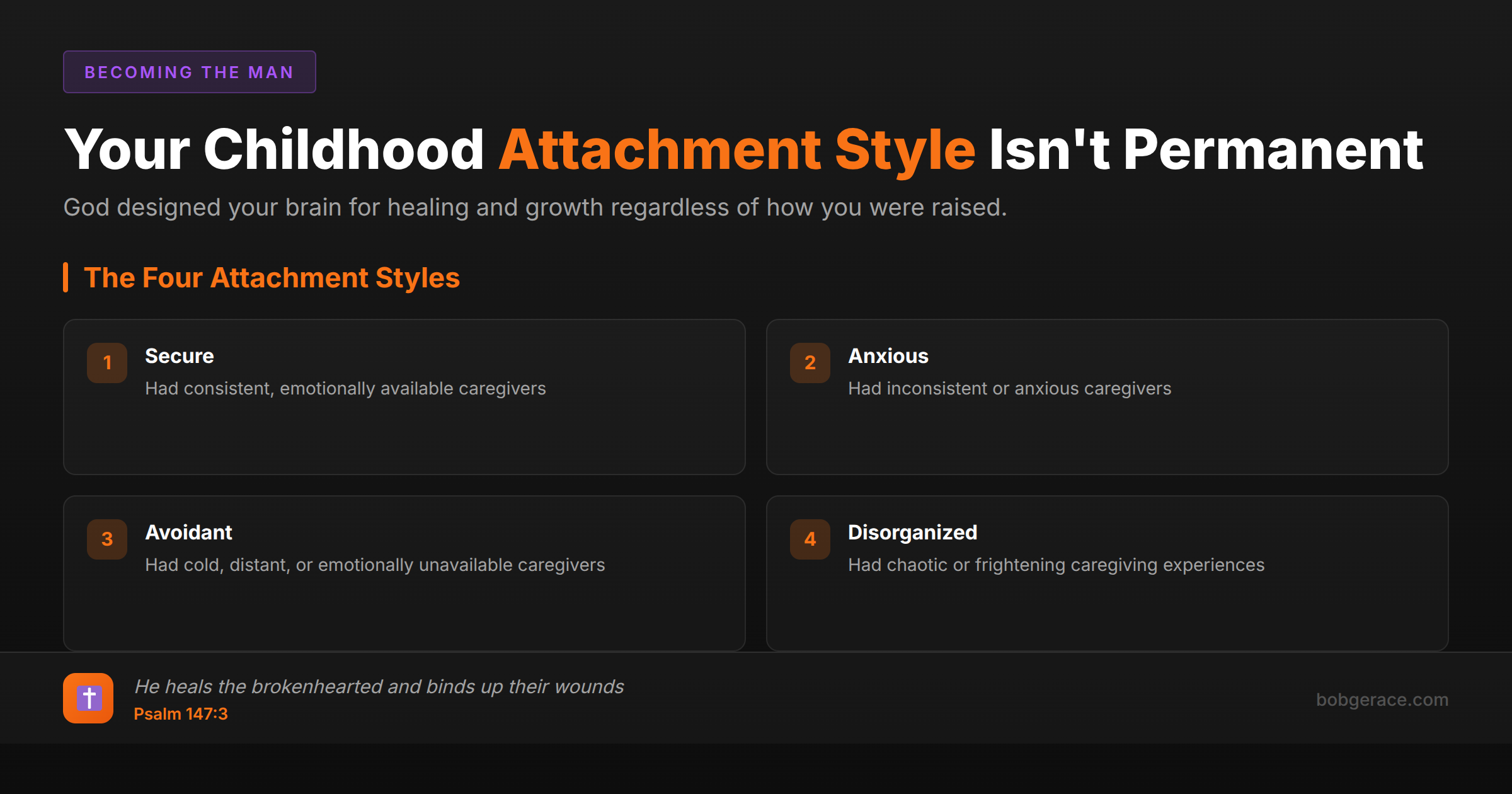
Your childhood attachment style was formed through your earliest relationships with caregivers and falls into one of four categories: secure, anxious-preoccupied, dismissive-avoidant, or disorganized. If your caregivers were consistently responsive and emotionally available, you likely developed secure attachment. If they were inconsistent or anxious themselves, you may have developed anxious attachment. Cold, distant, or emotionally unavailable caregivers often produce avoidant attachment patterns. The good news? Your attachment style isn't permanent. While these early patterns significantly influence how you connect in marriage, God designed our brains for healing and growth. Understanding your attachment style is the first step toward breaking destructive cycles and building the secure, loving marriage you desire. With intentional work and God's grace, you can develop earned security regardless of your childhood experiences.
The Full Picture
Your attachment style is essentially your relational blueprint - the unconscious expectations and behaviors you developed about relationships based on your earliest experiences with caregivers. This isn't about blame or excuses; it's about understanding the "why" behind your marriage struggles so you can actually fix them.
Secure Attachment (about 60% of people) develops when caregivers are consistently responsive, emotionally available, and provide a safe haven. These individuals tend to be comfortable with intimacy, communicate directly about needs, and trust their partner's love even during conflict.
Anxious-Preoccupied Attachment (about 15-20%) forms when caregivers are inconsistent - sometimes nurturing, sometimes overwhelmed or unavailable. This creates adults who desperately want closeness but fear abandonment, leading to clingy behavior, emotional volatility, and constant need for reassurance.
Dismissive-Avoidant Attachment (about 20-25%) results from emotionally distant, rejecting, or critical caregivers. These individuals learned early that emotional needs won't be met, so they suppress them. In marriage, they appear self-sufficient but struggle with intimacy and emotional expression.
Disorganized Attachment (about 5-10%) occurs when caregivers are frightening, abusive, or severely inconsistent. The child's source of comfort becomes their source of fear, creating chaotic internal patterns that make adult relationships extremely challenging.
Here's what's crucial: your attachment style explains your triggers, not your choices. Understanding why you react certain ways gives you power to respond differently. Many people develop "earned security" through healing relationships, therapy, and spiritual growth.
What's Really Happening
From a clinical perspective, attachment styles represent adaptive strategies your developing brain created to maximize safety and connection with imperfect caregivers. Your nervous system literally wired itself based on these early relational experiences, creating automatic responses that bypass conscious thought.
When anxiously attached individuals feel disconnected from their spouse, their nervous system triggers a "protest" response - the same biological alarm that kept them alive as dependent children. This explains why simple conflicts can feel life-threatening and why they pursue their partner with such intensity.
Dismissive-avoidant individuals learned to suppress their attachment system entirely. Their nervous system associates emotional needs with danger or rejection, so they automatically shut down during intimate moments. This isn't coldness - it's a protective mechanism that once served them.
Disorganized attachment creates the most complex patterns because the nervous system never learned a coherent strategy. These individuals simultaneously crave and fear closeness, leading to chaotic relationship cycles.
The hopeful reality is neuroplasticity - your brain's ability to form new neural pathways throughout life. Through consistent, secure relationship experiences (including with a spouse committed to growth), targeted therapy, and spiritual practices that reinforce your identity as God's beloved child, you can literally rewire your attachment system. This process requires patience and often professional support, but transformation is absolutely possible.
What Scripture Says
Scripture provides the ultimate framework for understanding attachment and healing. God designed us for relationship, first with Him, then with others. Our earthly attachments, while formative, are not final.
"He heals the brokenhearted and binds up their wounds." (Psalm 147:3) God specializes in healing attachment wounds. The same God who created your capacity for connection can restore what was damaged or never properly formed.
"Therefore, if anyone is in Christ, the new creation has come: The old has gone, the new is here!" (2 Corinthians 5:17) Your identity isn't defined by childhood experiences but by your position in Christ. This new identity provides the secure base needed for healthy attachment.
"And my God will meet all your needs according to the riches of his glory in Christ Jesus." (Philippians 4:19) The deepest attachment wound is the fear that our needs won't be met. God promises to meet every legitimate need, providing the security foundation for healthy relationships.
"Be kind and compassionate to one another, forgiving each other, just as in Christ God forgave you." (Ephesians 4:32) Healing attachment patterns requires both receiving and extending grace - to yourself, your spouse, and even your imperfect caregivers.
"Above all, love each other deeply, because love covers over a multitude of sins." (1 Peter 4:8) Perfect love - first from God, then expressed in marriage - has power to heal even the deepest attachment injuries.
"The Lord your God is with you, the Mighty Warrior who saves. He will take great delight in you; in his love he will no longer rebuke you, but will rejoice over you with singing." (Zephaniah 3:17) This is the ultimate secure attachment - a God who delights in you and never leaves.
What To Do Right Now
-
1
Complete an online attachment style assessment to identify your primary pattern and discuss results with your spouse
-
2
Write your childhood story focusing on caregiver relationships - note patterns of consistency, emotional availability, and safety
-
3
Identify your top 3 attachment triggers in marriage and share them with your spouse using "I" statements
-
4
Practice one specific behavior that moves you toward security - anxious types practice self-soothing, avoidant types practice vulnerability
-
5
Establish a weekly 30-minute conversation with your spouse focused on emotional connection without problem-solving
-
6
Consider professional counseling, especially if you identify disorganized attachment or significant trauma history
Related Questions
- What is 'family of origin' work?
- What patterns did I inherit vs. choose?
- What roles did I play in my family system?
- What unmet needs from childhood am I still seeking?
- What did I learn about love from my parents?
- What is 'earned secure' vs. 'earned insecure'?
- What is anxious attachment and am I doing it right now?
- How does attachment style relate to affair risk?
- What are 'attachment injuries' and how many did I cause?
- What does avoidant attachment look like in a wife?
Also find Bob on
Subscribe for weekly videos on Christian marriage.
Your Marriage Isn't a Theory
Attachment patterns play out differently in every marriage. A coach who knows your specific story can help you see what's actually happening in yours—and what to do about it.
Talk to Bob →