What attachment injuries did I experience?
6 min read
Attachment injuries are wounds from early relationships that shaped how you connect with others today. These typically occur when primary caregivers were inconsistent, absent, overly critical, or unable to provide the safety and security you needed as a child. Common injuries include emotional neglect, unpredictable caregiving, harsh criticism, abandonment, or having your needs dismissed. Recognizing these injuries isn't about blame—it's about understanding why you might struggle with trust, intimacy, or emotional regulation in your marriage. When you identify patterns like fear of abandonment, difficulty being vulnerable, or chronic people-pleasing, you're seeing how past injuries still influence your present relationships. This awareness is the first step toward healing.
The Full Picture
Attachment injuries happen when our earliest relationships fail to provide the security we desperately needed. As children, we depend completely on caregivers for emotional safety, consistency, and love. When those needs go unmet—whether through neglect, inconsistency, criticism, or trauma—we develop survival strategies that follow us into adulthood.
These injuries show up in predictable patterns. Maybe you experienced emotional neglect, where your feelings were dismissed or ignored. Perhaps you had inconsistent caregiving, never knowing if you'd get warmth or criticism. Some face outright abandonment, while others endure constant criticism that taught them they were never good enough.
The result is a wounded attachment system that affects every close relationship. You might find yourself anxiously seeking reassurance, or withdrawing when things get too close. You could struggle with trust, always waiting for the other shoe to drop. Maybe you're hypervigilant about your spouse's moods, or you shut down emotionally to protect yourself.
Understanding your specific injuries requires honest reflection on your earliest relationships. What messages did you receive about your worth? How did your caregivers respond to your needs? Were you safe to express emotions, or did you learn to hide them? These patterns don't disappear automatically in marriage—they need intentional healing.
What's Really Happening
From a clinical perspective, attachment injuries create neural pathways in the brain that automatically trigger defensive responses in close relationships. When your nervous system learned early that relationships weren't safe, it developed hypervigilant scanning for threats or numbing shutdown responses.
The most common injuries I see include anxious attachment from inconsistent caregiving, avoidant attachment from emotional neglect, and disorganized attachment from trauma or chaotic home environments. These aren't character flaws—they're adaptive responses that helped you survive difficult circumstances.
What's particularly important to understand is that these injuries live in your body, not just your thoughts. You might intellectually know your spouse loves you, but your nervous system still reacts as if you're in danger. This creates the frustrating cycle where you keep "blowing it" despite your best intentions.
Healing requires both cognitive awareness and somatic regulation. You need to understand your patterns while also learning to calm your nervous system when it's activated. This is why simply trying harder rarely works—you're working against decades of neurological programming that needs gentle, consistent rewiring through secure relationships and intentional practices.
What Scripture Says
God designed us for secure attachment from the beginning. Scripture reveals that we were created for relationship, first with God and then with others. When these foundational relationships are broken, we experience the deep pain of separation that God never intended.
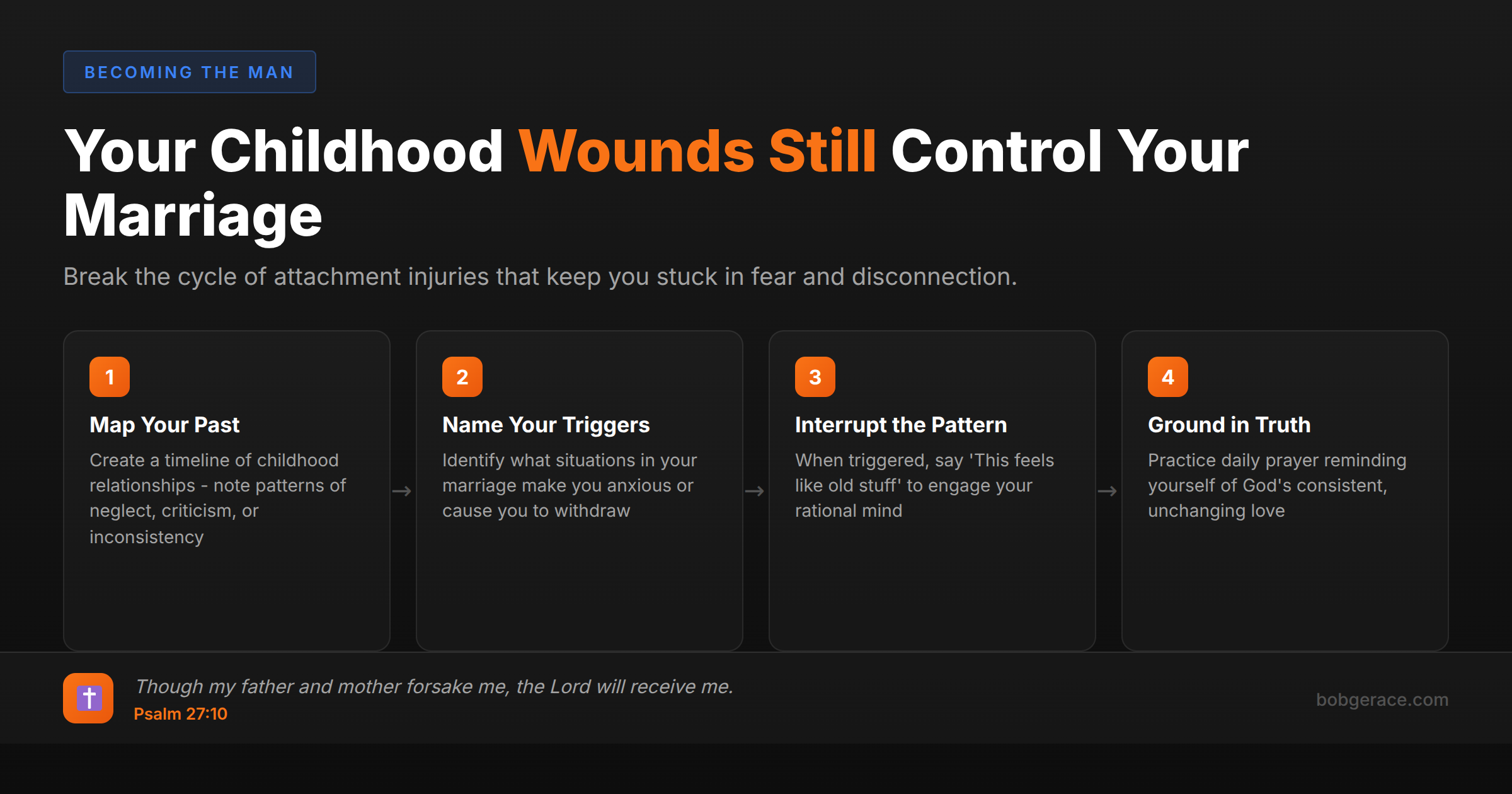
Psalm 27:10 speaks directly to attachment injuries: "Though my father and mother forsake me, the Lord will receive me." God acknowledges that earthly caregivers sometimes fail us, but He offers Himself as our ultimate secure base.
Isaiah 49:15-16 reveals God's perfect attachment: "Can a mother forget the baby at her breast and have no compassion on the child she has borne? Though she may forget, I will not forget you! See, I have engraved you on the palms of my hands." Even when human attachment fails, God's love remains constant and secure.
Romans 8:15 addresses our core attachment fears: "The Spirit you received does not make you slaves, so that you live in fear again; rather, the Spirit you received brought about your adoption as sons." God replaces our fearful attachment with secure sonship.
Healing comes through experiencing God's perfect love. 1 John 4:18 tells us "perfect love drives out fear," and as we experience God's consistent, unconditional love, our wounded attachment system begins to heal. This doesn't minimize the need for human healing, but grounds it in the ultimate source of security.
What To Do Right Now
-
1
Create a simple timeline of your childhood, noting key relationships and any patterns of inconsistency, criticism, or neglect
-
2
Identify your current attachment triggers—what situations in your marriage make you feel most anxious or cause you to withdraw
-
3
Practice the 'Name it to tame it' technique—when you feel triggered, simply say 'This feels like old stuff' to engage your prefrontal cortex
-
4
Begin a daily practice of grounding prayer, reminding yourself of God's consistent love and your secure identity in Him
-
5
Have an honest but gentle conversation with your spouse about your attachment injuries and how they might be affecting your marriage
-
6
Consider working with a therapist who understands attachment theory and can help you process these injuries safely
Related Questions
Ready to Break Free from Old Patterns?
Understanding your attachment injuries is just the beginning. Let me help you develop a personalized healing plan that honors both your story and God's design for your marriage.
Start Healing →