I start strong then fall back
6 min read
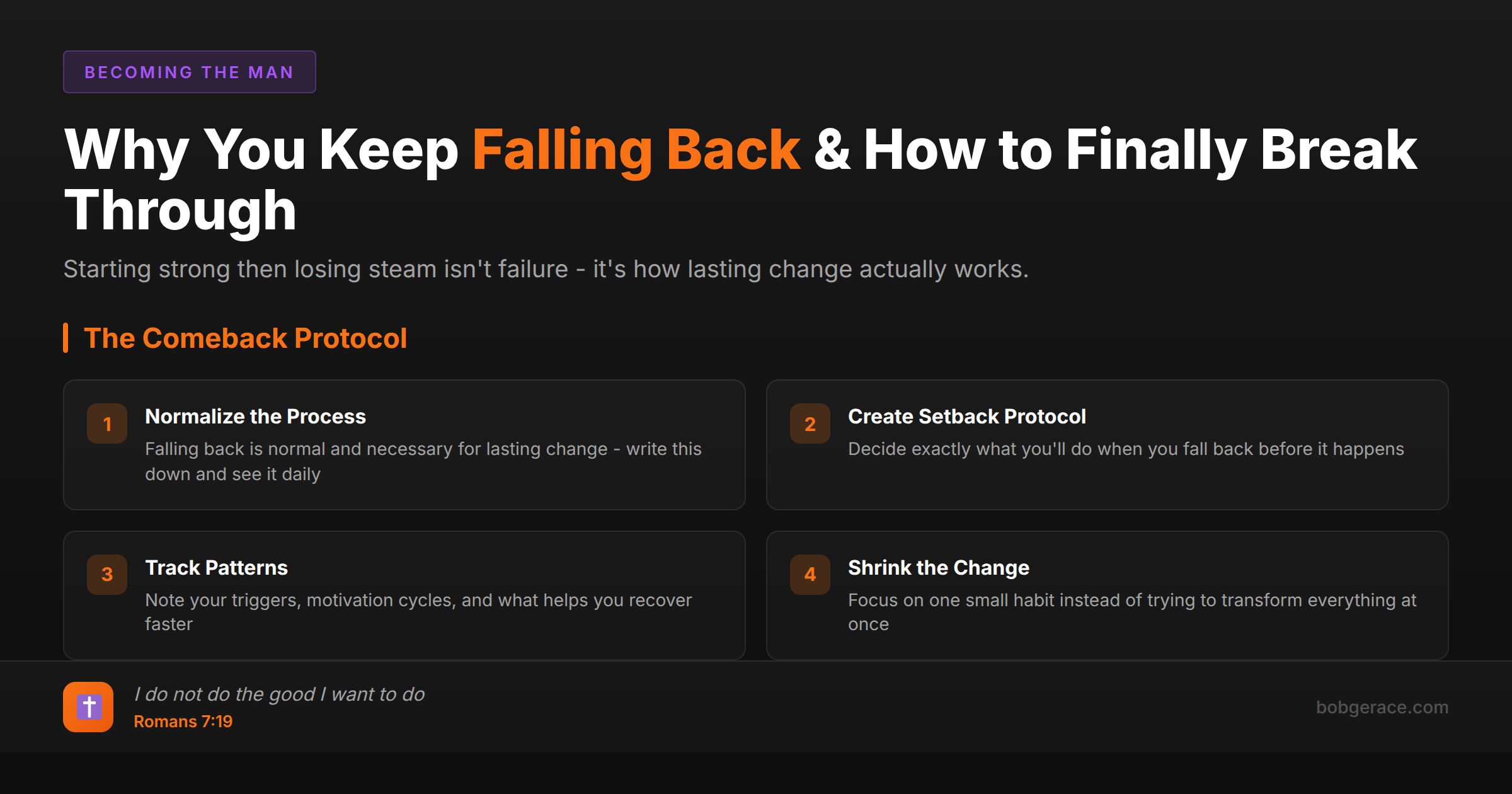
Starting strong then falling back is one of the most common patterns in marriage improvement - you're not alone, and you're not a failure. This happens because initial motivation is emotional and temporary, while lasting change requires building new neural pathways and habits over 60-90 days. The key insight: falling back isn't failure, it's data. Every attempt teaches you something about what works and what doesn't. The couples who succeed aren't the ones who never fall back - they're the ones who get back up faster each time and adjust their approach based on what they've learned.
The Full Picture
Here's what's really happening when you start strong then fall back: you're experiencing the normal cycle of change, not personal failure. Most people think change should be linear - start, improve steadily, arrive at success. But real change looks more like a spiral staircase - you go up, then around, sometimes it feels like you're going backward, but you're actually ascending.
The "strong start" happens because you're motivated by pain, hope, or both. Maybe you just had a big fight, attended a marriage seminar, or read something that clicked. Your brain floods with determination and vision for how things could be different. This is powerful but temporary fuel.
The "fall back" happens because motivation fades, but your environment, triggers, and ingrained response patterns remain the same. Your spouse does that thing that always sets you off. You have a stressful day at work. You get tired. Your brain defaults to what it knows best - the old patterns you've practiced for years.
This is why most marriage advice fails. It assumes you need better techniques when what you really need is a better system for navigating the inevitable cycle of progress and setback. The couples who break through aren't more disciplined or more in love - they understand that falling back is part of moving forward.
The breakthrough comes when you stop treating setbacks as failures and start treating them as information. Each cycle teaches you something: what triggers your old patterns, how long your motivation typically lasts, what support you need, and what approach actually works for your unique situation. This isn't about perfection - it's about getting better at recovery.
What's Really Happening
From a neurological perspective, you're experiencing the natural tension between your limbic system (emotional, automatic responses) and your prefrontal cortex (intentional, planned responses). When you start strong, your prefrontal cortex is highly engaged and motivated. But this system has limited capacity and gets depleted by stress, fatigue, and decision-making throughout the day.
When you fall back, your limbic system takes over, reverting to deeply ingrained neural pathways that have been strengthened through years of repetition. This isn't a character flaw - it's neuroscience. The good news is that every time you catch yourself and choose the new response, even briefly, you're strengthening new neural pathways.
Research shows it takes 60-90 days of consistent practice to establish new automatic responses in close relationships. The key word is 'consistent,' not 'perfect.' Studies indicate that people who succeed at lasting change experience setbacks 7-12 times before the new pattern becomes natural. The critical difference is their response to setbacks.
Successful changers develop what we call 'rapid recovery protocols' - predetermined responses for when they fall back. They normalize the process, learn from each cycle, and gradually extend the time between setbacks. They also build environmental supports: accountability partners, visual reminders, and structured practices that reduce reliance on willpower alone.
The shame and self-criticism that often follow setbacks actually make the problem worse by flooding your system with stress hormones that impair decision-making and increase the likelihood of continued old patterns.
What Scripture Says
Scripture is remarkably honest about the reality of starting well and struggling to continue. Paul himself describes this internal battle: "For I do not do the good I want to do, but the evil I do not want to do—this I keep on doing" (Romans 7:19). Even the apostle Paul experienced the gap between intention and action.
But notice Paul doesn't end there. He continues: "Thanks be to God, who delivers me through Jesus Christ our Lord!" (Romans 7:25). The answer isn't trying harder - it's recognizing our need for God's grace and strength in the process of change.
"He gives strength to the weary and increases the power of the weak" (Isaiah 40:29). God knows we get tired. He knows our motivation fades. His strength is specifically designed for our weak moments - not just our strong starts.
Jesus addresses this directly in the parable of building on rock versus sand: "Therefore everyone who hears these words of mine and puts them into practice is like a wise man who built his house on the rock" (Matthew 7:24). The key phrase is "puts them into practice" - ongoing action, not just initial enthusiasm.
The writer of Hebrews encourages us: "Let us not become weary in doing good, for at the proper time we will reap a harvest if we do not give up" (Galatians 6:9). Notice the assumption that we will become weary - the question is whether we'll give up when weariness comes.
"His mercies are new every morning" (Lamentations 3:23). Each day offers a fresh start, regardless of yesterday's setbacks. This isn't about perfection - it's about persistence sustained by grace.
What To Do Right Now
-
1
Normalize the process: Write down that falling back is normal and necessary for lasting change. Post it where you'll see it daily.
-
2
Create a setback protocol: Before your next attempt, decide exactly what you'll do when you fall back. Make it specific and immediate.
-
3
Track patterns, not just performance: Note what triggers your setbacks, how long you stay motivated, and what helps you recover faster.
-
4
Shrink the change: Instead of trying to transform everything, focus on one specific behavior you can practice for 60 days straight.
-
5
Build environmental supports: Set up accountability, reminders, and systems that don't rely on your willpower or motivation.
-
6
Celebrate recovery speed: Measure success not by avoiding setbacks, but by how quickly you recognize them and get back on track.
Related Questions
Ready to Break the Cycle for Good?
You don't have to keep starting over. Let's build a system that works with your reality, not against it.
Get Support →