Every time I make progress, I blow it
6 min read
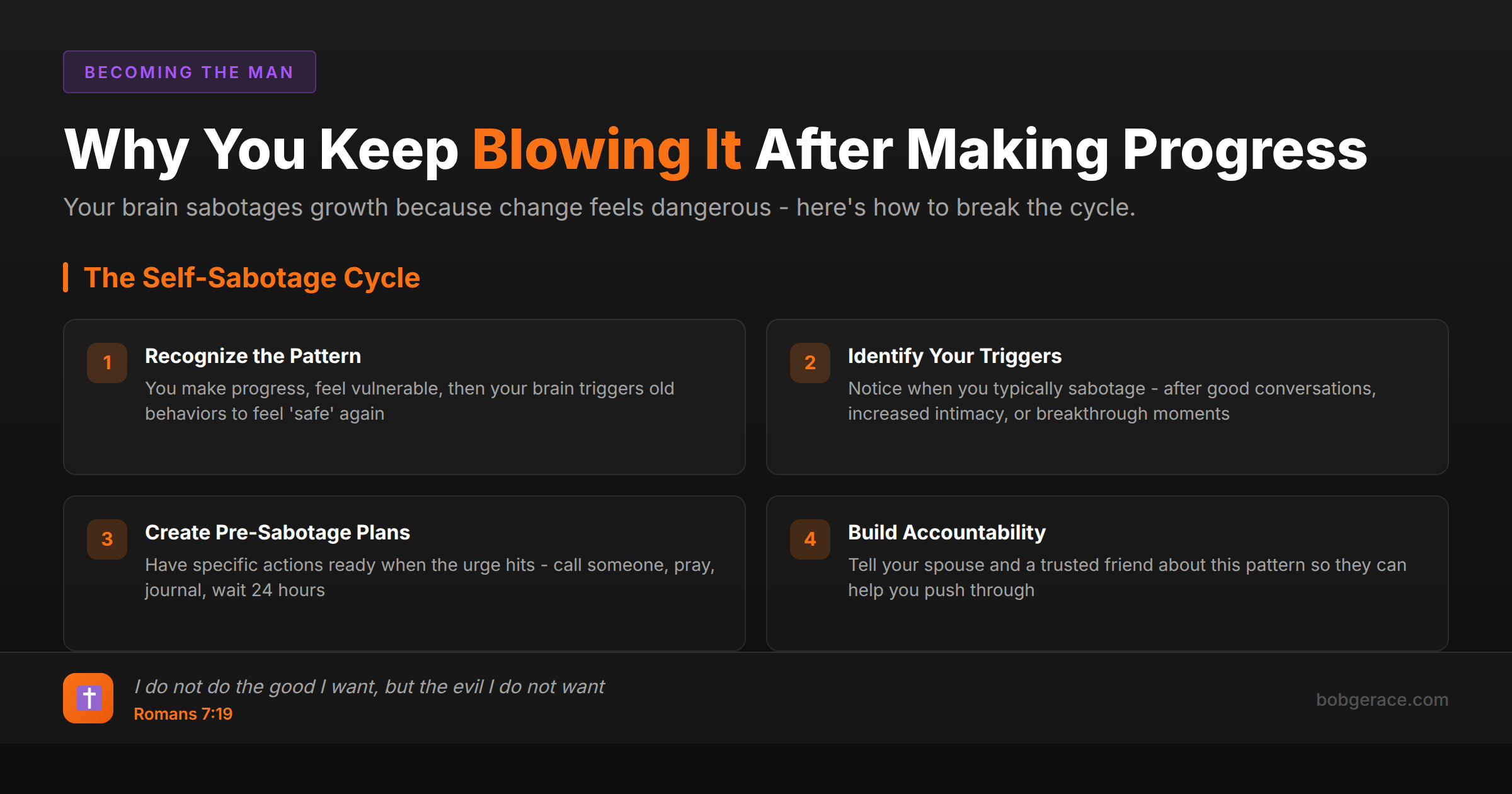
You're not alone in this frustrating cycle. What feels like 'blowing it' is actually your brain's way of protecting you from the vulnerability that comes with real change. When we make progress in marriage, it often requires us to be more open, honest, and emotionally available - which can feel terrifying to our nervous system. The pattern usually goes like this: you start changing, things improve, but then your old survival mechanisms kick in and sabotage the progress. This isn't a character flaw - it's a normal human response to growth that threatens our familiar (even if unhealthy) patterns. The key is recognizing this cycle and building in safeguards that help you push through the discomfort instead of retreating to old behaviors.
The Full Picture
Let's get real about what's happening here. You're experiencing what psychologists call self-sabotage, but I prefer to think of it as your inner protection system working overtime. Every time you make genuine progress in your marriage - becoming more vulnerable, communicating better, or breaking old destructive patterns - part of you panics.
Why? Because change feels dangerous to your nervous system, even when it's good change. Your brain has been wired through years of experience to associate certain behaviors with safety. When you start acting differently, even in positive ways, your subconscious mind sounds the alarm: "This isn't how we do things! Go back to what's familiar!"
Here's what the cycle typically looks like: You commit to change. You start seeing results. Your spouse responds positively. Things feel good... maybe too good. Then the fear creeps in - fear of being hurt, fear of not being able to maintain this new version of yourself, fear of raising expectations you can't meet. So you unconsciously create conflict or revert to old patterns to bring things back to familiar dysfunction.
The cruel irony is that this pattern often becomes the very thing that damages your marriage most. Your spouse starts to lose hope. They begin to see your commitments as empty promises. They protect their heart by expecting disappointment. Meanwhile, you're stuck in shame, convinced you'll never change, which actually makes the cycle worse.
But here's the truth: recognizing this pattern is the first step to breaking it. You're not weak or broken. You're human, and you're fighting against years of conditioning. The solution isn't to try harder with willpower alone - it's to understand the deeper mechanics of change and build a sustainable system for growth.
What's Really Happening
From a clinical perspective, this pattern reflects what we call approach-avoidance conflict. Your conscious mind wants the benefits of a healthier marriage, but your unconscious mind perceives change as a threat to your established attachment style and defensive patterns.
When you make progress, you're essentially rewiring neural pathways that have been reinforced for years or decades. This creates cognitive dissonance - a psychological tension between your new behaviors and your internalized beliefs about yourself and relationships. Your brain tries to resolve this dissonance by reverting to familiar patterns.
Trauma responses often underlie this cycle. If you experienced inconsistent love, abandonment, or criticism in your formative years, vulnerability in marriage can trigger these old wounds. The sabotage becomes a preemptive strike - "I'll hurt this relationship before it hurts me."
Neurologically, we see that the amygdala (fear center) becomes hyperactivated when we step outside our comfort zone, even in positive ways. This floods your system with stress hormones that make it nearly impossible to maintain new behaviors. The prefrontal cortex, responsible for decision-making and impulse control, goes offline.
The solution involves building distress tolerance - your capacity to sit with uncomfortable emotions without acting out. This requires specific techniques like mindfulness, grounding exercises, and what we call "urge surfing" - learning to ride out the wave of self-destructive impulses without acting on them. Progress happens when you can recognize the urge to sabotage and choose differently, even when every fiber of your being wants to retreat to old patterns.
What Scripture Says
God's word speaks directly to this struggle of falling back into old patterns. The Apostle Paul himself wrestled with this: "For I do not do the good I want, but the evil I do not want is what I keep on doing" (Romans 7:19). You're in good company - even the greatest saints have battled this internal conflict.
The difference between worldly change and godly transformation is the power source. "I can do all things through him who strengthens me" (Philippians 4:13). This isn't about trying harder in your own strength; it's about drawing on Christ's power to sustain you through the discomfort of growth.
God calls us to be "transformed by the renewal of your mind" (Romans 12:2). This renewal is a process, not a one-time event. Every time you feel like you've blown it, remember that God's mercies are "new every morning" (Lamentations 3:23). Each day is a fresh opportunity to walk in His strength.
The key is understanding that lasting change comes through abiding, not striving. Jesus said, "Abide in me, and I in you. As the branch cannot bear fruit by itself, unless it abides in the vine, neither can you, unless you abide in me" (John 15:4). When you're connected to Christ's strength rather than relying on willpower alone, you can sustain growth through the inevitable challenges.
Finally, remember that "he who began a good work in you will bring it to completion" (Philippians 1:6). God isn't surprised by your setbacks. He's committed to finishing what He started in your life and marriage. Your job isn't perfection - it's faithfulness to keep returning to Him when you stumble.
What To Do Right Now
-
1
Identify your specific sabotage triggers - when do you typically 'blow it'? After a good conversation? When intimacy increases? Write down the pattern.
-
2
Create a 'pre-sabotage plan' - specific actions you'll take when you feel the urge to revert (call a friend, pray, take a walk, journal).
-
3
Practice the 24-hour rule - when you want to act destructively, commit to waiting 24 hours and praying about it first.
-
4
Build accountability - tell your spouse and a trusted friend about this pattern so they can help you recognize it in real-time.
-
5
Focus on progress, not perfection - celebrate small wins and treat setbacks as learning opportunities, not proof of failure.
-
6
Develop a daily connection routine with God - consistent time in prayer and Scripture builds the spiritual strength needed for sustained change.
Related Questions
Ready to Break the Cycle for Good?
You don't have to keep living in this frustrating pattern. Let's work together to build lasting change that sticks.
Get Help Now →