I know what to do but can't do it
6 min read
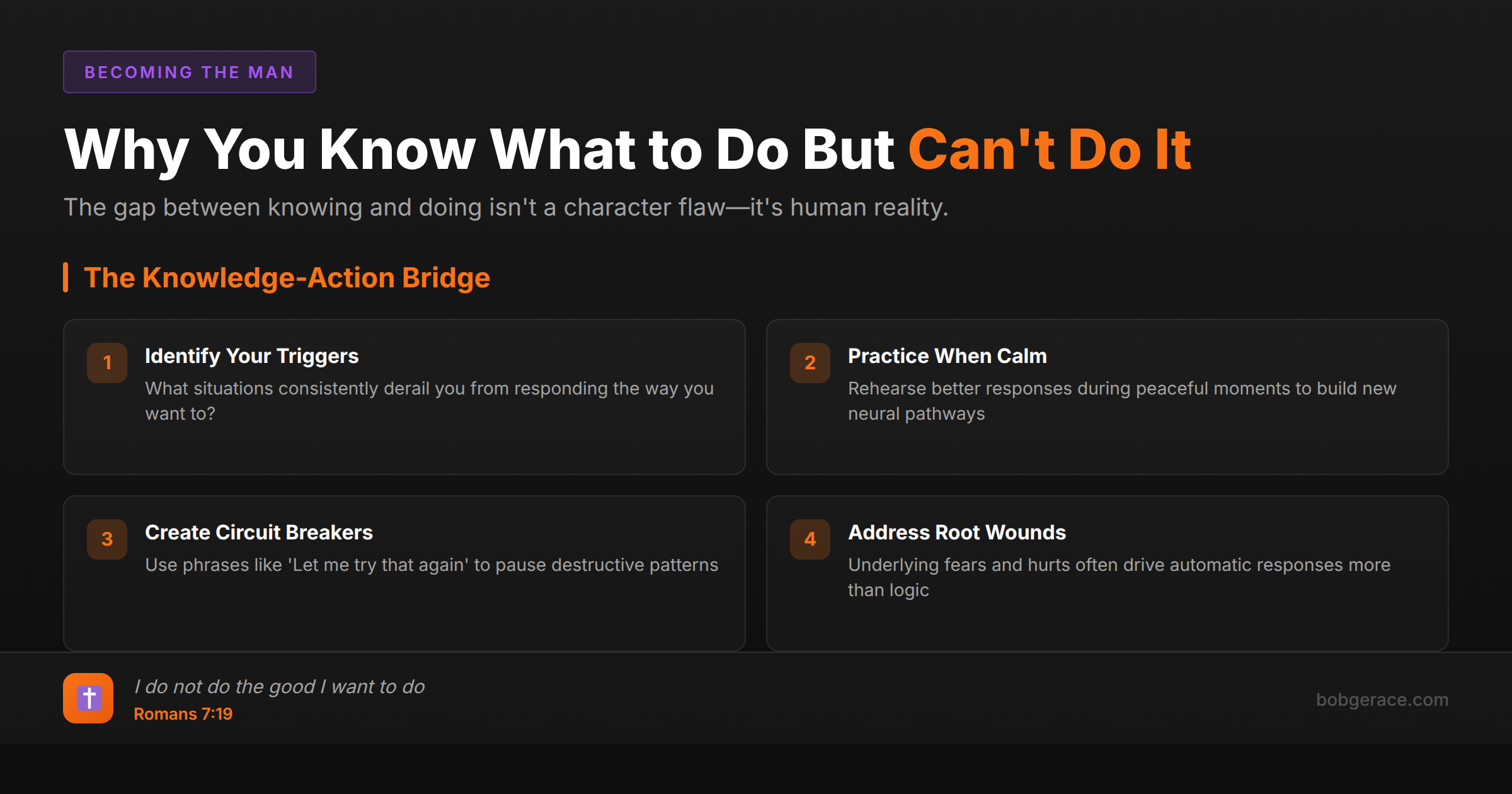
This is one of the most common struggles in marriage - you've read the books, attended the seminars, maybe even been to counseling, yet you still find yourself repeating the same destructive patterns. The gap between knowing and doing isn't a character flaw; it's a human reality that requires understanding and specific strategies to overcome. The issue isn't your knowledge or your intentions. It's that behavior change requires more than intellectual understanding - it demands emotional regulation, new neural pathways, and often addressing underlying wounds or fears. Your brain defaults to familiar patterns, especially under stress, regardless of what you know is right.
The Full Picture
You're not alone in this frustration. Most people seeking help for their marriages already know they should communicate better, show more appreciation, manage their anger, or be more affectionate. The problem isn't ignorance - it's implementation.
Why Knowledge Alone Fails
When we're triggered or stressed, our brain's emotional center (the amygdala) hijacks our rational thinking. All that good advice gets locked away while we operate from fight-or-flight mode. This is why you can be perfectly calm and reasonable when discussing your marriage with a friend, but completely lose it during an actual conflict with your spouse.
Additionally, many destructive patterns serve a purpose - they protect us from vulnerability, rejection, or feeling out of control. Until we address these underlying needs and fears, we'll keep defaulting to familiar behaviors regardless of what we know.
The Emotional Component
Most marriage advice focuses on techniques and strategies, but ignores the emotional reality. You might know you should validate your spouse's feelings, but if their criticism triggers your childhood wound of never being good enough, your body will react before your mind can apply what you've learned.
The Practice Gap
Knowing how to ride a bike and actually riding one are different skills. Marriage skills require practice in low-stakes situations before they become available during high-stress moments. Most people try to implement new behaviors only when they're already activated, which is like trying to learn to drive during a race.
The path forward involves understanding your triggers, practicing new responses when you're calm, addressing underlying emotional wounds, and creating systems that support better choices in the moment.
What's Really Happening
From a neurobiological perspective, this disconnect between knowledge and behavior is completely normal. When we're emotionally activated, the prefrontal cortex - where our rational thinking and learned strategies live - goes offline. The limbic system takes over, defaulting to ingrained patterns that feel safer, even when we know they're destructive.
This is why couples can have breakthrough conversations in therapy but still struggle at home. The therapeutic environment doesn't trigger their nervous system the way their actual relationship does. Real change requires what we call 'embodied learning' - practicing new responses until they become automatic, even under stress.
Many clients also struggle with what I call 'implementation anxiety.' They know what they should do, but attempting new behaviors feels vulnerable and uncertain. Their system resists change, preferring the familiar dysfunction over unknown outcomes. This isn't weakness - it's how our brains are designed to protect us.
Another factor is unresolved trauma or attachment wounds. If your primary relationships taught you that vulnerability leads to rejection or that conflict means abandonment, your nervous system will activate these defenses regardless of what your rational mind knows about healthy communication.
The solution involves working with your nervous system, not against it. This means learning to recognize your activation states, developing tools to self-regulate in the moment, and gradually expanding your window of tolerance for discomfort. Change happens through consistent practice in manageable doses, not through willpower alone.
What Scripture Says
Scripture acknowledges this universal struggle between knowing what's right and doing it. The Apostle Paul articulated it perfectly: 'I do not do the good I want to do, but the evil I do not want to do—this I keep on doing' (Romans 7:19). You're experiencing something every believer faces.
The solution isn't trying harder, but surrendering to God's transforming work: 'Therefore, if anyone is in Christ, the new creation has come: The old has gone, the new is here!' (2 Corinthians 5:17). This transformation is both instantaneous and progressive - we are new creatures, but we're still being renewed.
'Above all else, guard your heart, for everything you do flows from it' (Proverbs 4:23). This verse reveals that behavior flows from the heart, not just the mind. Surface-level behavior modification fails because it doesn't address heart-level issues like fear, pride, or unhealed wounds.
God understands our weakness: 'He knows how we are formed, he remembers that we are dust' (Psalm 103:14). He doesn't expect us to change through willpower alone. 'It is God who works in you to will and to act in order to fulfill his good purpose' (Philippians 2:13).
The Holy Spirit is our helper in this process: 'In the same way, the Spirit helps us in our weakness' (Romans 8:26). We don't have to figure this out alone or rely solely on our own strength. Lasting change comes through dependence on God, honest community, and cooperating with His grace rather than trying to manufacture transformation through human effort.
What To Do Right Now
-
1
Identify your specific triggers - what situations, words, or behaviors from your spouse consistently derail you from responding the way you want to?
-
2
Practice new responses during calm moments - rehearse better communication or conflict resolution when you're not activated, building new neural pathways
-
3
Create 'circuit breakers' - develop phrases like 'I need a moment to think' or 'Let me try that again' to pause when you notice yourself falling into old patterns
-
4
Address underlying wounds - consider what fears or past experiences drive your reactive patterns, and seek healing for these deeper issues through prayer, counseling, or trusted community
-
5
Start with small changes - don't try to overhaul everything at once; pick one specific behavior and focus on that until it becomes more natural
-
6
Get support - find a counselor, coach, or trusted friend who can help you see your blind spots and provide accountability for the changes you're trying to make
Related Questions
- Why do I repeat patterns I hate?
- I keep making the same mistakes
- Why can't I just change?
- How do I break destructive patterns?
- What are 'neural pathways' and why do patterns persist?
- Why does willpower fail under stress?
- Can I actually become a different man?
- What if I change and she still leaves?
- How long does real transformation take?
- What does real transformation look like?
Also find Bob on
Subscribe for weekly videos on Christian marriage.
Your Marriage Needs More Than What You Know
A coach sees what's blocking you specifically—the patterns you can't see from inside your own marriage. Bob works with you on the exact gap between what you know and what you're actually doing.
Talk to Bob →