Why do I repeat patterns I hate?
6 min read
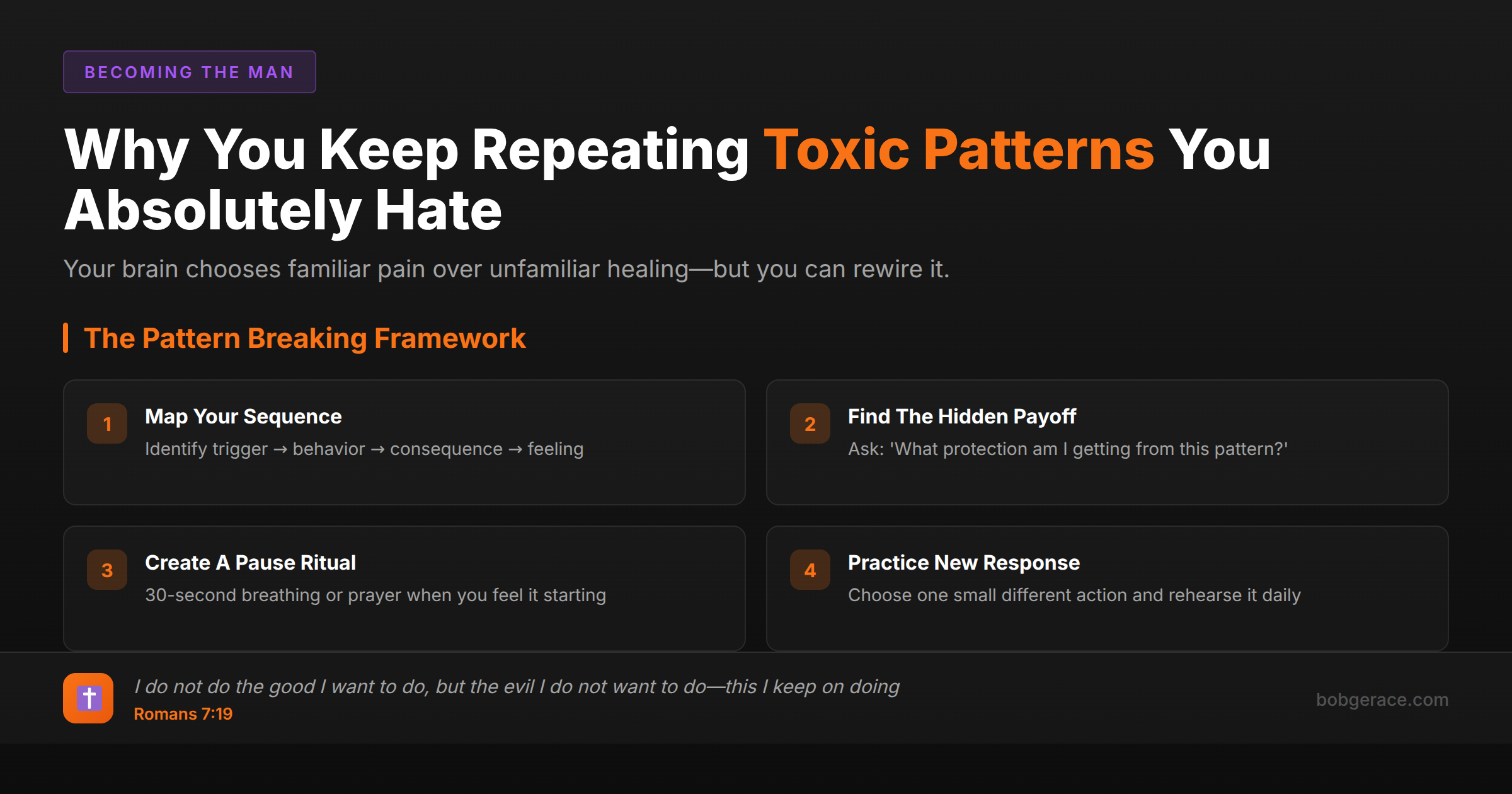
You repeat patterns you hate because your brain is literally wired for familiarity, not happiness. These patterns feel 'normal' even when they're destructive because they're what you learned early in life. Your nervous system actually interprets familiar dysfunction as safety, while healthy changes trigger anxiety and resistance. It's not a character flaw or lack of willpower—it's neurobiology. The good news? Your brain can be rewired. Breaking these cycles requires understanding that the pattern serves a purpose (usually protection from perceived threats) and then consciously choosing new responses despite the discomfort. This takes time, patience, and often professional support, but lasting change is absolutely possible when you understand what you're really fighting.
The Full Picture
Let's get real about why you keep doing the same things that hurt your marriage, even when you hate yourself for it afterwards. This isn't about being weak or broken—it's about understanding how your brain actually works.
Your Brain Loves Patterns
Your nervous system is designed to keep you alive, not happy. It creates neural pathways based on repetition, and once those highways are built in your brain, they become the default route. When you learned early in life that yelling gets attention, withdrawing keeps you safe, or people-pleasing prevents abandonment, those strategies got hardwired.
Trauma Bonding to Dysfunction
Here's what most people don't realize: if dysfunction was your 'normal' growing up, your nervous system actually interprets chaos as familiar and safe. Calm, healthy relationships can feel boring, suffocating, or even threatening because they're unknown territory. Your brain sounds alarm bells when things get too peaceful.
The Addiction Cycle
Destructive patterns often follow an addiction-like cycle: trigger → destructive behavior → temporary relief or payoff → shame/regret → determination to change → trigger appears again. The pattern provides something you need (control, attention, protection from vulnerability) even though the cost is enormous.
Secondary Gains
Every destructive pattern has a hidden payoff. Maybe your anger gives you a sense of power when you feel powerless. Maybe your withdrawal protects you from rejection. Maybe your criticism gives you the illusion of control. Until you identify what you're getting from the pattern, you'll keep unconsciously choosing it.
The Change Paradox
Here's the cruel irony: the more you hate a pattern, the more emotional charge it carries, and the stronger it can become. Self-hatred and shame actually reinforce the neural pathways you're trying to break. Change requires self-compassion, not self-condemnation.
What's Really Happening
From a neurobiological perspective, repetitive patterns—even destructive ones—represent your brain's attempt to create predictability and safety. These patterns typically originate from your attachment experiences in childhood, where you developed strategies to maintain connection with your primary caregivers.
Trauma Response Patterns
What you call 'patterns I hate' are often trauma responses that once served you well. If you learned that conflict meant abandonment, you might have developed a pattern of explosive anger (to push people away first) or complete shutdown (to avoid the conflict entirely). These responses made sense given your early environment.
Implicit Memory Activation
These patterns are stored in your implicit memory system—the part that operates below conscious awareness. When triggered, your brain doesn't distinguish between past and present. You're not actually responding to your spouse; you're responding to the emotional memory of a much earlier threat.
Neuroplasticity and Hope
The revolutionary discovery of neuroplasticity means your brain can form new neural pathways at any age. However, changing deeply ingrained patterns requires more than intellectual understanding. It requires somatic awareness, emotional regulation skills, and often professional support to navigate the anxiety that comes with change.
The Window of Tolerance
Successful pattern change happens within your 'window of tolerance'—the zone where you're calm enough to think clearly but activated enough to be motivated to change. Most people try to change when they're either completely shut down or in emotional crisis, neither of which supports lasting transformation.
What Scripture Says
God's Word addresses this struggle with remarkable clarity. The Apostle Paul himself wrestled with unwanted patterns: 'I do not do the good I want to do, but the evil I do not want to do—this I keep on doing' (Romans 7:19). You're in good company.
Transformation is God's Work
'Therefore, if anyone is in Christ, the new creation has come: The old has gone, the new is here!' (2 Corinthians 5:17). God doesn't just forgive your patterns—He provides the power to transform them. This isn't about willpower; it's about allowing God's Spirit to renew your mind.
Renewing Your Mind
'Do not conform to the pattern of this world, but be transformed by the renewing of your mind' (Romans 12:2). The Greek word for 'transformed' is *metamorphoo*—like a caterpillar becoming a butterfly. This change happens gradually as you align your thoughts with God's truth rather than your past experiences.
God's Patience with Your Process
'Being confident of this, that he who began a good work in you will carry it on to completion until the day of Christ Jesus' (Philippians 1:6). God isn't frustrated with your repeated failures. He's committed to your transformation and will be patient with the process.
The Power of Community
'As iron sharpens iron, so one person sharpens another' (Proverbs 27:17). Breaking destructive patternss rarely happens in isolation. God designed us for community, where others can lovingly challenge our blind spots and support our growth.
'Therefore confess your sins to each other and pray for each other so that you may be healed' (James 5:16). There's supernatural power in bringing your struggles into the light with trusted believers who will fight for your freedom alongside you.
What To Do Right Now
-
1
Map your pattern: Write down the specific sequence (trigger → behavior → consequence → feeling) for one pattern you want to change
-
2
Identify the payoff: Ask yourself honestly, 'What am I getting from this pattern?' (control, protection, attention, etc.)
-
3
Create a pause ritual: Develop a 30-second breathing or prayer practice to use when you feel the pattern starting
-
4
Design your new response: Choose one small, different action you can take when triggered, and practice it when you're calm
-
5
Find your support team: Tell one trusted person about your pattern and ask them to lovingly call you out when they see it
-
6
Celebrate small wins: Acknowledge every time you catch yourself or choose differently, even if the pattern still happens
Related Questions
Ready to Break Free from Destructive Patterns?
You don't have to stay trapped in cycles you hate. Get personalized strategies to rewire your responses and create the marriage you actually want.
Get Help Now →