I keep making the same mistakes
6 min read
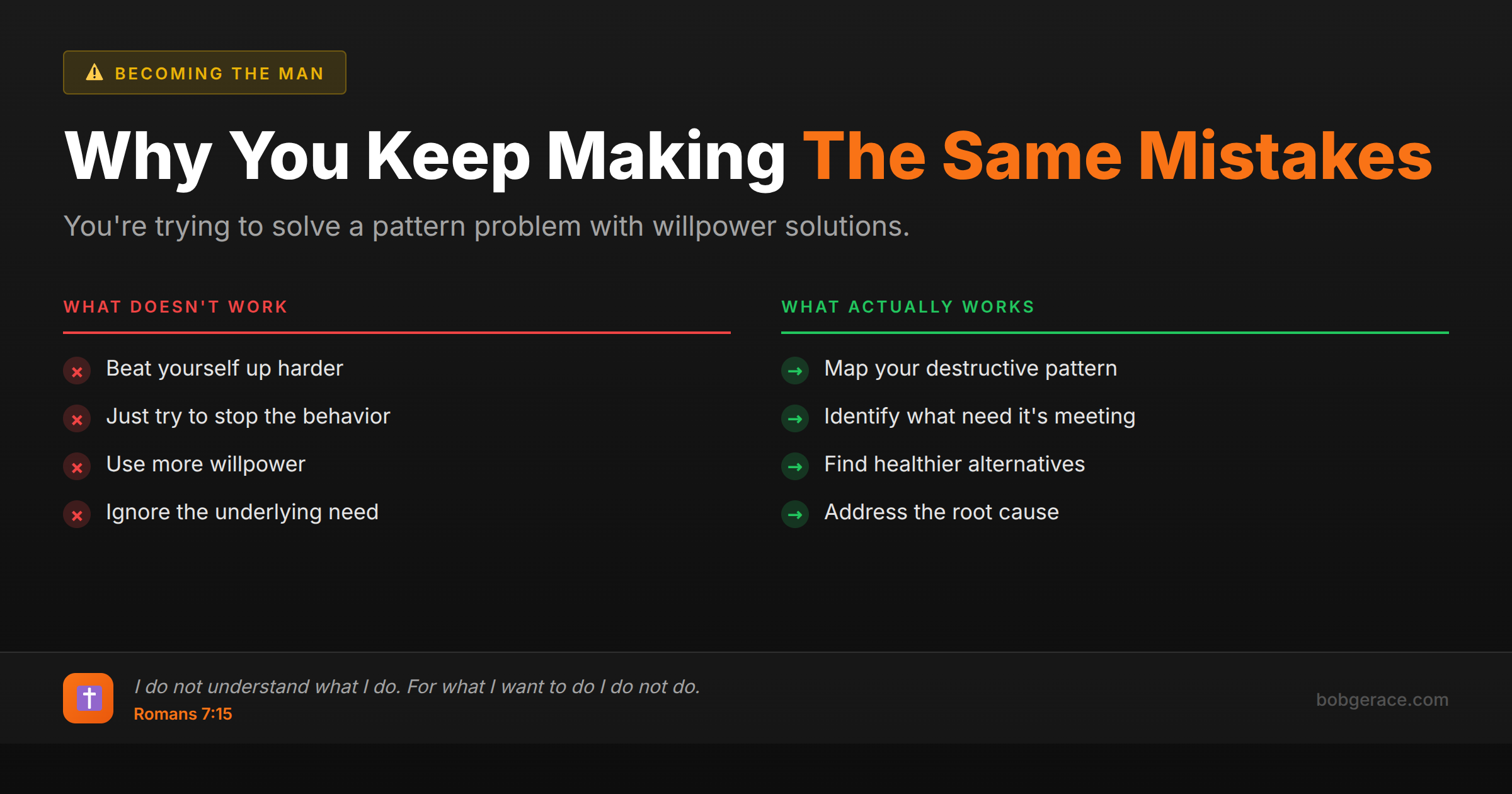
You keep making the same mistakes because you're trying to solve a pattern problem with willpower solutions. Those destructive cycles exist because they're serving some need - even if it's unhealthy. Maybe your anger gets you attention, or your withdrawal feels safer than vulnerability, or your criticism gives you a sense of control. The key isn't beating yourself up harder. It's identifying what need your mistake is meeting, then finding a healthier way to meet that need. This requires honest self-examination, often with help, and a commitment to changing the underlying system rather than just managing symptoms. Real change happens when you address the root cause, not just the behavior.
The Full Picture
Here's what I've learned after coaching hundreds of couples: the same mistakes keep happening because they're not really mistakes - they're solutions to deeper problems.
Your brain is wired to repeat what works, even if "working" just means avoiding something worse. That explosive anger? It might be your way of avoiding the vulnerability that comes with honest communication. That pattern of shutting down? It could be protecting you from feeling criticized or controlled.
The cycle looks like this: Trigger → Old pattern kicks in → Temporary relief → Guilt and shame → Promise to do better → Trigger → Repeat.
Most people get stuck trying to white-knuckle their way through step 2. But the real work happens in understanding what's driving the pattern in the first place. What are you really afraid of? What need is this "mistake" meeting?
I've seen spouses who kept "forgetting" important dates because deep down they resented feeling controlled. Others who kept starting fights right before intimate moments because they felt safer in conflict than in connection. The behavior looked destructive, but it was actually their system's way of self-protection.
Breaking the cycle requires three things: First, identifying your true triggers (not just the obvious ones). Second, understanding what payoff you're getting from the pattern. Third, developing new strategies that meet the same need in healthier ways.
This isn't about having more discipline. It's about having more awareness and better tools. Your marriage can handle your growth - in fact, it's waiting for it.
What's Really Happening
From a clinical perspective, repetitive relationship patterns are maintained by what we call "negative reinforcement cycles." Your brain creates neural pathways that become automatic highways for familiar responses, even destructive ones.
These patterns often stem from attachment injuries or learned coping mechanisms from childhood. Your nervous system recognizes familiar relationship dynamics and defaults to survival strategies that once protected you but now sabotage your marriage.
The neuroscience shows us three key factors: First, your brain's threat detection system (amygdala) can't distinguish between past and present dangers. Second, your prefrontal cortex - responsible for conscious decision-making - goes offline during emotional flooding. Third, repetitive behaviors create stronger neural pathways, making change feel almost impossible.
But here's the hope: neuroplasticity means your brain can form new pathways at any age. The key is interrupting the automatic sequence early, before your thinking brain shuts down. This requires developing what we call "emotional regulation skills" - the ability to stay present and conscious even when triggered.
Effective intervention focuses on: identifying your unique trigger sequence, developing somatic awareness (noticing body sensations before emotions peak), and practicing new responses during calm moments so they're available during stress.
The pattern isn't evidence of your failure - it's evidence of your brain doing exactly what brains do. With the right tools and consistent practice, you can literally rewire these automatic responses and create new, healthier relationship patterns.
What Scripture Says
God's Word speaks directly to the struggle of repeated patterns and the hope of transformation. Romans 7:15 captures the frustration: *"I do not understand what I do. For what I want to do I do not do, but what I hate I do."* Paul understood the battle between knowing what's right and actually doing it.
But Scripture doesn't leave us without hope. 2 Corinthians 5:17 promises: *"Therefore, if anyone is in Christ, the new creation has come: The old has gone, the new is here!"* This isn't just positional truth - it's practical reality. God provides the power for real change.
Romans 12:2 gives us the method: *"Do not conform to the pattern of this world, but be transformed by the renewing of your mind."* Notice it says "renewing" - this is an ongoing process, not a one-time event. Your thought patterns can actually change.
Philippians 4:13 reminds us of our power source: *"I can do all this through him who gives me strength."* The change you need isn't dependent on your willpower alone - you have divine assistance available.
The process requires both divine power and human responsibility. James 4:8 says: *"Come near to God and he will come near to you."* As you draw close to God through prayer and His Word, He provides wisdom and strength for breaking destructive cycles.
Psalm 139:23-24 gives us the prayer for breakthrough: *"Search me, God, and know my heart; test me and know my anxious thoughts. See if there is any offensive way in me, and lead me in the way everlasting."* God wants to reveal the deeper issues and lead you to freedom.
What To Do Right Now
-
1
Map your pattern - Write down your last 3 occurrences: What triggered it? What were you feeling right before? What need was it trying to meet?
-
2
Identify your early warning signs - Notice the physical sensations, thoughts, or emotions that show up before your pattern kicks in
-
3
Create a pause protocol - Develop a specific plan for what you'll do when you notice those warning signs (deep breathing, brief walk, quick prayer)
-
4
Find your healthier alternative - Determine what positive action could meet the same underlying need your pattern was trying to address
-
5
Practice during calm times - Rehearse your new response when you're not triggered so it's available when you need it
-
6
Get accountability - Share your pattern and new plan with your spouse or a trusted friend who can help you stay on track
Related Questions
Ready to Break Free from Destructive Patterns?
You don't have to figure this out alone. Let's work together to identify your specific triggers and create lasting change in your marriage.
Get Help Now →