What is 'intermittent explosive disorder'?
6 min read
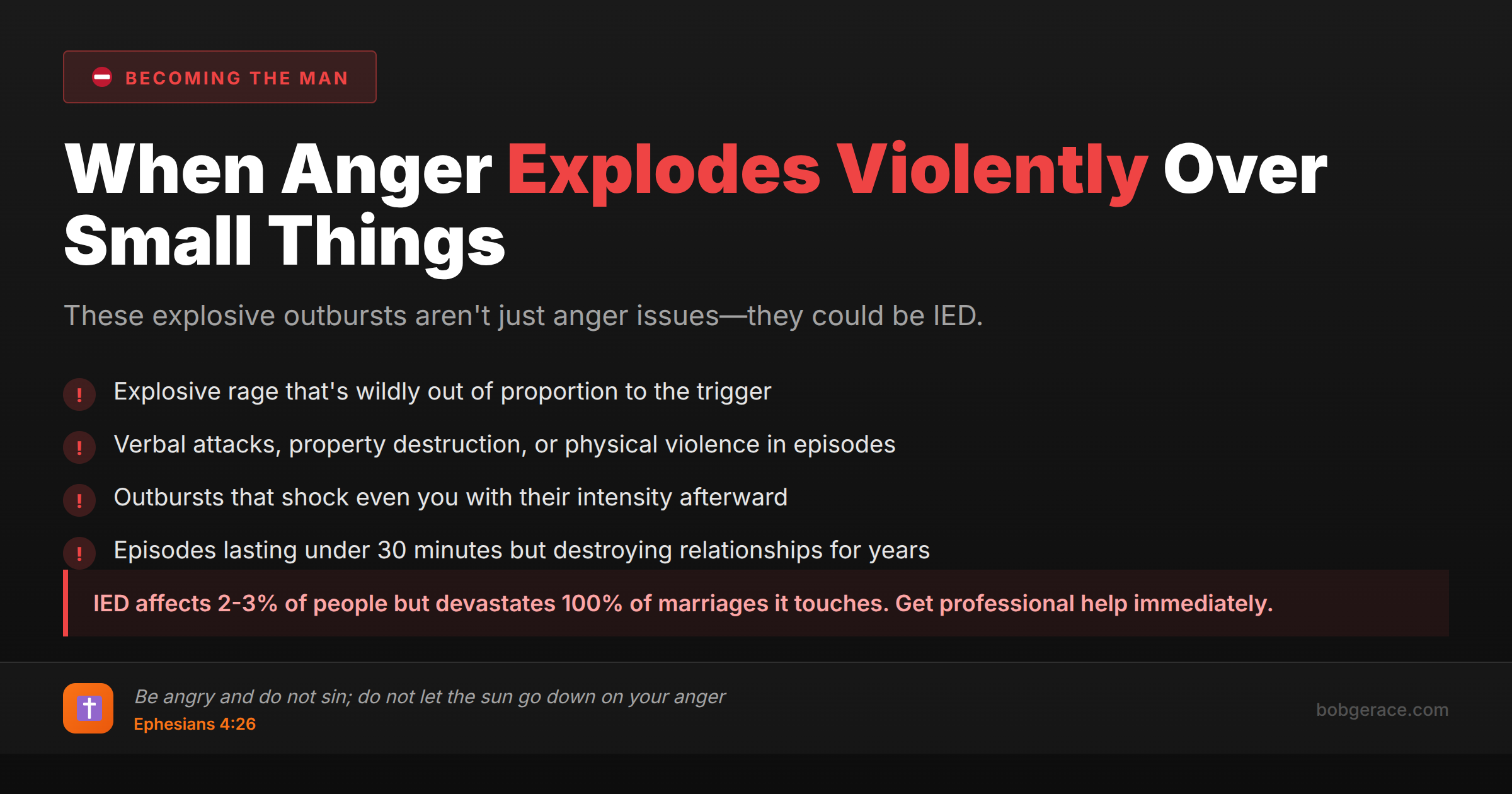
Intermittent Explosive Disorder (IED) is a clinical condition characterized by repeated episodes of impulsive, aggressive, or violent behavior that are grossly out of proportion to the situation. These aren't just moments of losing your temper - they're intense outbursts that can include verbal aggression, property destruction, or physical violence. The key markers of IED are the suddenness and severity of the episodes compared to the trigger. Someone might explode over a minor inconvenience in ways that shock even themselves afterward. These episodes typically last less than 30 minutes but can cause significant damage to relationships, careers, and self-esteem. While IED affects only 2-3% of the population, its impact on marriages and families is devastating.
The Full Picture
Understanding IED goes beyond just 'anger issues.' This is a recognized mental health condition that involves a failure in the brain's impulse control mechanisms. People with IED often describe feeling a buildup of tension before an episode, followed by an explosive release that feels almost involuntary.
The diagnostic criteria are specific: The outbursts must be recurrent, impulsive, and result in significant distress or impairment. They're not premeditated or committed to achieve some goal - they're reactive explosions that often leave the person feeling remorseful and confused about their own behavior.
IED typically emerges in adolescence or early adulthood and can persist for years if untreated. It's more common in men than women and often co-occurs with other conditions like depression, anxiety, or substance abuse. The episodes can be triggered by seemingly minor stressors - a traffic jam, a disagreement, or even positive events that create unexpected pressure.
The aftermath is usually immediate regret and shame. Unlike someone with antisocial tendencies who might feel justified in their aggression, people with IED are typically horrified by their behavior. They may spend considerable time apologizing and trying to repair damage, only to repeat the cycle weeks or months later.
For marriages, IED creates a pattern of unpredictability that can leave spouses walking on eggshells. The explosive episodes followed by genuine remorse can create trauma bonds and cycles that are difficult to break without professional intervention.
What's Really Happening
From a clinical perspective, IED represents a dysregulation in the brain's emotional processing centers, particularly the amygdala and prefrontal cortex. During an episode, the amygdala essentially hijacks rational thought processes, flooding the system with stress hormones and triggering a fight-or-flight response that's completely disproportionate to the actual threat.
What makes IED distinct from other anger problems is the neurobiological component. Brain imaging studies show differences in how people with IED process emotional stimuli. They have heightened reactivity in emotional centers and decreased activity in areas responsible for impulse control. This isn't an excuse for behavior, but it helps explain why willpower alone rarely resolves the issue.
Treatment typically involves a combination of medication and therapy. SSRIs can help regulate the underlying mood instability, while cognitive-behavioral therapy teaches recognition of warning signs and alternative coping strategies. The key is early intervention before the pattern becomes deeply entrenched.
For couples, I emphasize that while IED is a real clinical condition, it doesn't absolve someone of responsibility for their actions or their recovery. The non-explosive partner needs support too, as living with unpredictable anger can create secondary trauma and hypervigilance that affects the entire family system.
What Scripture Says
Scripture takes anger seriously while offering hope for transformation. Ephesians 4:26-27 instructs us: 'Be angry and do not sin; do not let the sun go down on your anger, and give no opportunity to the devil.' This acknowledges that anger itself isn't sinful, but our response to it can be.
Proverbs 29:11 warns: 'A fool gives full vent to his spirit, but a wise man quietly holds it back.' The explosive episodes characteristic of IED represent exactly this - giving 'full vent' without the restraint that wisdom requires. Yet God's Word offers a path toward the self-control that seems impossible in our own strength.
Galatians 5:22-23 promises that 'the fruit of the Spirit is love, joy, peace, patience, kindness, goodness, faithfulness, gentleness, self-control.' Notice that self-control is listed as a fruit of the Spirit - not something we manufacture through willpower, but something God produces in us as we surrender to His work in our lives.
James 1:19-20 provides practical wisdom: 'Let every person be quick to hear, slow to speak, slow to anger; for the anger of man does not produce the righteousness of God.' This suggests a learned response pattern that can replace the explosive reactivity of IED.
The hope in Scripture is that while we may struggle with these patterns, God's transforming power can rewire our responses. 2 Corinthians 5:17 promises that 'if anyone is in Christ, he is a new creation. The old has passed away; behold, the new has come.' This includes our anger responses.
What To Do Right Now
-
1
Seek professional evaluation from a mental health provider experienced with anger disorders - don't try to self-diagnose or manage this alone
-
2
Begin tracking your episodes - note triggers, warning signs, duration, and aftermath to identify patterns
-
3
Inform your spouse about IED and create a safety plan for when episodes occur, including when to leave the situation
-
4
Start anger management counseling immediately, preferably with someone who understands both the clinical and spiritual dimensions
-
5
Consider medical evaluation for medication if episodes are frequent or severe - this isn't weakness, it's wisdom
-
6
Commit to consistent accountability with a pastor, counselor, or mature Christian friend who will ask hard questions
Related Questions
Don't Let Explosive Anger Destroy Your Marriage
IED won't resolve on its own and typically escalates without intervention. Get the clinical and biblical support you need before more damage occurs.
Get Help Now →