Is my anger normal or pathological?
6 min read
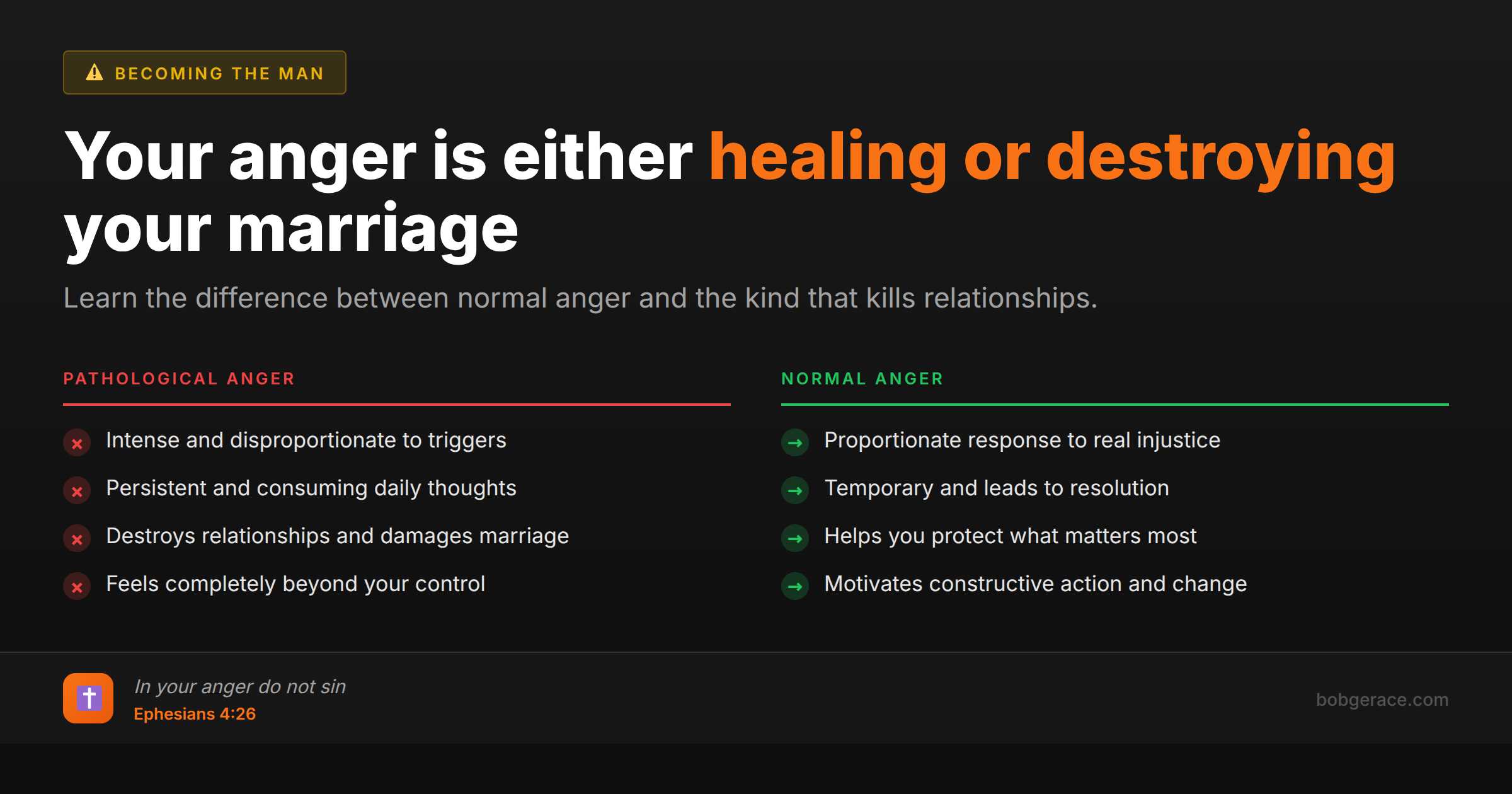
Normal anger is a healthy emotional response to perceived injustice, threat, or boundary violations. It's temporary, proportionate to the trigger, and leads to constructive action or resolution. Pathological anger, however, is intense, persistent, disproportionate to triggers, and destructive to relationships and daily functioning. The key difference lies in control, frequency, intensity, and outcome. Normal anger helps you address problems and protect what matters. Pathological anger destroys what you're trying to protect. If your anger regularly damages your marriage, escalates beyond your control, or feels consuming and constant, you're likely dealing with something that needs clinical attention.
The Full Picture
Anger exists on a spectrum from healthy to destructive, and understanding where your anger falls is crucial for your marriage's survival. Normal anger serves important functions: it alerts you to problems, motivates you to address injustices, and helps you set boundaries. It's like your emotional immune system - designed to protect what matters most.
Healthy anger has clear characteristics: it's proportionate to the trigger, temporary in duration, and constructive in outcome. When your spouse breaks a promise, normal anger helps you address the broken trust. You feel upset, you communicate your feelings, you work toward resolution, and the anger subsides.
Pathological anger is different entirely. It's anger that has become your master rather than your tool. This type of anger is disproportionate - small triggers create volcanic reactions. It's persistent - you can't let things go. It's destructive - instead of solving problems, it creates bigger ones.
Pathological anger often stems from deeper issues: unresolved trauma, chronic stress, brain chemistry imbalances, learned patterns from childhood, or underlying mental health conditions like depression or anxiety. It's not a character flaw - it's a clinical concern that responds to proper treatment.
The impact on marriage is devastating. Normal anger can actually strengthen relationships through healthy conflict resolutionn. Pathological anger destroys trust, creates fear, and erodes intimacy. Your spouse begins walking on eggshells, and you begin hating who you become when anger takes control.
Recognizing the difference isn't always easy when you're in the middle of it. Pathological anger often feels justified in the moment. That's why external perspective - from a spouse, friend, or counselor - is so valuable in gaining clarity about your anger patterns.
What's Really Happening
From a clinical perspective, pathological anger often involves dysregulation in the brain's emotional processing centers. The amygdala becomes hyperactive while the prefrontal cortex - responsible for rational thinking and impulse control - goes offline. This creates a neurological hijacking where logic and self-control become nearly impossible.
Several factors can contribute to pathological anger patterns. Trauma history is significant - childhood abuse, neglect, or witnessing domestic violence can create hypervigilant nervous systems that perceive threats everywhere. Chronic stress depletes your emotional resources, making anger your default response. Depression often masquerades as anger, especially in men who struggle to express sadness or vulnerability.
Intermittent explosive disorder is a specific condition characterized by sudden episodes of impulsive, aggressive, violent behavior disproportionate to the trigger. Bipolar disorder can include periods of intense irritability and rage. ADHD can contribute to emotional dysregulation and impulsivity that manifests as anger.
The good news is that pathological anger responds well to treatment. Cognitive-behavioral therapy helps identify triggers and develop coping strategies. Dialectical behavior therapy teaches emotional regulation skills. EMDR can address underlying trauma. In some cases, medication can help stabilize brain chemistry.
The key clinical markers I look for include: anger that's disproportionate to triggers, inability to self-soothe once triggered, anger that interferes with daily functioning, physical symptoms during anger episodes, and relationship damage despite wanting to change. If these describe your experience, professional help isn't weakness - it's wisdom.
What Scripture Says
Scripture acknowledges anger as a normal human emotion while providing clear guidelines for managing it righteously. Ephesians 4:26 instructs us, "In your anger do not sin: Do not let the sun go down while you are still angry." This verse validates anger while emphasizing control and resolution.
The Bible distinguishes between righteous and sinful anger. Mark 3:5 shows Jesus "looked around at them in anger and, deeply distressed at their stubborn hearts" - demonstrating that anger at injustice and hard-heartedness can be appropriate. Jesus also cleansed the temple in righteous anger (Matthew 21:12-13), showing that anger can motivate godly action.
However, Scripture warns against uncontrolled anger: Proverbs 29:22 states, "An angry person stirs up conflict, and a hot-tempered person commits many sins." James 1:19-20 reminds us to be "slow to become angry, because human anger does not produce the righteousness that God desires."
Pathological anger often stems from heart issues that need divine transformation. Proverbs 4:23 says, "Above all else, guard your heart, for everything you do flows from it." When anger flows from pride, selfishness, or unforgiveness, it becomes destructive. Galatians 5:22-23 presents self-control as a fruit of the Spirit, indicating that emotional regulation is part of spiritual maturity.
Colossians 3:8 instructs believers to "rid yourselves of all such things as these: anger, rage, malice." This doesn't mean never feeling angry, but rather not allowing anger to define us or control our actions. Proverbs 16:32 declares, "Better a patient person than a warrior, one with self-control than one who takes a city." God calls us to steward our emotions wisely, seeking His help when our anger becomes unmanageable.
What To Do Right Now
-
1
Track your anger patterns for one week - note triggers, intensity (1-10), duration, and outcomes to gain objective data
-
2
Ask your spouse and trusted friends for honest feedback about your anger patterns and their impact
-
3
Learn the physical warning signs of escalating anger - tension, heat, racing heart - and practice the 24-hour rule for major decisions
-
4
Develop immediate de-escalation techniques: deep breathing, counting to ten, taking a time-out, or removing yourself from triggering situations
-
5
Schedule a professional assessment if your anger is frequent, intense, or damaging relationships - early intervention prevents greater damage
-
6
Begin addressing underlying issues through counseling, stress management, trauma therapy, or medical evaluation as appropriate
Related Questions
Get Professional Clarity on Your Anger
Don't let uncontrolled anger destroy your marriage. Get the professional assessment and tools you need to transform destructive patterns into healthy responses.
Get Help Now →