What assessment would tell me if I need more help?
6 min read
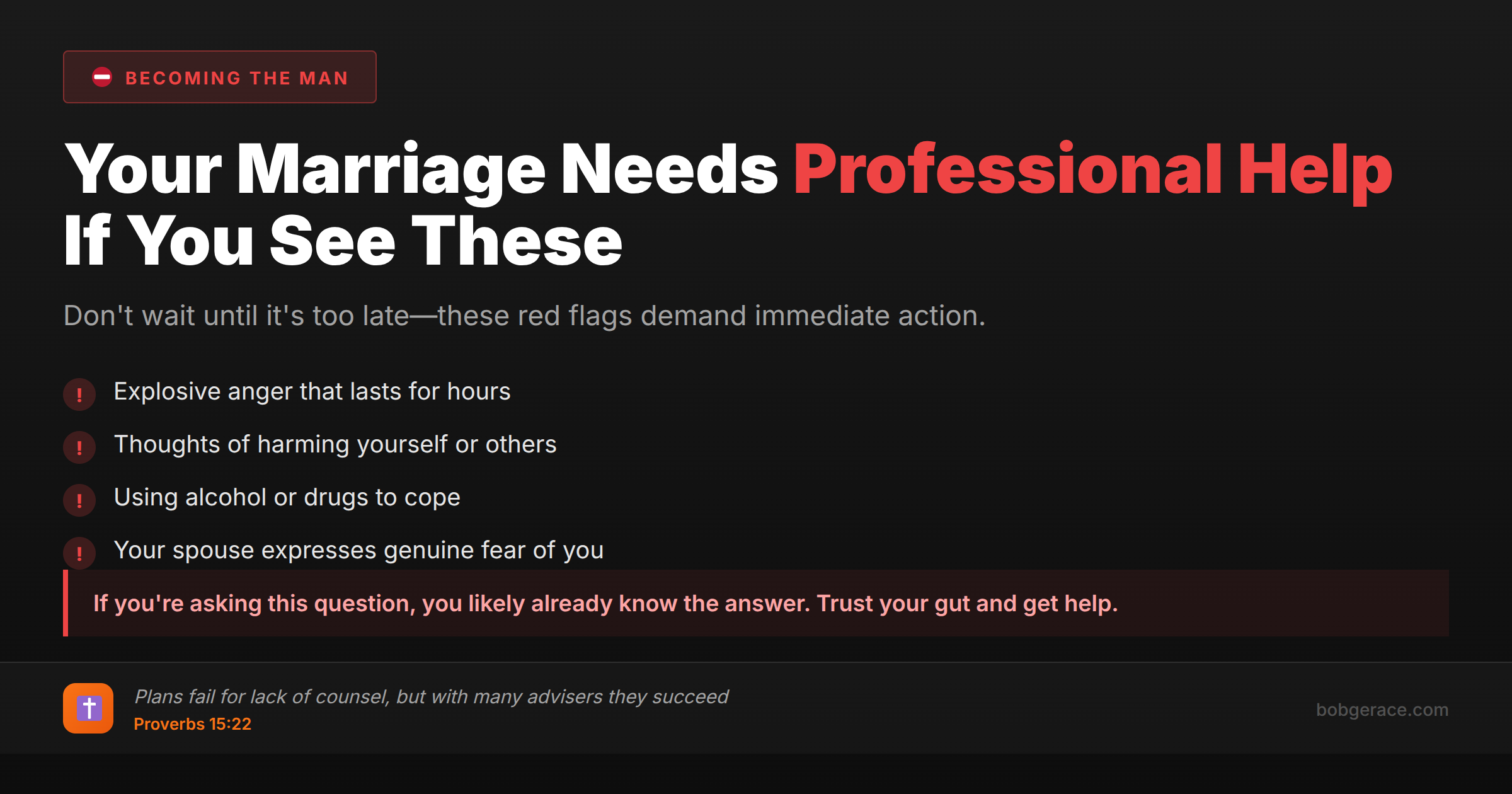
Several validated assessments can help determine if you need professional support beyond self-help resources. The Gottman Relationship Assessment, Beck Depression Inventory, and State-Trait Anger Expression Inventory are gold standards. However, you don't need formal testing to recognize warning signs. Key indicators include: explosive anger lasting hours, thoughts of harming yourself or others, substance abuse as coping, chronic depression affecting daily function, or your spouse expressing genuine fear. If your marriage conflicts escalate to threats, property damage, or any physical aggression, immediate professional help is non-negotiable. Trust your gut—if you're asking this question, you likely already sense you need additional support.
The Full Picture
The decision to seek professional help isn't about failure—it's about wisdom. Many couples struggle alone far longer than necessary because they don't know when they've crossed the line from "normal" marital challenges into territory requiring clinical intervention.
Formal Assessment Tools: The Gottman Relationship Assessment measures the Four Horsemen (criticism, contempt, defensiveness, stonewalling) and predicts divorce with 94% accuracy. The Beck Depression Inventory-II screens for clinical depression, while the State-Trait Anger Expression Inventory measures anger frequency, intensity, and expression patterns.
The Dyadic Adjustment Scale evaluates relationship satisfaction across four dimensions: consensus, satisfaction, cohesion, and affectional expression. For trauma-related issues, the PTSD Checklist for DSM-5 identifies symptoms requiring specialized treatment.
Red Flag Indicators: - Escalation patterns: Arguments that consistently intensify beyond your control - Recovery time: Taking days or weeks to repair after conflicts - Physical symptoms: Chronic headaches, sleep disruption, or digestive issues from relationship stress - Isolation: Withdrawing from friends, family, or activities you once enjoyed - Coping mechanisms: Increasing reliance on alcohol, work, or other numbing behaviors
The "Professional Help" Threshold: When self-help books, marriage seminars, and pastoral counseling aren't creating sustainable change after 3-6 months of consistent effort, clinical intervention becomes necessary. This isn't about quick fixes—transformation takes time. But if you're applying biblical principles and practical tools without seeing progress, underlying issues may need professional diagnosis and treatment.
Remember: seeking help demonstrates strength, not weakness. It shows you value your marriage enough to get the specialized support it needs.
What's Really Happening
From a clinical perspective, the question itself often indicates readiness for professional support. Self-awareness about needing help is actually a positive prognostic indicator—it shows insight and motivation for change.
Diagnostic Considerations: Many individuals struggling with anger or relationship issues have underlying conditions that self-help approaches cannot address. Intermittent Explosive Disorder affects 2.7% of adults and requires specialized treatment. Bipolar disorder, ADHD, or anxiety disorders can manifest as relationship volatility. Complex PTSD from childhood trauma creates attachment disruptions that impact adult relationships.
The Assessment Process: Comprehensive evaluation includes clinical interviews, standardized measures, and often collateral information from spouses. We assess frequency, intensity, and triggers of problematic behaviors. Family history reveals genetic predispositions, while developmental history identifies trauma or attachment wounds.
Key Clinical Thresholds: - Safety concerns: Any threats or fear of physical harm - Functional impairment: Work, parenting, or social functioning significantly affected - Comorbid conditions: Depression, anxiety, or substance use complicating the picture - Treatment resistance: Previous attempts at change have been unsuccessful
The Integration Model: Effective treatment often combines clinical intervention with spiritual formation. Research shows that faith-integrated therapy produces better outcomes for religious clients. Clinical tools address symptom management and skill deficits, while spiritual practices provide meaning, hope, and community support.
Don't wait for a crisis. Early intervention prevents more serious problems and reduces treatment duration. Professional help isn't about pathologizing normal struggles—it's about getting the right tools for the specific challenges you face.
What Scripture Says
Scripture consistently affirms the value of seeking wise counsel and acknowledges our need for community support in growth and healing.
The Wisdom of Seeking Counsel: *"Plans fail for lack of counsel, but with many advisers they succeed"* (Proverbs 15:22). God designed us for community, not isolation. Professional counselors are part of the "many advisers" He provides for our flourishing.
*"Where there is no guidance, a people falls, but in an abundance of counselors there is safety"* (Proverbs 11:14). The word "safety" here implies not just protection but prosperity and success. Seeking professional help creates safety for your marriage and family.
Acknowledging Our Limitations: *"The heart is deceitful above all things and beyond cure. Who can understand it?"* (Jeremiah 17:9). Sometimes we need outside perspective to see patterns we're blind to. Clinical assessment provides objective insight into subjective experiences.
*"Trust in the Lord with all your heart and lean not on your own understanding"* (Proverbs 3:5-6). This doesn't mean avoiding professional help—it means recognizing that God often works through trained professionals He's equipped for this purpose.
The Call to Healing: *"Is anyone among you sick? Let them call the elders of the church to pray over them and anoint them with oil in the name of the Lord"* (James 5:14). This passage affirms both spiritual intervention and practical care (oil was medicinal). Mental health struggles deserve the same comprehensive approach.
Stewardship of Our Minds: *"We take captive every thought to make it obedient to Christ"* (2 Corinthians 10:5). Sometimes this requires professional help to develop the skills and insights necessary for this spiritual discipline.
Seeking professional help isn't a lack of faith—it's faithful stewardship of the resources God has provided for healing and growth.
What To Do Right Now
-
1
Take an honest self-assessment: Complete online versions of the Beck Depression Inventory or Gottman Relationship Quiz to identify specific areas of concern
-
2
Ask your spouse directly: 'Do you think we need professional help?' Their perspective often reveals blind spots you might miss
-
3
Set a timeline: If you've been struggling with the same issues for more than 3-6 months without improvement, schedule a consultation this week
-
4
Research qualified professionals: Look for licensed therapists with specific training in marriage therapy and, if important to you, faith integration
-
5
Start with one session: You don't need to commit to long-term therapy—begin with a single assessment session to get professional perspective
-
6
Prepare for the appointment: Write down specific patterns, triggers, and incidents that concern you to maximize the value of your consultation
Related Questions
- Is my anger normal or pathological?
- What is 'intermittent explosive disorder'?
- Do I have a personality disorder?
- What is 'complex trauma' and do I have it?
- What role might ADHD/depression/anxiety play?
- What does a comprehensive mental health assessment look like?
- What is 'betrayal trauma' and do I have it?
- Is this PTSD?
- What therapies help with this kind of trauma?
- What is EMDR and could it help?
Also find Bob on
Subscribe for weekly videos on Christian marriage.
Bring Your Situation to Bob
Assessments measure symptoms. A coach sees your actual marriage—what's driving the anger, where your wife is, what move comes next for you.
Talk to Bob →